


Delhi to overhaul PUCC system, launch car-pooling app, boost pollution control measures: minister
Environment Minister Manjinder Singh Sirsa announces long-term funding to MCD for mechanical road sweepers, integrated traffic management
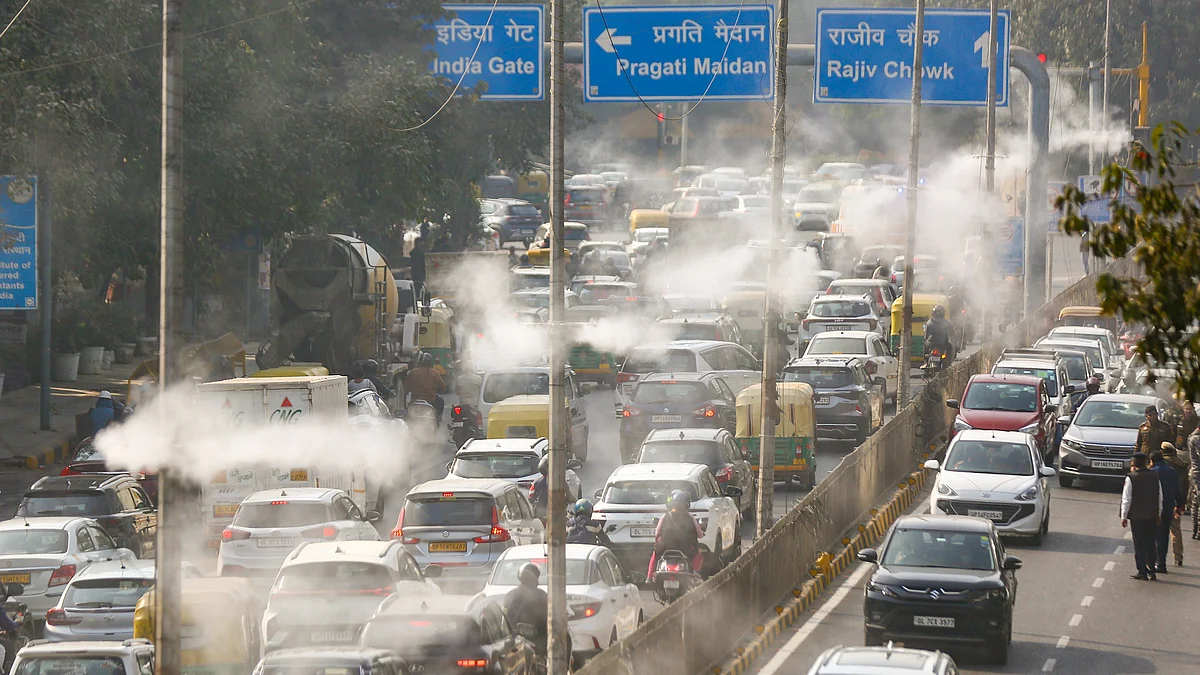


The Delhi government will overhaul the Pollution Under Control Certificate (PUCC) system with third-party monitoring, develop a car-pooling app to reduce vehicular congestion and allocate Rs 2,700 crore over 10 years to the Municipal Corporation of Delhi (MCD) to procure mechanical road sweepers and litter pickers, Environment Minister Manjinder Singh Sirsa said on Wednesday, 17 December.
Addressing a press conference in New Delhi, Sirsa said the car-pooling app is aimed at encouraging Delhiites to share rides and reduce the number of private vehicles on the roads. "We are trying to bring a car-pooling app that is easy for people to download and use," he added.
The minister also announced plans to hire a third-party agency to monitor potholes citywide. This agency will conduct year-long surveys, identify potholes, document them with photographs, and submit data to authorities. The Delhi Pollution Control Committee (DPCC) has already issued a tender for this initiative.
Sirsa further said the government is working with the Delhi Traffic Police to develop an integrated traffic management system that will dynamically adjust traffic signal timings to ease jams. “Currently, even during long jams, traffic signals remain red for fixed periods, worsening congestion. We aim to reduce red light durations when jams build up,” he explained.
To identify pollution hotspots, Delhi is partnering with Google Maps. Sirsa noted that pollution hotspots have increased from 13 under the previous Aam Aadmi Party government to 62 now. The city plans to identify 100 vehicular pollution hotspots for targeted interventions.
Highlighting the main sources of pollution, Sirsa said vehicular emissions, industrial activity, dust and solid waste contribute most to Delhi’s poor air quality.
The government has directed the Public Works Department to deploy 70 mechanical road sweepers and water sprinklers. In addition, around 1,000 litter pickers and 300 water sprinklers are being deployed across the city, he claimed.
Sirsa said Delhi is coordinating with neighboring states for a regional approach to controlling air pollution.
In addition, he said the government has signed a Memorandum of Understanding with IIT Madras to develop “smog-eating” surfaces aimed at reducing pollution levels. These surfaces will be tested and installed in selected areas.
(With agency inputs)
Join our official telegram channel (@nationalherald) and stay updated with the latest headlines