


Why ED targets Opposition only during elections, asks Kapil Sibal
Rajya Sabha MP urges Supreme Court to hear review pleas on powers of probe agencies
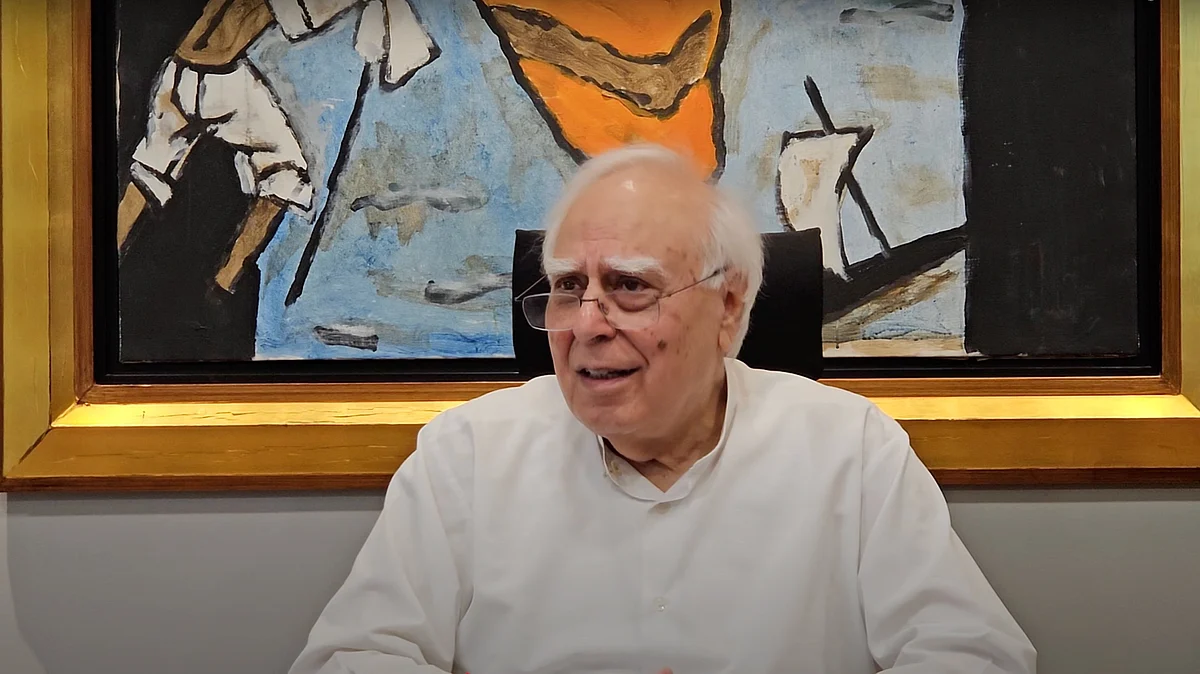


Independent Rajya Sabha MP Kapil Sibal on Saturday questioned the timing of ED (Enforcement Directorate) against Opposition leaders, alleging that the central agency becomes active only when elections are underway, and urged the Supreme Court to urgently hear review petitions pending on the jurisdiction of probe agencies.
Addressing a press conference here, Sibal said the ED’s recent action in West Bengal appeared aimed solely at harassing Opposition leaders and undermining the federal structure.
“It is not a coincidence that the ED suddenly wakes up whenever elections are near. This pattern has repeated itself in Jharkhand, Bihar and now West Bengal,” he said.
The former Union minister pointed to earlier cases involving former Jharkhand Chief Minister Hemant Soren and Rashtriya Janata Dal leaders Lalu Prasad and Tejashwi Yadav, claiming that probe agency actions in those states coincided with assembly elections.
“Now the ED has reached West Bengal just when elections are approaching. This is not law enforcement; this is political timing,” Sibal said.
Questions ED action in I-PAC raids
Referring to the recent raids conducted by the ED at the Kolkata office of political consultancy firm Indian Political Action Committee (I-PAC) and the residence of its chief, Sibal asked what exactly the agency was investigating.
“The ED cannot take away every document it finds. If the probe is about a coal scam, then access should be limited to that. You cannot convert every raid into a fishing expedition,” he said.
The ED had conducted the searches in connection with an alleged coal smuggling case. The agency later claimed that West Bengal Chief Minister Mamata Banerjee entered the premises during the operation and removed what it described as “key evidence”.
Sibal alleged that central investigative agencies are being used as political tools.
“When the Enforcement Directorate was created, nobody imagined it would become an omnipresent prosecuting authority that can go anywhere, anytime, disturbing elected governments and targeting Opposition leaders,” he said.
Drawing a contrast with the period between 2004 and 2014, when the UPA was in power, Sibal said the ED was never given a “free hand” to proceed against political leaders on the basis of unverified or motivated complaints.
“The unity and integrity of the country cannot be safeguarded if institutions are used selectively,” he said.
Federal structure under strain
Expressing concern over developments in West Bengal, the Rajya Sabha MP said repeated intervention by central agencies threatens India’s federal framework.
“If arbitrary decisions are taken without any basis, they will have consequences. The more pressure you apply, the stronger the public response will be,” he said, responding to questions about whether the Centre could impose President’s Rule in the state.
Sibal placed part of the responsibility on the Supreme Court, saying review petitions on the powers and jurisdiction of investigative agencies have remained pending for too long.
“The time has come for the Supreme Court to examine these issues seriously. Otherwise, the federal structure will suffer, and that will not be acceptable to the people of this country,” he said.
He argued that the ED increasingly acts on the assumption that it has the authority to investigate wherever any FIR is registered, irrespective of whether the matter genuinely falls within its remit.
Summing up his criticism, Sibal said the pattern of ED action is clear.
“In Jharkhand, the ED arrived during elections. In Bihar, the same thing happened when Lalu Prasad and Tejashwi Yadav were forced to attend court hearings in the middle of the campaign. Now it is West Bengal’s turn,” he said.
“The intention is obvious — to create disruption and trouble the Trinamool Congress and Mamata Banerjee because they cannot win politically otherwise,” he added.
Calling the ED and the CBI “this government’s instruments of control”, Sibal said, “They have become omnipresent, like God. They can do anything — and that is dangerous for democracy.”
Join our official telegram channel (@nationalherald) and stay updated with the latest headlines