


Faced criticism from my community for backing creamy layer principle: Gavai
Gavai says social justice means shared opportunities, inclusivity, and upholding Ambedkar’s principles
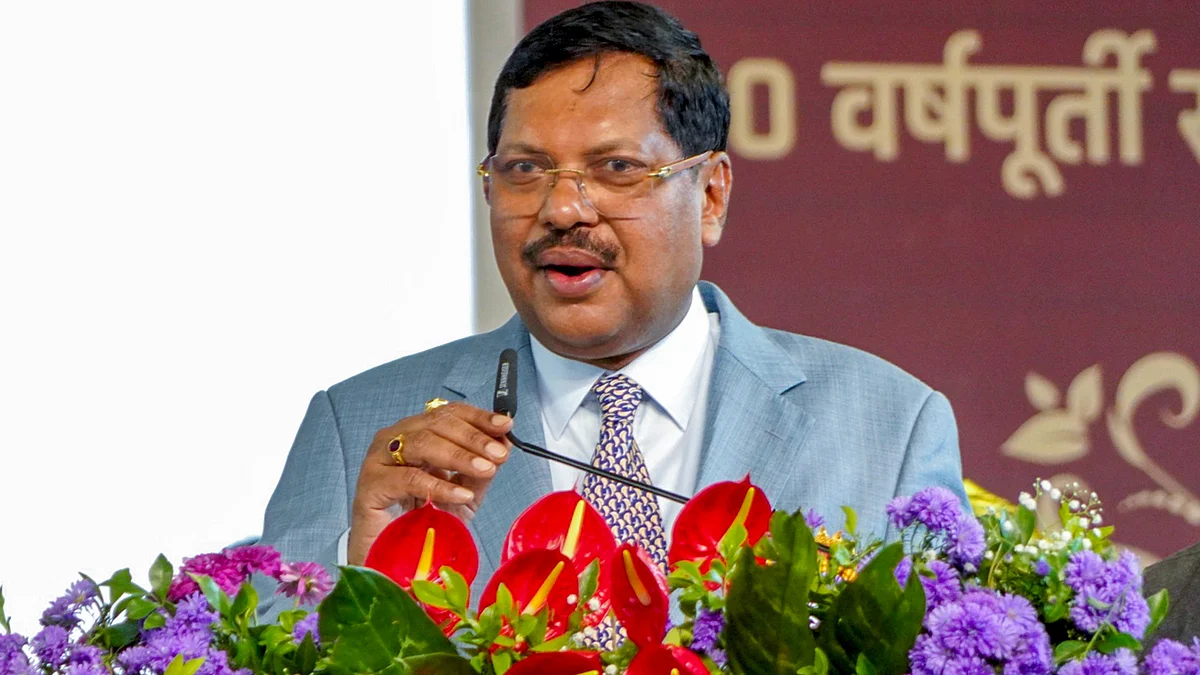


Former Chief Justice of India B.R. Gavai has revealed that he faced widespread criticism from his own community for advocating the application of the creamy layer principle to Scheduled Castes, a step he believes aligns with the true vision of social and economic justice envisioned by Dr. B.R. Ambedkar.
Speaking at Mumbai University on Saturday during a lecture on the “Role of Affirmative Action in Promoting Equal Opportunity,” Gavai paid tribute to Ambedkar on his death anniversary, describing him as not just the architect of the Indian Constitution but also the pioneer of affirmative action in the country.
Drawing on Ambedkar’s metaphor, Gavai said, “Affirmative action is like providing a bicycle to someone who is lagging behind. If one person is at the tenth kilometre and another at zero, the latter is given a cycle to reach the tenth kilometre faster, so they can walk alongside each other. Did Ambedkar intend for the first person to remain on the cycle indefinitely and prevent progress for others? I believe not. He envisioned real social and economic justice, not merely formal gestures.”
Gavai cited the Indra Sawhney vs Union of India case, which first enunciated the creamy layer principle, and noted that in his own judicial pronouncement, he extended its application to Scheduled Castes. The principle, he explained, ensures that those who have achieved sufficient social and economic advancement do not continue to benefit from affirmative action designed for the backward communities.
Yet, he admitted, this stance drew sharp criticism. Some accused him of hypocrisy, suggesting that he had benefited from reservation to reach the Supreme Court only to deny its benefits to others. Gavai clarified that such claims were unfounded, pointing out that there is no reservation for constitutional offices such as High Court or Supreme Court judges.
He posed a striking question to his audience: can equality truly be achieved if the son of a chief justice or chief secretary is treated the same as the son of a labourer studying in a gram panchayat school? This, he argued, is precisely why the creamy layer principle is essential to ensure fairness in affirmative action.
Despite the controversies, Gavai acknowledged the transformative impact of reservation over the past 75 years. “I have travelled across India and the world,” he said. “I have witnessed Scheduled Caste individuals rising to positions of chief secretary, director general of police, ambassadors, and high commissioners. Affirmative action has undeniably played a positive role.”
Gavai also highlighted Maharashtra’s historic legacy as a land of social reformers, describing it as the birthplace of modern India’s progressive ideas. He paid homage to Jyotirao Phule and Savitribai Phule, pioneers who fought societal inequalities and opened the doors of education for women at a time when they were among the most oppressed in society.
In Gavai’s words, the vision of social justice is not merely about policy but about creating real opportunities for advancement, ensuring that progress is shared and inclusive, and that the principles Ambedkar cherished continue to guide India’s journey toward equality.
With PTI inputs
Join our official telegram channel (@nationalherald) and stay updated with the latest headlines