


From bookstores to quick-commerce delivery: the buzz surrounding ‘Belonging: A Journey of Love’
Sonia Gandhi's autobiography sparks nationwide enthusiasm and revolutionises how serious literature reaches readers through rapid quick-commerce platforms
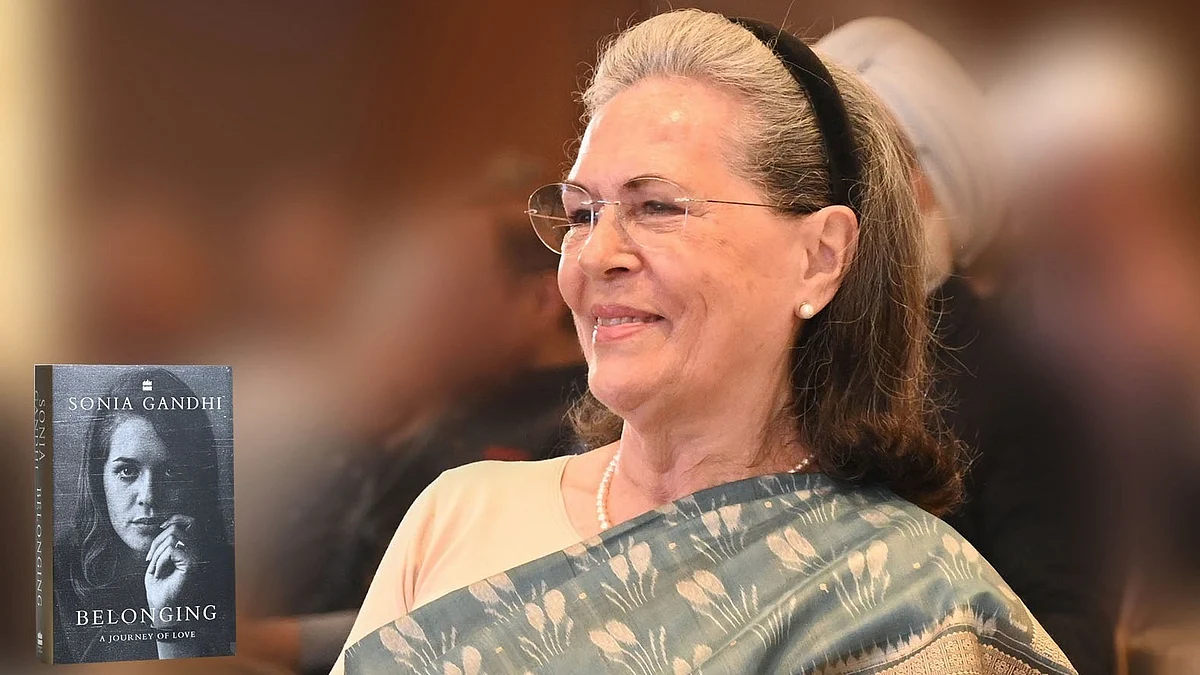


A new and fascinating turning point in the history of the Indian publishing industry was witnessed on 10 November 2026. The release of ‘Belonging: A Journey of Love’—the autobiography of Sonia Gandhi, chairperson of the Congress Parliamentary Party—not only heated up the nation’s political corridors but also completely transformed the decades-old, traditional dynamics of book distribution.
Published by HarperCollins India—following editorial disagreements with Penguin Random House—this 544-page hardcover book has shattered the myth that reader interest in serious literature is waning in the age of digital and social media.
Blinkit a book
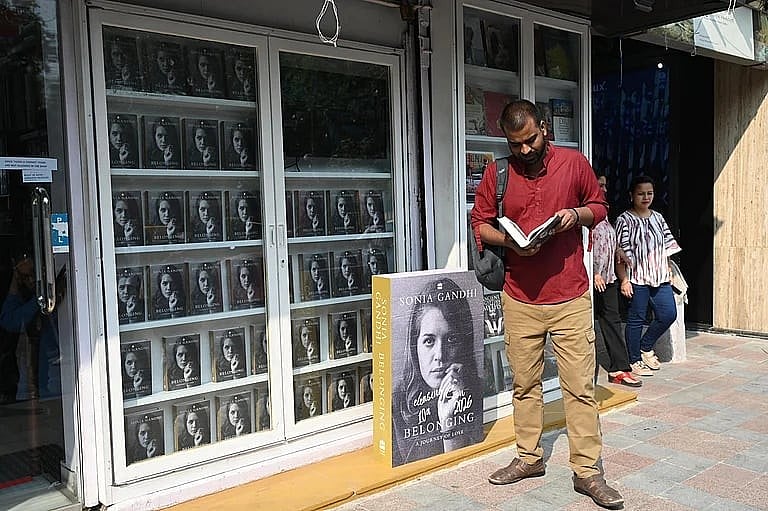
Until now, readers had only two primary options following the release of a high-profile book: they could visit well-known local bookstores, or place an order through traditional e-commerce platforms like Amazon or Flipkart and wait anywhere from 24 to 48 hours. However, this time, the ‘quick-commerce’ platform Blinkit has made a spectacular entry into the publishing industry, setting a new benchmark for book sales.
With an MRP of ₹1,299, the book was listed on Blinkit at a 35 per cent discounted price at ₹849. As a result, in central areas of Delhi, the book was delivered within 8 to 20 minutes of placing an order. A similar trend was observed in Bengaluru. The rapid delivery of a serious political autobiography—facilitated by the same apps typically used for groceries, bread and daily essentials—has taken readers, critics, and publishers alike by surprise.
Prabhat Kumar observes, “This shift indicates that today’s readers are eager for answers to their questions; they are so keen to engage with their preferred subjects that they are unwilling to wait even a single day to get their hands on the book.”
Similar frenzy in the past
In India, there has long been a significant craze for political autobiographies and memoirs, both in English and Hindi. For instance, before Independence, when Jawaharlal Nehru’s An Autobiography was published, it sparked a rush among the nation’s youth and intellectuals—much like the frenzy we see today. That enthusiasm persists even now.
The release of The Accidental Prime Minister—a book detailing the tenure of former Prime Minister Manmohan Singh—created a stir in the Indian market. Demand was so high that publishers had to scramble to print new editions overnight.
Former President Pranab Mukherjee’s The Dramatic Decade and his other memoirs also generated great curiosity, as readers sought an intimate look at the politics unfolding behind the scenes.
While Dr. A.P.J. Abdul Kalam’s Wings of Fire was not strictly a political book, the intense passion it ignited among the youth remains a landmark moment in the history of Indian publishing. The list goes on.
Why this interest among the youth is 'unprecedented'?
While there has been a generally observable interest in Sonia Gandhi’s book across various segments of society—which is easy to understand—the specific interest among the youth stems from some unique and novel factors.
Throughout her political career, Sonia Gandhi’s 'guarded privacy' has been a constant subject of discussion—a privacy she maintained, remarkably, for decades, even while in the public eye. This, in itself, is a rare reality. However, well before the book’s launch (on 22 October 2026), she made her debut on platforms like Instagram, Facebook, and X by sharing a video. This digital engagement was, in itself, enough to capture the attention of a younger generation that is highly active on social media.
Avinash Chandra, who is closely associated with the world of books and publishing, observes: “It is worth noting that this book is not merely a 'political thriller'; it is also a 'love story'. This is precisely why the younger generation views the book not just as a political document, but as a deeply emotional narrative." It goes without saying that she has shared her journey—from a small Italian town to Cambridge, becoming a daughter-in-law in India, her love story with Rajiv Gandhi, and various personal tragedies—with remarkable candour.
Not just Lutyens’ Zone
The excitement surrounding the book is not confined to Delhi, or its ‘elite’ Lutyens’ Zone. A similar, unprecedented level of enthusiasm has been witnessed in major metropolitan cities across the country. While precise figures may not yet be available, bookstores in various regions have reported record-breaking numbers for advance bookings and pre-orders. Although final sales figures have not yet been released—given that the book has only just hit the market—a report by Dainik Bhaskar indicates that 100,000 copies were printed for the first run.
Online reports suggest that on the day of its launch, bookstores across the country set up dedicated display zones, with the initial demand far exceeding expectations. In Mumbai, the nation’s financial capital, there was a palpable frenzy among readers; from the morning of 10 November, bookstores such as the iconic Kitabkhana, Crossword and White Crow saw a flurry of activity. Significant enthusiasm for pre-bookings was observed among young corporate professionals and college students.
In Bengaluru—the nation’s tech hub—major bookstores, particularly those in Church Street, Vijayanagar and Indiranagar, saw large crowds. At the Beetle Book Shop (Vijayanagar)—a venue renowned for its collection of Kannada literature—youngsters were seen eagerly searching for a particular book. While Venkat Narendra suggests that "given the Congress party’s strong political base in South India—notably Sonia Gandhi’s long-standing connection to Bellary—there is an emotional curiosity among local readers regarding this autobiography," the reality is more nuanced.
Swapnil, who holds a senior position at a major private firm in Bengaluru and is an avid reader, observes: "On quick-commerce platforms like Blinkit, the book would frequently show as 'out of stock' or 'notify soon', yet deliveries continued to take place. A key driver behind this fascination with such books is a desire to uncover the 'other side' of the narrative.”
In Kolkata—often hailed as India’s cultural and literary capital—the book has sparked significant enthusiasm among intellectuals and the youth, both in the historic shops of College Street and at the Oxford Bookstore. Writer Prabhat Pandey notes that the city has a long-standing culture of reading political history and memoirs, which naturally fuelled the demand. He points out that works like The Discovery of India, or texts concerning Gandhi, Bhagat Singh, and Ambedkar, have seen a surge in readership over the last decade or so—far exceeding the interest shown in the preceding decades—a trend that warrants careful reflection.
S. Hanumant Rao, a Hindi journalist currently based in Hyderabad, notes that the level of interest—and the pre-launch buzz—surrounding this book among the city’s youth, particularly IT professionals, was an entirely new experience. Perhaps for this reason, copies of the book at the city’s prominent bookstores and on online delivery platforms were on the verge of going ‘out of stock’ on the day of its release. Online research indicates a similar curiosity among the youth in Chandigarh and several other cities across North India—such as Lucknow and Jaipur—with local and major bookstores reporting high interest.
A look at estimated book sales in India over the past four decades (see box) clearly shows that the culture of reading has never vanished; it has simply evolved over time. While literature was largely confined to a limited intellectual circle until the 1980s, it expanded significantly in the following decades, reaching the general public through new mediums. Today, in 2026, Belonging: A journey of Love has proven that when a book combines political intrigue with human emotion, readers not only return to bookstores but—thanks to modern technology—can also bring history and literature into their own living rooms in a mere eight minutes.
10 Indian mega-bestsellers (estimated sales)
• Wings of Fire (Dr. A.P.J. Abdul Kalam and Arun Tiwari, 1999) 10 million+ (1 crore+) copies— across all languages
• The God of Small Things (Arundhati Roy, 1997), Booker Prize winner, 6 million+ copies
• Five Point Someone (Chetan Bhagat, 2004), marked the beginning of commercial fiction, 3.5–4 million+ copies
• The Immortals of Meluha (Amish Tripathi, 2010) 2.5 million+ copies— total sales of the 'Shiva Trilogy' exceed 8 million.
• Midnight's Children (Salman Rushdie, 1981) 2 million+ copies—global sales.
• The Namesake (Jhumpa Lahiri, 2003) 1.5 million+ copies
• A Suitable Boy (Vikram Seth, 1993) 1 million+ copies
• The Palace of Illusions (Chitra Banerjee Divakaruni, 2008) 1 million+ copies
• The White Tiger (Aravind Adiga, 2008) 1 million+ copies—150,000 hardcover copies in the first year
• The Accidental Prime Minister (Sanjaya Baru, 2014) 500,000+ copies—one of the most talked-about political memoirs
(Source AI)
Join our official telegram channel (@nationalherald) and stay updated with the latest headlines