


From sea to satellite: ISRO’s ‘Nabhmitra’ to safeguard one lakh fishing vessels
Developed by ISRO, VCSS enhances vessel monitoring, navigation, emergency response and communication at sea, even in remote waters
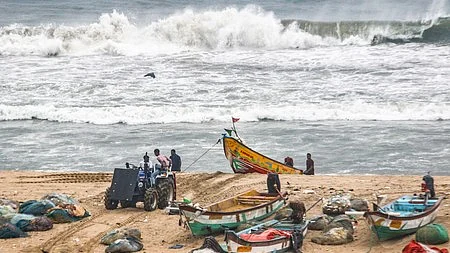


In a major leap towards modernising India's marine fisheries and strengthening the safety net for fishermen, the Centre has approved the nationwide rollout of the Vessel Communication and Support System (VCSS), an indigenous satellite-based platform that will equip one lakh marine fishing vessels with advanced communication transponders.
The ambitious project, cleared by the Union Department of Fisheries on Thursday under the Pradhan Mantri Matsya Sampada Yojana (PMMSY), will be implemented at a total cost of Rs 364 crore.
Developed by the Indian Space Research Organisation (ISRO), the VCSS is designed to transform how fishing vessels are monitored at sea, enhancing surveillance, navigation, emergency response and communication even in remote waters.
At the heart of the initiative is 'Nabhmitra', an ISRO-developed application that will serve as a digital lifeline for India's fishing community. Available in regional languages, the platform offers a host of real-time services, including periodic vessel tracking, two-way messaging, SOS alerts, geo-fencing-based boundary warnings, weather and cyclone advisories, emergency alerts, Potential Fishing Zone (PFZ) information, navigational assistance and an e-Token/Trip Declaration system.
Officials said the system will significantly improve the safety of fishermen during adverse weather by enabling faster search and rescue operations. It will also help prevent Indian fishing vessels from inadvertently straying into the territorial waters of neighbouring countries through automated boundary-crossing alerts.
The project also includes the establishment of earth stations and supporting communication infrastructure required for seamless satellite connectivity.
Under the scheme, eligible fishermen will receive the satellite transponders free of cost. The project will be implemented on a 60:40 cost-sharing basis between the Centre and the states, while Union Territories will receive 100 per cent Central assistance.
To support the rollout, infrastructure development has been planned at 423 Fish Landing Centres (FLCs) out of the country's 1,547 notified centres. The facilities have been prioritised based on factors such as the number of fishing vessels operating, dependence of local fishing communities, fish landing volumes, proximity to markets and processing centres, techno-financial viability and other regional requirements.
According to government data, Andhra Pradesh has the highest number of Fish Landing Centres at 350, followed by Tamil Nadu (301) and Kerala (204).
The VCSS rollout marks another step in India's push to harness space technology for grassroots livelihoods, bringing satellite-powered safety, connectivity and real-time intelligence to thousands of fishermen navigating the country's vast coastline.
With IANS inputs
Join our official telegram channel (@nationalherald) and stay updated with the latest headlines