


Has India surrendered to a ‘coercive’, ‘extractive’ and ‘unfair’ deal with US?
India must raise US imports from $40 billion to $100 billion annually and offer major trade concessions, casting doubt on PM Modi’s “great news” claim
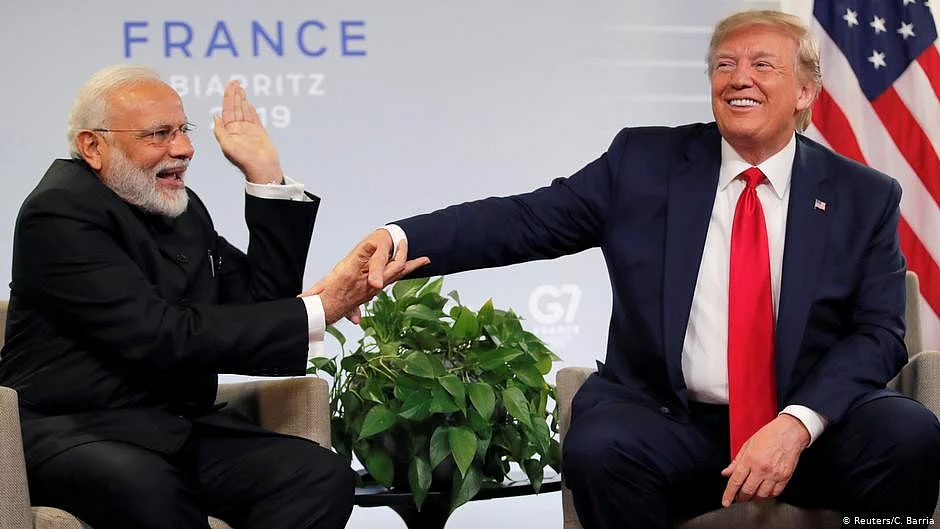


Within hours of the announcement in Washington D.C. of the framework of an interim trade agreement, murmurs of discontent could be heard in India. An unfazed prime minister Narendra Modi flew off to Malayasia on Saturday, 7 February after gushing that it was ‘great news for India and the US’. The Union minister of commerce Piyush Goyal was left to do the fire-fighting. Goyal claimed ‘no concessions have been extended in grains, fruits, oilseeds, vegetables…’ in an effort to allay apprehensions and scepticism. He seemed to be fighting a losing battle.
Unimpressed, the political opposition is pressing for a full discussion in parliament. “Naam Narender and Kaam Surrender’ mocked Congress MP Jairam Ramesh. Even strategic affairs analyst Dr Brahma Chellaney in the US appeared alarmed. “…India is an import-dependent economy whose growth rests primarily on domestic consumption. With total US-India bilateral goods trade at just $132.13 billion in 2025, forcing India to import roughly $100 billion a year from the United States would not merely skew the bilateral relationship — it could, without a dramatic jump in Indian exports, nearly double India’s overall merchandise trade deficit to around $200 billion,” he posted on X.
While the United States-India Joint Statement is silent on details, pointed out Jairam Ramesh, what is clear is that
1. India will no longer import oil from Russia. The US has announced that 25 p.c. penalty could be reimposed if India buys oil directly or indirectly from Russia
2. India will slash import duties to help American farmers at the cost of Indian farmers.
3. India’s annual imports from the USA will triple, wiping out our longstanding goods trade surplus.
4. There will continue to be great uncertainty on India’s exports of IT and other services to the US.
5. India’s exports of goods to the US will face higher duties than before.
The executive order signed by the US President Donald Trump on 6 February in Washington DC states that the US Secretary of Commerce and other Secretaries would monitor India’s trade with Russia. If the US team finds that ‘India has resumed directly or indirectly importing Russian Federation oil, they “shall recommend whether and to what extent I should take additional action as to India, including whether I should reimpose the additional ad valorem rate of duty of 25 per cent on imports of articles of India.”
Contrary to Piyush Goyal’s claim, the joint statement, which reads like a unilateral statement agreed with a gun pointing to the head, also states, “India will eliminate or reduce tariffs on all US industrial goods and a wide range of US food and agricultural products, including dried distillers’ grains (DDGs), red sorghum for animal feed, tree nuts, fresh and processed fruit, soybean oil, wine and spirits, and additional products”.
The joint statement and the executive order issued from the White House make it clear that US farm products will be imported with either no import duty or substantially reduced import duty. While there is no specific mention of ‘dairy’, the deliberately vague statement keeps it open to include additional sectors and products in future. The ‘condition’ imposed by the US for the lower tariff is that India will stop buying energy from Russia — raising questions of bullying and sovereignty. It is being criticised as a ‘one-sided statement’ with only one side, India, making concessions. India has conceded too much by agreeing to give up or substantially lower tariff on US industrial and agricultural products, judging by the statement.
Opposition parties are seeking more clarity from the government and a full discussion in parliament next week — promising another stormy session.
Join our official telegram channel (@nationalherald) and stay updated with the latest headlines