


Hawker evictions in West Bengal revive debate over livelihoods and public spaces
Street vendors and trade unions demand rehabilitation and enforcement of the 2014 law as authorities move to clear encroachments from roads and footpaths
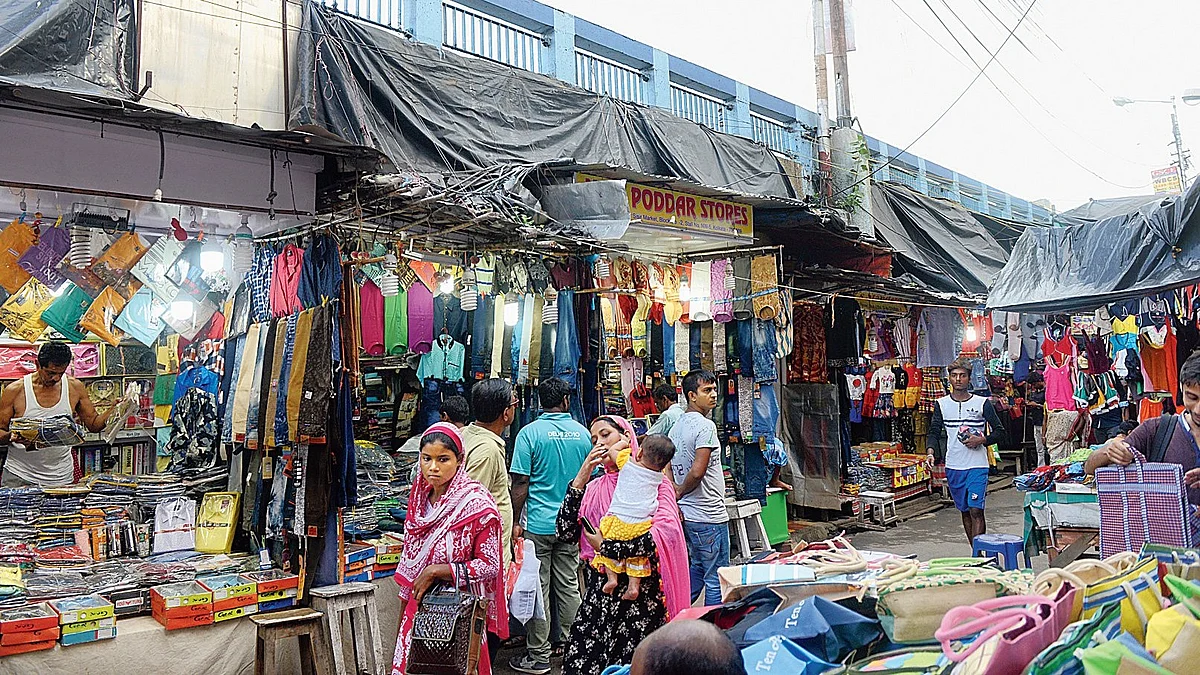


The removal of hawkers from Kolkata and other West Bengal cities has renewed a long-running debate over protecting the livelihoods of street vendors while ensuring that pedestrians can use footpaths and roads without obstruction.
Former Kolkata mayor Bikash Ranjan Bhattacharya has called for a humane approach, arguing that hawkers should be rehabilitated before they are evicted from public spaces.
“You have to have a humane approach,” he said.
“Hawkers and street vendors run an alternative economy,” Bhattacharya told PTI, pointing out that both the vendors and many of their customers belong to economically weaker sections.
Roadside eateries provide affordable meals to people who cannot bear the cost of eating at restaurants, while pavement stalls sell clothes and other necessities at prices far below those charged by branded shops and shopping centres, he said.
“The shirt would have been tailored by a jobless woman who also finds a source of income through this work; this is an alternative economy which helps the weaker sections of the people survive,” Bhattacharya said.
The eviction drive has gathered momentum under State Urban Development Minister Agnimitra Paul, who has pushed for the removal of encroachments from roads and footpaths. She faced criticism after asking a woman who was heating milk for her child in the Park Street area to vacate the spot.
Following widespread discussion of the incident on social and mainstream media, Chief Minister Suvendu Adhikari met the homeless woman during his ‘Janata Darbar’ last week and assured her of assistance.
The West Bengal Street Hawkers Federation, affiliated with the Centre of Indian Trade Unions, has also demanded rehabilitation before eviction. Its president, Debashis De, accused the BJP government of removing vendors without providing alternative sites after coming to power in May.
The organisation has opposed the eviction of traders from Mangla Haat, a decades-old bi-weekly wholesale garments market in Howrah, as well as similar action elsewhere in the state.
The dispute has also reached the Calcutta High Court. While hearing a challenge brought by a representative body of Mangla Haat traders, the court questioned whether hawkers’ right to earn a livelihood could override the public’s right to unobstructed roads and footpaths. It declined to grant the vendors interim protection from eviction.
De called for the proper enforcement of the Street Vendors (Protection of Livelihood and Regulation of Street Vending) Act, 2014.
“We want implementation of the central Act, formation of town vending committees and provision of licenses to the hawkers,” he said.
He maintained that vendors could be shifted when required in the public interest, but only after suitable alternative arrangements had been made. A shortage of regular employment opportunities, he added, had pushed many people towards street vending as a means of survival.
The uncertainty surrounding the eviction campaign has already affected vendors’ earnings. Dipankar Das, who operates a small shop in Salt Lake’s Sector V, said restrictions imposed by the administration had made it increasingly difficult for him to support his family.
“I have a family of four, including two school-going children. I am at a loss how to provide for their education, besides other expenses,” he said.
Fear has also spread among hawkers who have not yet been ordered to move. With Durga Puja approaching, traders are hesitant to invest in additional stock despite the festival traditionally being their most lucrative business period.
“With the Durga Puja festival just over a month away, which is our prime business season, we are afraid to stock goods owing to the fear of eviction,” said Manu Basak, a garment seller in south Kolkata’s Gariahat area.
Bhattacharya alleged that large businesses stood to gain from the removal of hawkers because it would reduce competition for their products. He argued that the government’s constitutional responsibility to protect life and livelihood should guide its handling of the issue.
“The government's fundamental duty would be to ensure these people can earn their livelihood and have basic decent human living,” he said.
“You cannot simply use force to evict these hawkers,” Bhattacharya added, accusing the administration of using bulldozers to carry out arbitrary removals.
The former CPI(M) Rajya Sabha member said the Street Vendors Act had been enacted to prevent hawkers from being summarily deprived of their occupations. Instead of applying its safeguards, he alleged, “the government is taking recourse to barbaric forces”.
“There would be a huge repercussion among the poor people,” said Bhattacharya, who has been representing hawkers’ interests before the courts. He asserted that the state’s constitutional obligations outweighed any “so-called cosmetic changes in cities and towns”.
Bhattacharya said that during his tenure as Kolkata mayor between 2005 and 2010, vendors had been required to leave two-thirds of footpaths and other pedestrian spaces unobstructed. Such regulation, he suggested, could protect livelihoods without denying residents access to pavements.
De also criticised the previous Trinamool Congress government, saying it too had conducted eviction drives and failed to implement the vending committee framework envisaged under the central law.
The legislation provides for the creation of town vending committees, including representatives of the hawker community, to identify vending and non-vending zones in accordance with state-specific rules.
“But the TMC government did not implement the Town Vending Act, which is to the benefit of both the general public and the hawkers,” De said.
He stressed that cities were not inhabited solely by affluent residents but also by drivers, lift operators, domestic workers and others who relied on inexpensive food and goods sold by street vendors.
“It is for these people that hawkers are a necessity as they can buy things from them for a price which they can afford,” he said.
More than 60,000 hawkers are registered with the CITU-affiliated federation, according to De. He claimed that Kolkata alone has over two lakh street vendors, underscoring the scale of the livelihood challenge confronting the administration.
With PTI inputs
Join our official telegram channel (@nationalherald) and stay updated with the latest headlines