


IMD to revise heatwave criteria as climate change intensifies extreme heat
Existing parameters unsuitable for regions like Kerala where severe heat stress often goes unclassified
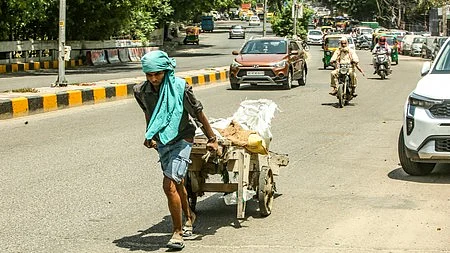


The India Meteorological Department is set to revise the parameters used to declare heatwave conditions across the country, with officials saying the current criteria are no longer suited to India’s changing climatic and geographical realities amid worsening climate change impacts.
Officials said the new framework is being prepared in consultation with technical partners and disaster management authorities, with Kerala emerging as one of the key states highlighting the limitations of the present system.
According to IMD sources, Kerala experienced unusually severe heat and humidity this summer, driven partly by a rare anti-cyclonic system that developed near the Karnataka–Maharashtra coast — an uncommon phenomenon for southern India.
“We have never had an anti-cyclone system form closer to the South before, and this time we had to predict the weather based on it,” a senior IMD official told PTI.
The official explained that anti-cyclonic conditions caused downward air movement, trapping warm air near the surface and preventing cooling during the night. As a result, several parts of Kerala recorded night temperatures three to four degrees Celsius above normal levels.
Existing rules limit heatwave warnings
Under current IMD guidelines, a heatwave warning in coastal regions can only be issued if the maximum temperature crosses 37 degrees Celsius with a departure of at least 4.5 degrees Celsius above normal.
For plains, the threshold is 40 degrees Celsius, while hilly areas require temperatures of at least 30 degrees Celsius along with similar deviations from normal.
Officials said another limitation was that such conditions must be recorded simultaneously at two stations within a state before a heatwave alert can be officially declared.
“In Kerala, we hardly get to record these conditions in two areas; moreover, we have severe heat stress that can easily cause heatstroke,” the official said.
Because of these restrictions, the IMD has often been forced to issue only “hot and humid weather” advisories even during periods of dangerous heat stress.
Climate hotspot concerns
Kerala reported several heatstroke cases this summer despite repeated advisories from the IMD and the state disaster management authority.
Climate experts have increasingly identified Kerala as a climate change hotspot, pointing to steadily rising atmospheric temperatures, erratic rainfall patterns and changing monsoon behaviour.
Officials said revised heatwave declaration norms would help authorities issue earlier and more effective warnings, particularly in states where humidity-driven heat stress poses major health risks despite temperatures remaining below traditional heatwave thresholds.
The IMD has also forecast a below-normal monsoon this year, with officials noting that India is witnessing consecutive El Niño years for the first time, raising concerns about prolonged heat and rainfall irregularities.
Join our official telegram channel (@nationalherald) and stay updated with the latest headlines