


Inquiry into abortion of foetuses by pregnant tigress relocated from Bihar to Bengal
The behaviour of a pregnant tigress who repeatedly tried to escape after capture, and the capture team’s failures, are under investigation by central and state agencies.
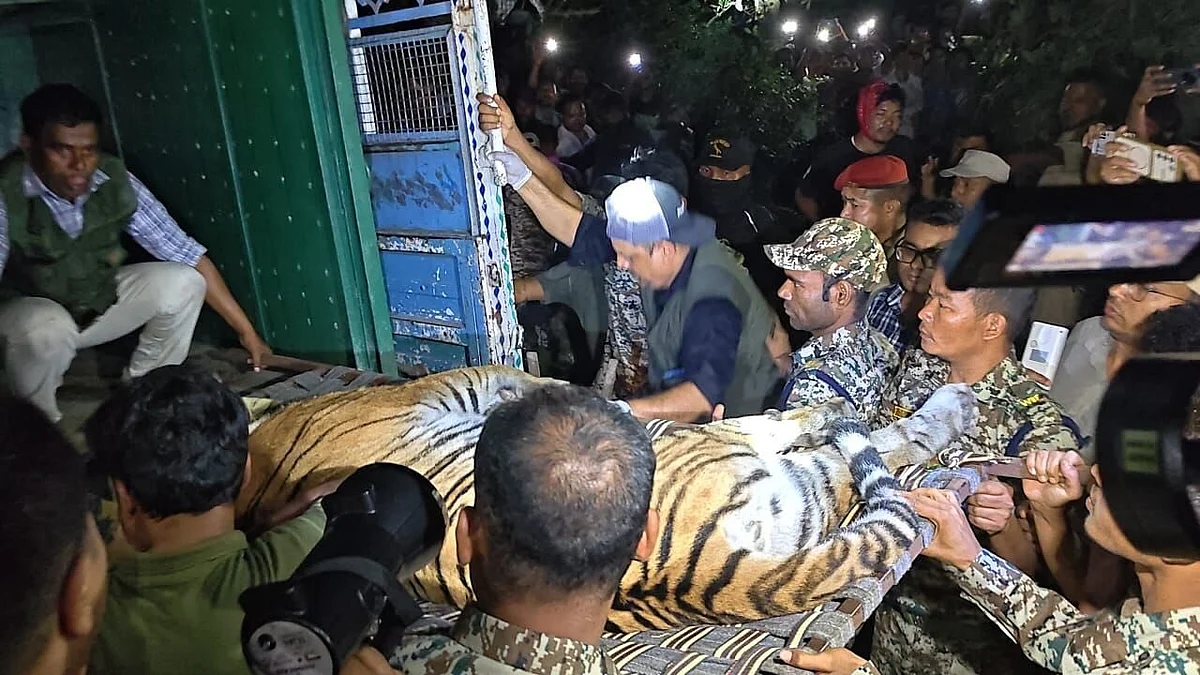


A three-year-old tigress was captured in September 2026 from Bihar and relocated to Buxa in West Bengal
The tigress, with an undetected pregnancy, escaped twice but brought back to Buxa each time
An investigation is underway to determine why tests failed to detect pregnancy, if the tigress was sedated thrice and if the sedation led to abortion of three foetuses
A pregnant tigress is believed to have paid the price for West Bengal Government’s haste to promote wildlife tourism in North Bengal and turn it into a tourist hub. A three-year-old tigress was hurriedly captured in September 2026 from Bihar’s Valmiki Tiger Reserve and brought to Buxa in West Bengal. Buxa, a tiger reserve set up in 1983, has been without a tiger though for several years. According to the 2022 all-India tiger census Buxa was among five reserves including Dampa (Mizoram), Kamlang (Arunachal Pradesh), Kawal (Telangana), Satkosia (Odisha) and Sahyadri (Maharashtra), which officially recorded zero wild tigers.
National Tiger Conservation Authority (NTCA) and Wildlife Institute of India are investigating into the circumstances under which the tigress—identified as T-138 and named ‘Dooars Rani’ (Queen of Dooars) lost three foetuses after she was relocated from Bihar to West Bengal. The investigation will include the repeated use of transquilisers and whether that led to the abortion, have indicated NTCA chief Sanjay Kumar and Wildlife Institute of India scientist Dr K. Ramesh.
A three-year-old tigress known as T-138 or "Dooars Rani" was relocated from Valmiki Tiger Reserve (Bihar) to Buxa Tiger Reserve (West Bengal) in September as part of a tiger reintroduction programme. She was reportedly tranquilised at least thrice, first when she was captured in Valmiki Tiger Reserve on 3 September, on 1 October when her radio collar reportedly came off and needed to be refitted and finally on 3 November when she was recaptured from Assam where she had escaped.
Conservationists point out that initial tests should have revealed her pregnancy and as a rule, pregnant wild animals are not captured and relocated. Her behaviour after relocation also suggests that the tigress was trying to return to more familiar grounds as she escaped from Buxa and strayed into Assam. She was recaptured and brought back. However, she once again escaped from an acclimatisation enclosure by digging beneath the fencing.
NDTV, citing sources, reported that the tigress aborted three foetuses, estimated to be about two months old, on the night of 7 November. The pregnancy had allegedly gone undetected during pre-translocation examinations. The Times of India also reported that the tigress suffered a miscarriage after undergoing three rounds of tranquilisation, prompting state and central investigations. Media reports have raised questions about whether the stress of capture, repeated sedation, transport and recapture contributed to the pregnancy loss.
The West Bengal Forest Minister, Manoj Kumar Oraon, stated that the state forest department had no information confirming the reported loss of foetuses and said an NTCA (National Tiger Conservation Authority) team was investigating the matter.
Conservation biologist Raghunandan Singh Chundawat questioned the selection and relocation process, and said, “It must be established how the tigress was selected and whether the team knew she was pregnant.” Retired forest officer R. Sreenivasa Murthy was equally critical of the decision. “There have already been three reported tranquillisations. The release should have been deferred.” Wildlife expert Joydeep Kundu also questioned the decision to tranquilise her again in Assam rather than allowing her to disperse naturally.
Alipurduar District Congress president Mrinmoy Sarkar demanded the forest minister's resignation over failures in monitoring, enclosure security and radio-collar surveillance. The controversy has also raised questions about the substantial public expenditure involved in the relocation project and whether political pressure to demonstrate conservation success overshadowed scientific concerns and caution.
Why was bringing her back deemed essential and urgent? Officials argued that she was selected to establish revive Buxa's depleted tiger population. Her return from Assam was justified on the grounds of territorial management, public safety and the need to retain the relocated animal within West Bengal.
Wild animals and in this case a tigress, point out retired forest officials, have no understanding of state boundaries. Valmiki field director Gaurav Ojha observed, “The tigress was relocated to Buxa, but she has no concept of political boundaries—whether it is Buxa, Bhutan, or Assam.” Did administrative and political considerations influence the captivity and were conservationists consulted, wonder wild life enthusiasts. “The lapses are difficult to ignore: inadequate assessment of possible pregnancy, insufficient attention to transit injuries, repeated tranquilisation, questionable enclosure security and failures in monitoring,” conceded a forest department official but added that the inquiry report would hopefully throw more light.
The NTCA investigation, he added, must establish who authorised each intervention, what kind of veterinary assessments were conducted and whether established protocols were followed. It is important to fix accountability, he stressed.
Join our official telegram channel (@nationalherald) and stay updated with the latest headlines