


World takes note of Delhi protests, and the crackdown on dissent
International outlets focus on mass detentions, restrictions in Delhi, concerns over electoral rights and democratic accountability
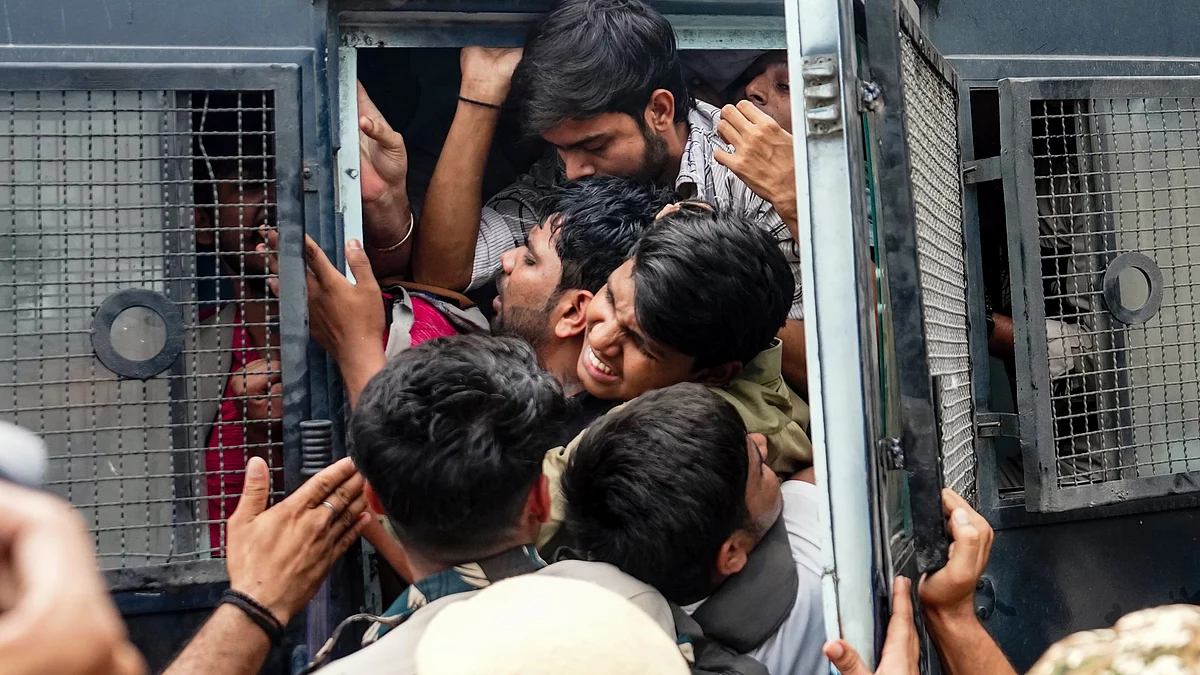


International media report mass detentions, transport restrictions and a security crackdown during Delhi protest.
Coverage links CJP demonstration to voter-roll revisions, electoral rights and confidence in democratic institutions.
Reuters’ account reaches wide international audience through syndication as several outlets examine broader civil liberties concerns.
International media coverage has been extensive for the protests in New Delhi on Saturday, 10 October, spearheaded by Left parties and their student bodies in response to a call by the Cockroach Janta Party (CJP). The protest, which fell on a weekend, nonetheless attracted reports and commentaries from major global outlets, with more coverage likely to follow later this week.
The Guardian (UK) published a prominently displayed report under the headline ‘Cockroach leader among thousands detained in Delhi protest crackdown'. The newspaper highlighted the government’s crackdown on dissent, describing Delhi as being under ‘severe lockdown’. It reported on mass detentions, road barricades and transport restrictions, while also examining the assault on civil liberties, democratic accountability and the crisis of confidence in the Election Commission of India.
The Straits Times (Singapore) carried a report under the headline ‘India detains thousands, locks down Delhi to foil election chief protest’. Largely following a Reuters-based account, the newspaper focused on the security operation and the political dispute over voter-list revisions. It highlighted the detention of more than 2,000 protesters, the shutdown of Metro stations and mobile internet restrictions. It also reported criticism from the UN human rights body and India’s rebuttal that such comments amounted to interference in its internal affairs. On Sunday, it followed up with another report under the headline ‘Indian capital braces for second day of protests against poll chief’.
Also Read: The jackboot has replaced the ballot box
Much of international media appeared to rely on a Reuters report headlined ‘India detains thousands, locks down Delhi to foil election chief protest’. The report was syndicated by numerous international outlets and platforms, including The Straits Times, The Jakarta Post, The Kathmandu Post, US News & World Report and CNBC.
The Wall Street Journal was among the few US newspapers to give prominent coverage to the New Delhi protests on Saturday. Its report was headlined ‘India Locks Down Heart of Capital to Thwart Voter Rights Protest’. The subheading linked the electoral controversy to wider economic discontent: 'The anger over the voting lists has melded with grievances from young Indians struggling to find work.' The newspaper framed the controversy as a challenge to public confidence in India’s electoral system.
Le Monde (France) published a report under the headline ‘En Inde, “sentiment de panique” à New Delhi, où le nettoyage des listes électorales menace de radier la moitié des votants’ (‘In India, a “sense of panic” in New Delhi, where the cleaning of electoral rolls threatens to strike off half the voters’).
The French newspaper focused less on the street protests than on the underlying voter-roll revision that triggered them. Its report highlighted fears among poor residents and Muslims that they could lose not only their voting rights but also access to state benefits, and could even face questions about their citizenship status. The newspaper described a widespread ‘sense of panic’ and portrayed the revision exercise as disproportionately affecting marginalised groups.
Deutsche Welle (DW), Germany’s international broadcaster, carried a video report under the headline ‘Voter purge fuels anger in the world’s largest democracy’. Its coverage centred on the clash between protesters who claim millions are being wrongly removed from electoral rolls and authorities who insist they are cleaning up voter lists.
DW framed the story as a debate over voting rights and confidence in democratic institutions. Its use of the phrase ‘voter purge’, alongside the reference to anger in the world’s largest democracy, placed the controversy within a broader discussion of democratic accountability rather than day-to-day Indian politics.
The Associated Press (AP) reported on what it described as a ‘sweeping security crackdown’. It covered protesters being intercepted en route to Jantar Mantar, people being chased and dragged away to detention centres, and checkpoints set up along routes into Delhi. AP noted that the response reflected official concern over a growing protest movement attracting support from young people and opposition parties.
Al Jazeera reported that the protest had been ‘quashed’ by police action. It covered the lockdown in Delhi, train cancellations, Metro station closures and the suspension of mobile internet services. It also reported that protest leaders were detained after being taken off an aircraft upon landing in New Delhi. Its live coverage highlighted criticism from civil liberties groups and press freedom organisations over the detention of journalists covering the protests.
CNN focused on the detention of CJP founders Abhijeet Dipke, Ashutosh Ranka and Saurav Das after police boarded his aircraft. It reported that Delhi had effectively become a ‘fortress’, with mobile internet blocked and protesters detained before they could reach the venue. CNN noted that the police action appeared designed to prevent a repeat of earlier large-scale, youth-led demonstrations.
Several other international outlets, including The Jerusalem Post, Emirates 24/7 and The Times of Israel, republished or carried summaries of the Reuters report.
Join our official telegram channel (@nationalherald) and stay updated with the latest headlines