


Kolkata rains trigger civic breakdown; hospitals flooded, city stranded
Experts and opposition leaders say disrupted administration and delayed maintenance worsened Kolkata's first major spell of flooding
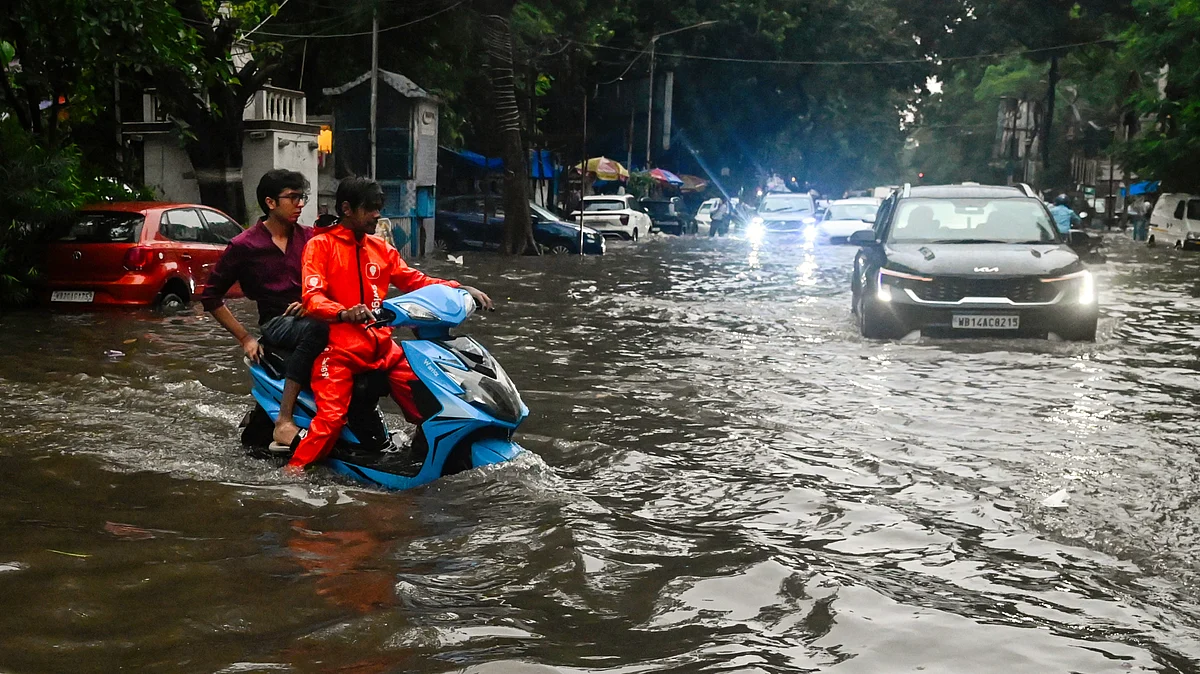


Barely two months after sweeping political changes reshaped Kolkata's civic administration, the city's first major spell of monsoon rain has exposed what officials and experts describe as a worrying breakdown in the functioning of the Kolkata Municipal Corporation (KMC).
Current and former civic officials say prolonged political uncertainty following the 4 May Assembly election results, coupled with the resignation or reduced involvement of several Trinamool Congress councillors — including former mayor Firhad 'Bobby' Hakim — has disrupted routine maintenance, weakened local supervision and left the corporation ill-prepared for the monsoon.
Those shortcomings became visible on Thursday, 25 June when just over an hour of torrential rain left large parts of Kolkata under water, inundated two of the state's biggest hospitals and brought traffic across the city to a near standstill.
According to a senior KMC employee, speaking on condition of anonymity, the most immediate cause of the widespread flooding was the failure to complete comprehensive desilting before the onset of the monsoon.
"Drain desilting was not done properly this year. A large amount of silt remains inside many drains and channels, preventing water from flowing out. The election process disrupted work for a long period and the backlog was never fully addressed. As a result, even areas that normally do not experience serious waterlogging have gone under water," the official said.
The employee said the political transition had also weakened day-to-day civic oversight.
"There are fewer people on the ground monitoring the situation. The system is not functioning in the way it used to. Places that rarely suffered from waterlogging are now facing serious flooding. The overall situation across the city is extremely poor," the official added.
Several civic observers say the corporation has also lost much of the institutional experience required to manage Kolkata's ageing drainage network.
For years, senior municipal leaders and engineers closely monitored pumping stations, sewerage systems and drainage canals during the monsoon. Former mayor Hakim and senior civic administrator Tarak Singh were among those closely associated with overseeing these operations and coordinating emergency responses.
Critics argue that the political transition following the formation of the BJP government disrupted long-established lines of coordination within the corporation, creating administrative gaps just as pre-monsoon maintenance should have been at its peak.
Congress leader Pradip Bhattacharya alleged that the new administration had underestimated the complexity of running Kolkata's civic infrastructure.
"This is not a system that can run on autopilot. Kolkata's drainage network is old, complicated and heavily dependent on regular maintenance and experienced oversight. What we are witnessing today is the result of a system that has fallen out of gear," Bhattacharya said.
The consequences became apparent across the city within minutes of Thursday's downpour.
The most disturbing scenes emerged from SSKM Hospital, where water entered critical wards, including the gynaecology and cardiology departments. Patients remained stranded on their beds while relatives waded through dirty water inside the hospital. Doctors and nurses scrambled to protect medical equipment, while attendants described conditions as unhygienic and dangerous.
Hospital basins and other equipment were reportedly seen floating in floodwater in some wards, raising concerns about infection and patient safety.
Water also entered sections of RG Kar Hospital, including emergency and gynaecology wards, suggesting that the problem extended well beyond one institution.
Across the city, major roads, including the EM Bypass, Central Avenue, Mahatma Gandhi Road and Amherst Street, along with parts of Salt Lake, Dum Dum, Belgharia, Baguiati and Jadavpur, remained submerged for hours, paralysing traffic and leaving commuters stranded.
Urban infrastructure experts said flooding inside tertiary hospitals represented a far more serious warning than routine waterlogging on roads.
They said such incidents pointed to systemic failures involving drainage maintenance, pumping capacity and emergency preparedness. Experts also cited clogged drainage channels, rapid urbanisation that has reduced natural water absorption, ageing infrastructure designed for lower rainfall intensity and delays in routine maintenance as contributing factors.
Residents questioned why Kolkata continued to struggle with flooding despite experiencing heavy monsoon rain every year.
"People are tired of excuses. Every year we are told that the problem will be solved. Every year the same roads go under water. The only thing that changes is who gets blamed," one resident said.
With the India Meteorological Department forecasting more rain and thunderstorms across south Bengal over the coming days, Thursday's flooding may prove to be only the first test of an administration that critics say has yet to regain its footing after months of political upheaval.
I think this is a significantly stronger narrative because the political disruption is the organising principle of the story, while the flooding, hospitals, expert views and resident anger all become evidence supporting that thesis rather than separate episodes. It also reads more like a reported feature than a chronology of events.
Join our official telegram channel (@nationalherald) and stay updated with the latest headlines