


Legal ambiguities, heritage concerns clash in Delhi’s demolition drive
The demolitions near Turkman Gate mosque highlight the complex tensions between the municipal authority, waqf property laws and efforts to preserve religious heritage amid rapid urban development
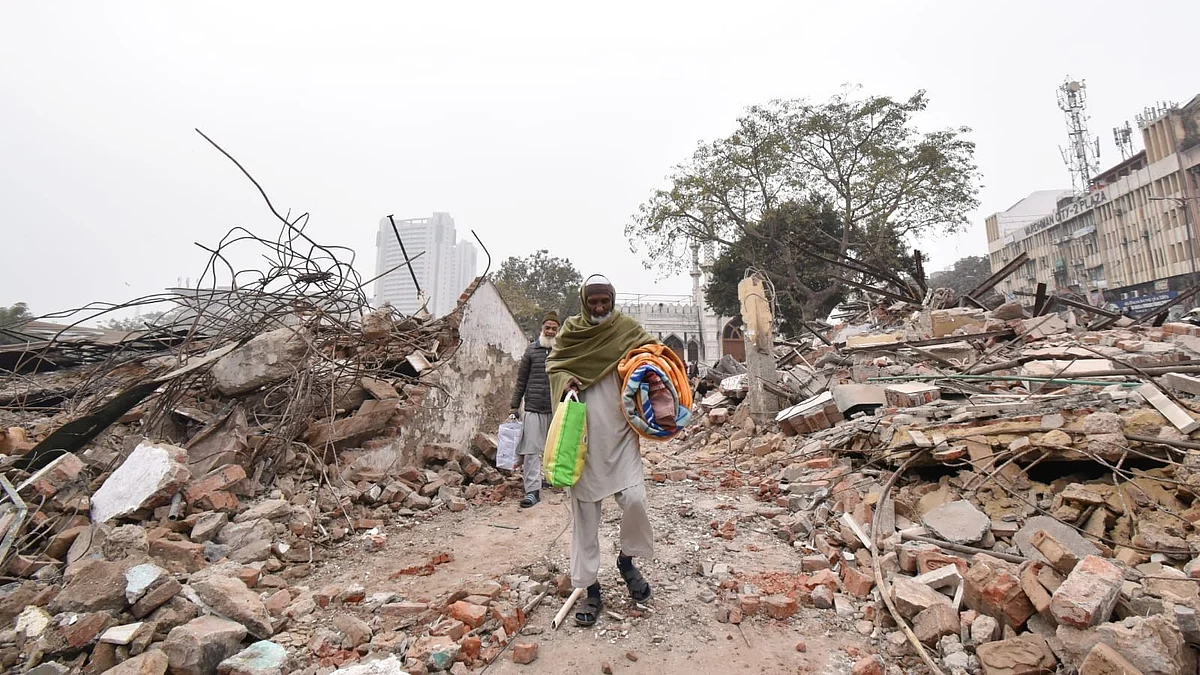


Largescale demolitions on the intervening night of 6 and 7 January targeting structures deemed illegal encroachments around Faiz-e-Elahi mosque located in Turkman Gate, Delhi has come a day after Justice Amit Bansal of the Delhi High Court heard a petition filed by the mosque’s managing committee challenging an earlier order from the Municipal Corporation of Delhi (MCD).
The MCD had issued an order on 22 December 2025, declaring all structures beyond the mosque’s officially leased land area of 0.195 acres as unauthorized encroachments. These structures were deemed illegal due to a lack of valid ownership documents and were declared liable for demolition. The mosque’s managing committee contested this order, asserting that the land in question is notified as waqf property under Muslim charitable endowments law. They argued that disputes relating to waqf land fall exclusively under the jurisdiction of the Waqf Tribunal, and not municipal authorities.
In response to the petition, Justice Amit Bansal on 6 January took cognizance of the issue and issued notices to multiple authorities including the Municipal Corporation of Delhi (MCD), Delhi Development Authority, Land and Development Office (L&DO), Public Works Department (PWD), Ministry of Urban Development and the Delhi Waqf Board
All respondents were directed to submit their written replies within four weeks. While the court acknowledged that the matter requires careful consideration, it did not grant an interim stay or status quo order preventing the demolitions. The next hearing is scheduled for 22 April.
This demolition drive is part of a wider push by Delhi authorities to clear unauthorised encroachments in the city, particularly around sensitive and historic locations such as Turkman Gate and the Ramlila Ground area. These efforts gained momentum following a 12 November 2025, order by a division bench of the Delhi High Court, headed by Chief Justice D.K. Upadhyay and Justice Tushar Rao Gedela, which instructed the removal of encroachments to ensure urban development and public safety.
Also Read: ‘No one bats an eye’
The demolitions have affected both religious and non-religious structures, triggering debates on the balance between heritage conservation, religious rights and urban governance. Media reports quoted officials emphasizing that every step was carried out in strict compliance with judicial directives and with sensitivity to public sentiment to prevent disturbances.
Beyond Wednesday’s demolitions, the case highlights ongoing challenges in Delhi concerning land ownership disputes, particularly involving waqf properties, which are governed by a distinct legal framework. It also underscores tensions between urban development priorities and the protection of religious and heritage sites.
Join our official telegram channel (@nationalherald) and stay updated with the latest headlines