


Maharashtra drought: Crop surveys begin in 265 talukas as super El Nino looms large
Fadnavis says state must prepare for possible El Niño intensification as government assesses crop losses and plans relief
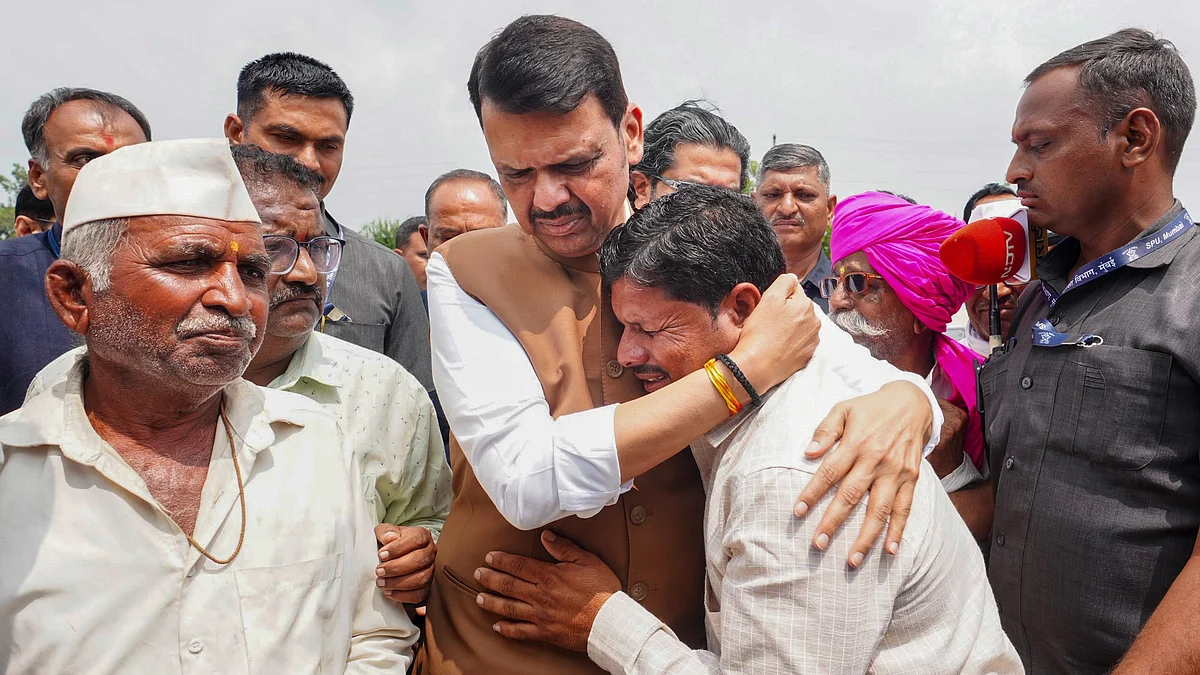


Maharashtra has begun preparing crop inspection reports after declaring 265 of 358 talukas drought-affected
Chief minister Devendra Fadnavis said affected farmers will receive appropriate assistance after the assessments
Fadnavis warned the state should prepare for worsening conditions if El Niño intensifies, with the pattern expected to peak in February
The Maharashtra government has begun preparing crop inspection reports after declaring 265 of the state’s 358 talukas drought-affected, chief minister Devendra Fadnavis said on Sunday, adding that affected farmers would receive appropriate assistance after the assessments.
The state government on Saturday declared drought in 265 talukas, or about 74 per cent of the state, citing rainfall deficit. It announced relief measures including crop loan restructuring, land revenue concessions and power bill subsidies.
Fadnavis said the government had begun the process of preparing crop inspection reports and was working to complete the procedures required before financial assistance is released.
“The assistance will be provided to the affected talukas. Twelve emergency measures have been approved, and at the first trigger we already issued orders for their implementation,” he said.
The chief minister said the government had received some complaints about talukas being left out of the drought assessment, but described their number as small. He said crop losses would also be assessed in those areas.
Fadnavis said farmers affected by crop losses would be covered under “Trigger Three”, adding that no affected farmer would be left out.
On water management, he said each district should prepare its own water plan based on available stocks.
Water could be reserved to meet requirements through July and August 2027, while surplus supplies could be diverted for other uses, including Rabi crops or industry.
He said several large reservoirs currently had abundant water and were full, but stressed that decisions on allocation should be based on water availability in individual districts and talukas rather than through a uniform policy.
Fadnavis also raised concerns about the possibility of worsening weather conditions linked to El Niño. He said the weather pattern was expected to peak in February before weakening as the Pacific Ocean cools.
“Considering these possibilities, we should prepare in every way and be ready to face issues if the El Niño effect intensifies,” he said.
The drought declaration follows a period of rainfall deficit across parts of Maharashtra and comes with the state government preparing relief measures while monitoring water availability ahead of the coming agricultural seasons.
What is a ‘Super El Niño’ and why does it matter for Indian agriculture?
‘Super El Niño’ is an informal term, not an officially recognised category used by the World Meteorological Organisation or the IMD (India Meteorological Department). It generally refers to an exceptionally strong El Niño, in which sea-surface temperatures in the central and eastern tropical Pacific become unusually high.
The IMD has said that El Niño conditions in 2026 strengthened from weak levels in June to moderate levels in July and could intensify further during October-December, potentially reaching the very strong category.
El Niño is the warm phase of the El Niño-Southern Oscillation (ENSO), a natural ocean-atmosphere cycle that periodically alters weather patterns around the world.
For India, its importance lies in its relationship with the southwest monsoon. In general, El Niño weakens the monsoon circulation and is associated with below-normal rainfall, although the relationship is not absolute and other factors, including the Indian Ocean Dipole, can modify its effects. IMD data shows that of the 16 El Niño years since 1950, seven were associated with below-normal Indian monsoon rainfall.
Why agriculture is vulnerable
India's agriculture remains heavily dependent on the southwest monsoon. A weaker or poorly distributed monsoon can reduce soil moisture and reservoir levels, affecting crops such as rice, pulses, soybean, cotton and maize. The timing of rainfall is also crucial: even when seasonal rainfall totals do not look catastrophic, prolonged dry spells during critical stages of crop growth can reduce yields. September rainfall is particularly important because of the historically stronger inverse relationship between El Niño and late-monsoon rainfall.
The concern is therefore not simply less rain, but greater agricultural uncertainty. A weak monsoon can affect Kharif crops directly and leave less water available for the Rabi season. Lower production can subsequently affect farm incomes, food supplies and prices.
The Usual Suspect
El Niño itself is a natural climate phenomenon, so it is important not to describe every strong El Niño as being caused by climate change. However, human-induced global warming is changing the background conditions in which El Niño occurs. Recent research published in Nature Communications found that greenhouse warming can exacerbate El Niño-associated Indian monsoon droughts, increasing risks to India's food security.
Climate change is also making India's rainfall more erratic, with longer dry periods increasingly punctuated by episodes of very heavy rain. That creates a double challenge for agriculture: farmers can face water shortages during critical crop stages while still experiencing destructive flooding when rain does arrive.
Join our official telegram channel (@nationalherald) and stay updated with the latest headlines