


Maharashtra: The return of Jarange, the coming of UCC and a ‘feku’ badgya
A round up of the week's events from a state that is both celebrating and struggling through various political mazes
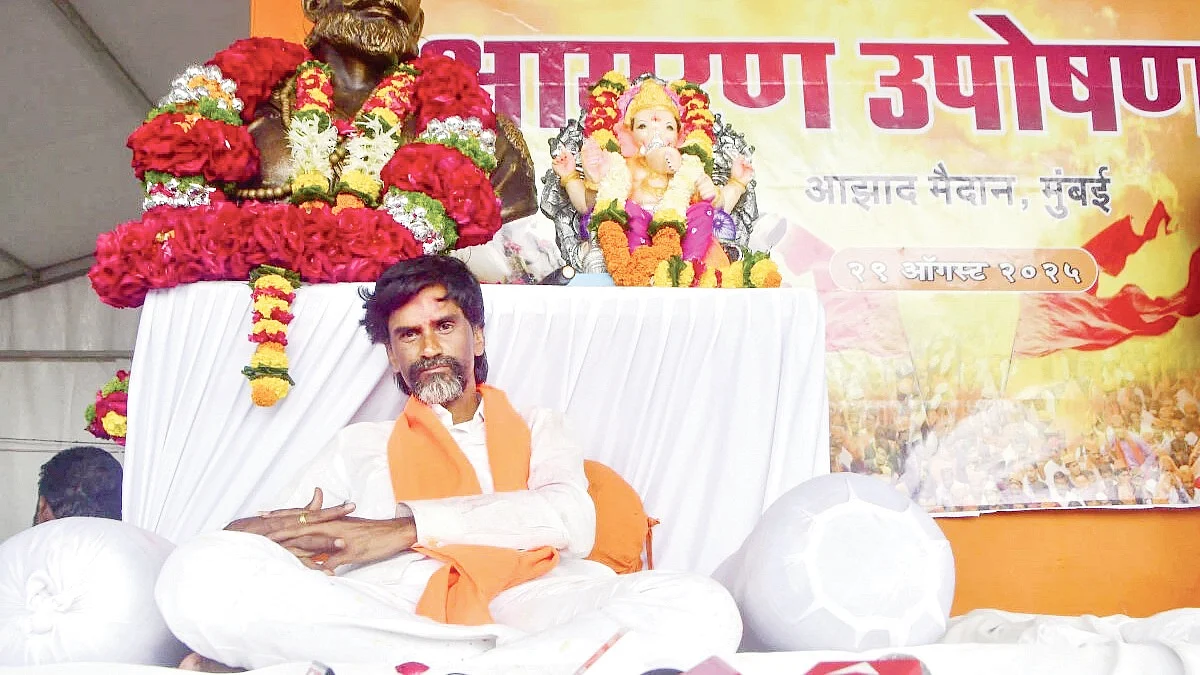


It seems the prospect of Maratha leader Manoj Jarange-Patil agitating in Mumbai during Ganeshotsav was too big a risk for the Devendra Fadnavis government.
Jarange had begun yet another Maratha-quota fast — his 12th since 2014, for a hundred-odd days cumulatively — in his native Antarwali Sarati in Jalna district of Marathwada. After two weeks in Jalna, he had embarked on a march to Mumbai, where he planned to resume his protest, smack in the middle of the festival.
The Fadnavis government was sweating over the prospect because Mumbai is anyway bursting at the seams this time of year, and law and order is a challenge because of the processions and the festivities, which often need reining in. There is also the looming spectre of heavy retreating monsoon rains. Add to this Jarange’s famed capacity to mobilise people in his state, and the cocktail was enough to give the state government the heebie-jeebies.
Late on Wednesday, 16 September, Jarange was waylaid by a state government contingent in Beed, en route to Mumbai, where he was expected on Saturday, 19 September. The government has conceded most of his demands and agreed to keep its promise in 90 days. What it’ll do once the festival ends is anybody’s guess.
Jarange’s protest this time pivots on the state government’s claim that a significant section of Marathas historically shares the same agrarian identity as the Kunbis, who are recognised as an OBC community. A government-appointed committee has reportedly identified 58 lakh historical records relating to the identity of Kunbis, including records from the Nizam-era Hyderabad Gazette in eight Marathwada districts. The government claims it has already issued 3,16,977 Kunbi certificates.
Also Read: Protest. Capitulation. Repeat
Jarange insists if the government has found the records, it must issue the certificates immediately. Therein lies the rub: a historical entry in a revenue record does not automatically convert into a caste certificate. Each claim must be verified, linked to an applicant’s family and genealogy and the administration must establish who among the 58 lakh records found are eligible people and how their eligibility transfers to descendants.
However, Jarange’s demand seems to make no room for a convoluted archival exercise — he wants entitlement as of yesterday.
Governments in Maharashtra have spent the last two decades trying to find a legally defensible route to Maratha reservation. Their Kunbi identity, if established, opens a possible route under the OBC quota. But to take that route is to invite the wrath of other OBCs, who are the BJP’s main voter base.
****
UCC coming soon
On 14 September, chief minister Devendra Fadnavis said Maharashtra intends to introduce a Uniform Civil Code Bill in Nagpur during the winter session of the state legislature, after the committee examining the issue submits its report. His statement came a day after the Union home minister said in Mumbai that 21 BJP-ruled states would have the UCC in place before the 2029 Lok Sabha election.
What’s new is the BJP taking the state route, instead of bringing in a uniform Central law, to realise a long-standing core objective of the Sangh Parivar.
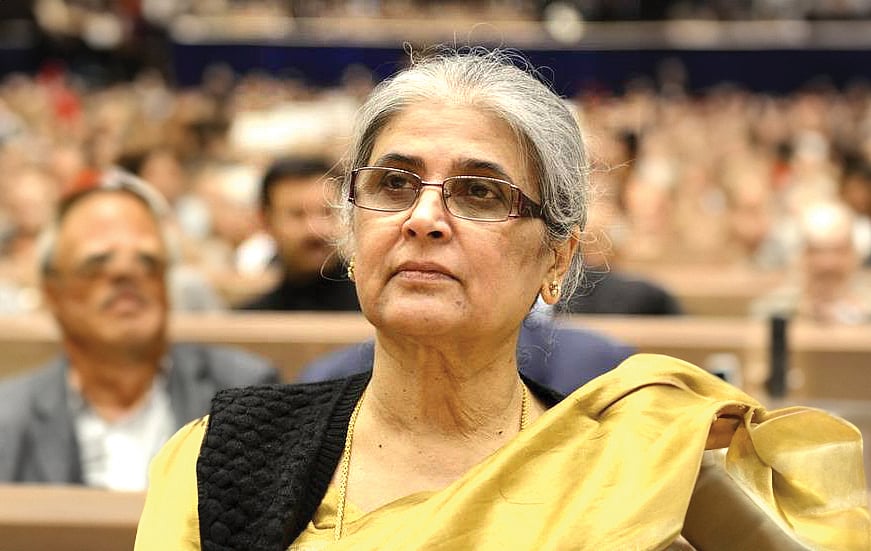
Maharashtra constituted a seven-member panel, headed by retired (Supreme Court) Justice Ranjana Desai, in July. The panel, which includes former Bombay High Court judges R.C. Chavan and S.G. Mehare, former chief secretary D.K. Jain, former advocate-general Virendra Saraf, constitutional scholar Ramesh Patange and educationist Suvarna Rawal, has six months to make its recommendations.
The 9 July resolution asks the committee to examine the constitutional, legal, social, cultural and administrative consequences of a UCC. It has to study the experience of Uttarakhand and other states, examine marriage, divorce, adoption, inheritance and succession, and recommend the legal, administrative and institutional changes required for Maharashtra. It is expected ‘to seek the views of representatives of different religions, women’s organisations, NGOs, experts and citizens’.
While the committee is rich in legal and administrative expertise, it has no representative of any minority religious community — Muslim, Christian, Sikh, Jain, Buddhist or Parsi — whose personal laws it is being asked to examine. There is no tribal representative either. In Mumbai, Shah explicitly said tribal communities will remain outside the UCC and their customs will be protected.
Uttarakhand has a UCC in force since January 2025. Gujarat and Madhya Pradesh have passed the law, but are yet to get the presidential assent. Maharashtra is the fourth state to move on it. It remains to be seen if Maharashtra will produce a state-specific code or copy-paste an existing state law.
Justice Desai was part of the Uttarakhand and Gujarat committees as well. So far, since its formation, the Maharashtra panel has had no public consultation. Dare we expect the state will make the process transparent — who is invited, what submissions are received and whether dissenting views actually influence the final recommendations?
****
The missing ‘Feku’
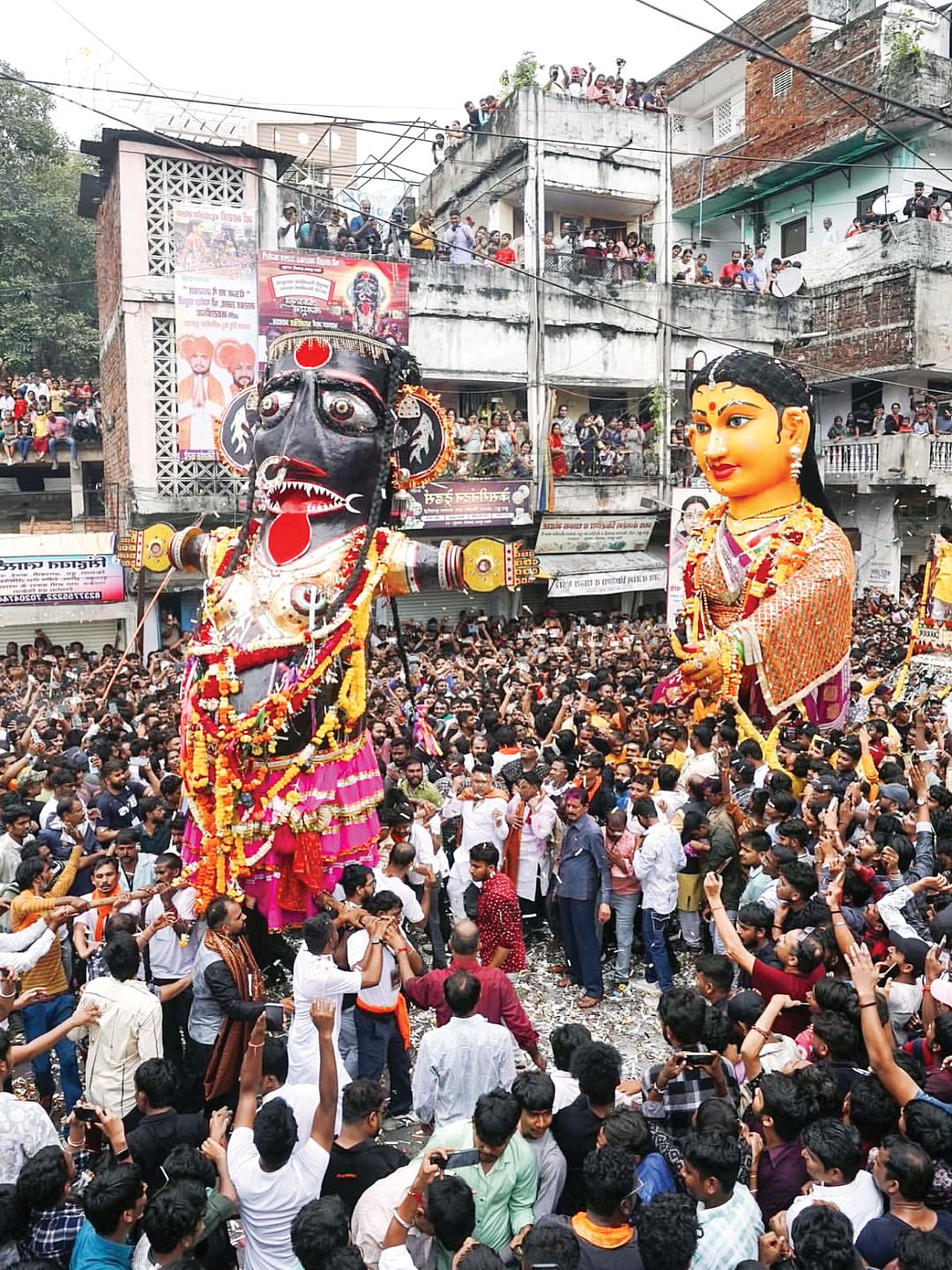
Nagpur’s Marbat festival has a 145-year-old history of speaking truth to power. It was conceived as a Raj-era form of resistance, a kind of civic safety valve where people take out a procession of ‘marbat’ (symbolising a goddess that soaks up evil) and ‘badgya’ (the shape of evil itself, typically a man), in a ritual of naming, mocking and consigning to flames the evils of their time.
If it was foreign rule back in the days of the Raj and social ills always, it is now inflation, unemployment, civic distress and political arrogance. Its power lies in its irreverence. In the lanes of the old city, amid drums, chants and crowds, no leader is above reproach and ridicule.
The festival is a barometer of the popular mood. So the reported last-minute disappearance of a ‘Feku’ badgya and the BJP-ruled Nagpur Municipal Corporation’s Rs 2 crore attempt to recast the festival as a global cultural showcase is being seen as an attempt to desecrate its soul. Political patronage for a folk festival that traditionally challenged power is a mockery of its core idea.
While other badgyas attacked unemployment, paper leaks, smart meters, drugs and civic problems, a ‘Feku’ badgya — an obvious reference to you know who — was dropped at the last moment under pressure from local BJP leaders, and replaced by one targeting Pakistan prime minister Shehbaz Sharif.
****
The Bapat effect
Tens of Ganesha Mandals across Maharashtra have voluntarily given up DJs and high-decibel sound systems as the ten-day celebrations got off to a colourful start on 14 September.
Nagpur’s other unique symbol of resistance — the radical Chandrashekhar Azad Ganesh Mandal, set up seven decades ago by the late freedom fighter Gulab Puri and now headed by his son Chandrashekhar Puri — made up for the Marbat miss.
Austere in form and sharp in tone, this year’s Ganesha pandal decoration is on the Jantar Mantar protests, the sugar price spike and the ethanol controversy, inflation and unemployment, privatisation of education and other such concerns that big media has no bandwidth for. It does not spare the prime minister either. Ganesha-bhakts are loving it.
Jaideep Hardikar is a senior Nagpur-based journalist and author of Ramrao: The Story of India’s Farm Crisis. More by him here
Join our official telegram channel (@nationalherald) and stay updated with the latest headlines