


Jumping through hoops for debt relief
Jaideep Hardikar on yet another farm loan waiver scheme in Maharashtra that promises more than it can deliver
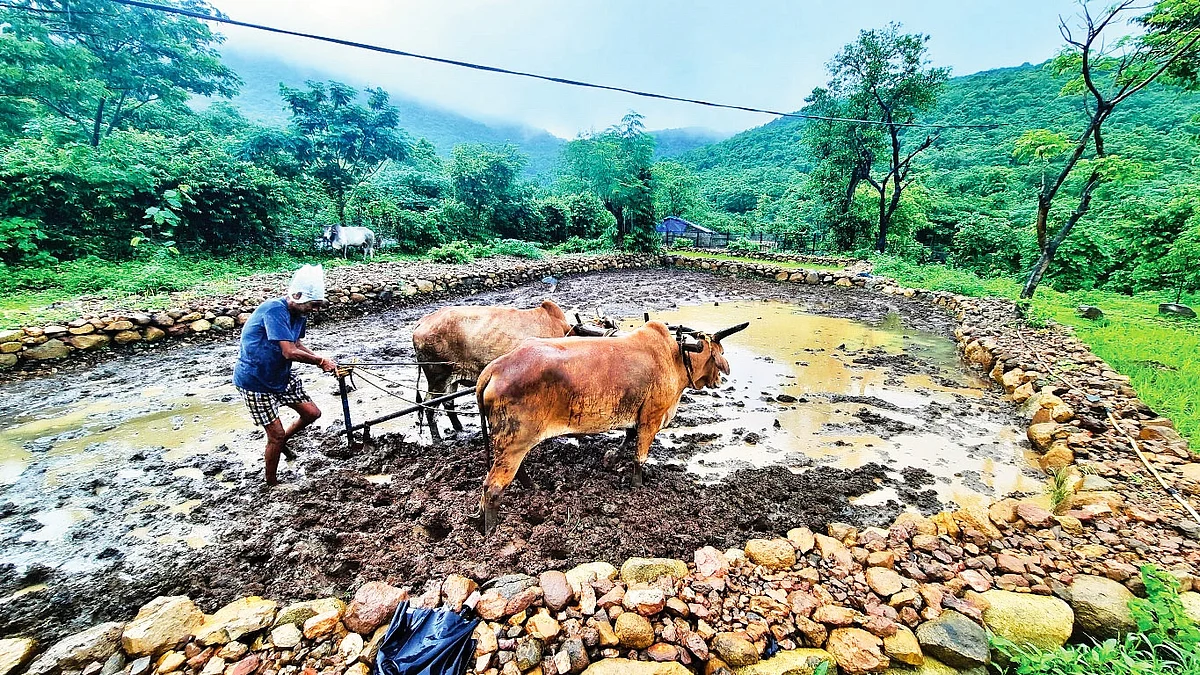


The farmer in Maharashtra has seen this before. The state government announces a farm loan waiver scheme and trumpets it as big relief. Then come the confusing terms and conditions. And then the digital rollout beyond his comprehension. It’s no different this time.
The eligibility criteria of the ‘Punyashlok Ahilyadevi Holkar Shetkari Karjmukti Yojana’, announced with much fanfare earlier this month by Maharashtra chief minister Devendra Fadnavis, has left farmers befuddled. It has come after much delay, imperilling their chances of getting fresh crop loans from banks even as sowing operations commence for the kharif season.
Farmer organisations are up in arms against the scheme, which they say is more a stunt, and the government has now set up a sub-committee to rework conditions, further delaying its rollout. Maharashtra’s latest ‘Karjmukti Yojana’ is the handiwork of a committee constituted in November 2025 to recommend how farmers could be rid of their outstanding loans.
This is Maharashtra’s fourth farm loan waiver since 2017 — in itself an admission that despite three previous efforts, the state’s farmers have been unable to escape the debt trap. “This waiver is more propaganda than anything else,” veteran farmer leader Vijay Jawandhia told National Herald. The real issue is their paltry and sagging income, despite prime minister Narendra Modi’s grandstanding about doubling farm incomes.
“Unless the Centre implements its promise to increase minimum support prices, the endless cycle of debt won’t end,” Jawandhia says. When fuel and fertiliser prices are skyrocketing and the price of farm produce stagnating, how will the farmer survive, he asks.
The immediate worry is: will farmers with unpaid loans get fresh crop loans if the scheme is delayed? If they are denied bank loans, more likely than not, their only recourse will be private lenders, who will charge usurious rates of interest.
“Banks still don’t have clarity about the rules, because there are myriad eligibility conditions,” says Nitin Khadse, a cotton farmer in Jalka, Yavatmal. “Our worry is that unless old loans are settled, we won’t get new loans for the coming season.”
****
The latest Karjmukti Yojana provides for a waiver of up to Rs 2 lakh per farmer for short-term crop loans. To qualify, the loan must have been disbursed between 1 April 2019 and 31 March 2025, remained overdue on 30 September 2025, and not have been repaid by 31 March 2026.
The waiver applies to the combined outstanding amount of principal and interest, irrespective of the farmer’s landholding. The government has also included restructured and re-restructured crop loans that were converted into medium-term loans, acknowledging that many farmers had already undergone debt restructuring before slipping back into default.
The most contentious provision concerns farmers who had already benefited under the ‘Mahatma Jyotirao Phule Shetkari Karjmukti Yojana’ of 2019, and who may not receive the full benefit this time. As per the government resolution, such farmers will not receive another waiver of up to Rs 2 lakh. They are eligible for relief of only up to Rs 50,000.
The government is apparently concerned about granting repeated waivers to the same borrowers, but it has caused great resentment in rainfed regions like Vidarbha and Marathwada, where repeated crop failures due to climate factors, pest attacks, lack of irrigation and the double whammy of declining incomes and much higher input costs have pushed farmers back into debt despite earlier relief.
The scheme contains another important limitation. Farmers whose overdue loans exceed Rs 2 lakh will not automatically receive the full benefit. They must first pay the amount due above Rs 2 lakh from their own resources to qualify for a one-time-settlement (OTS) benefit, with the government bearing the burden of Rs 2 lakh. The same principle applies to those eligible for the Rs 50,000 concession: they must first clear dues in excess of that amount before receiving government assistance.
The deadline for such settlements is 31 March 2027, as per current terms.
In other words, the scheme will not bring relief to the most indebted farmers. A cultivator who owes, say, Rs 3 to 4 lakh must find other means to repay a big chunk before qualifying for relief. Most will fail to do that, and hence will become ineligible for relief under the new scheme.
The OTS is a bizarre idea. Kerala did this far more efficiently in the 2007-10 period. It set up a farmers’ commission to negotiate case-to-case settlements with banks for far lower amounts, the way red-flagged corporate accounts do. Maharashtra has not done this.
Meanwhile, amid concerns over the state’s growing fiscal deficit, with its debt crossing Rs 11 lakh crore, the state government on 22 June sought the legislature’s nod for supplementary demands of Rs 97,706 crore. This, on the first day of the monsoon session, within months of tabling the budget. Fadnavis, who also holds the finance portfolio since the death of Ajit Pawar, told the House that Rs 20,552 crore out of the supplementary demands would be allocated to the farm loan waiver scheme.
The government estimates that the scheme will benefit 56 lakh farmers at a cost of Rs 36,000 crore. As stated above, this is not a farm loan waiver as much as a conditional debt-relief programme with various strings attached.
An incentive structure has been built in to reward ‘honest borrowers’ as opposed to ‘habitual defaulters’: those who repaid their loans in at least two of the agricultural years between 2022-23 and 2024-25 will receive an incentive of up to Rs 50,000. Small borrowers, whose loans were less than Rs 50,000, are assured a minimum incentive of Rs 5,000.
The scheme covers loans from private banks, nationalised banks, regional rural banks, district central cooperative banks and certain other cooperative credit institutions. But access to benefits is also tied to a new layer of digital verification. Apart from mandatory Aadhaar authentication, registration on the ‘Agri Stack’ farmer database is also mandatory. The scheme is to be implemented digitally, which is another reason farmers fear exclusion, their wariness stemming from experience.
The debt waiver programmes of 2017, 2019 and 2022 ran into problems due to digital verification processes. Quietly hidden within the government resolution is a proposal to build a ‘Sahakar Stack’ or Cooperative Stack. The stated objective is to integrate farmer records, credit histories and cooperative institutions in a common digital framework.
The longer-term ambition appears to be the creation of a database for agricultural credit and cooperative governance in Maharashtra. But this is rich coming from a government that doled out the Ladki Bahin Yojana — promising unconditional, monthly financial aid of Rs 2,000 to women ahead of the 2024 Assembly elections, only to restructure the scheme later to eliminate over one crore beneficiaries.
Jaideep Hardikar is a senior Nagpur-based journalist and author of Ramrao: The Story of India’s Farm Crisis. Read more by him here
Join our official telegram channel (@nationalherald) and stay updated with the latest headlines