


NCERT book row: SC thanks media for bringing issue into public domain
Calling the press a vital pillar of democracy, the bench acknowledged its role in safeguarding constitutional values
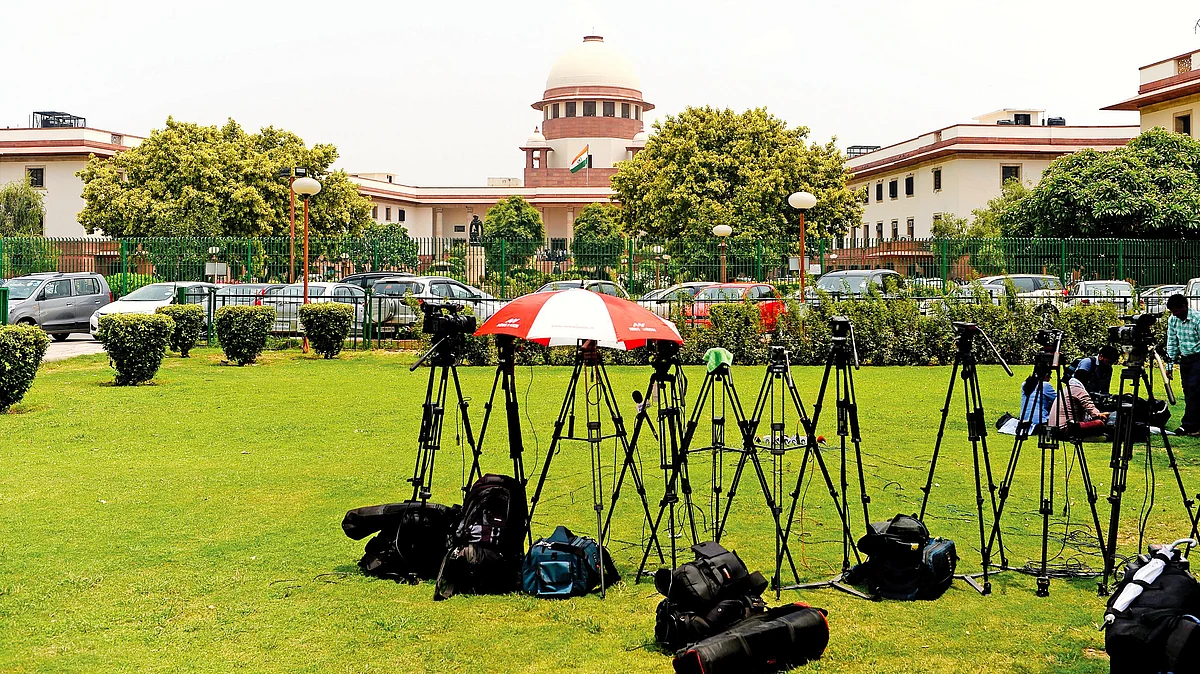


The Supreme Court on Thursday imposed a sweeping ban on the publication, reprinting and digital circulation of an NCERT (National Council of Educational Research and Training) Class 8 social science textbook containing what it described as “offending” material on corruption in the judiciary — even as it thanked the media for bringing the issue to light.
A bench comprising Chief Justice of India Surya Kant and Justices Joymalya Bagchi and Vipul M. Pancholi said timely reporting had prevented what could have become irreversible damage.
“It is the responsible media that brought the matter into the public domain… Otherwise, the damage would have been completely irreversible,” the CJI observed during the hearing of the suo motu case.
The remarks came after a suggestion from one of the advocates that media outlets should be restrained from publishing extracts of the controversial content. Solicitor-general Tushar Mehta also told the court that mainstream media had acted responsibly, distinguishing it from tabloids.
Calling the press a vital pillar of democracy, the bench acknowledged its role in safeguarding constitutional values.
At the centre of the controversy is the Class 8 social science textbook Exploring Society: India and Beyond (Part 2), released by NCERT. The court said it was “nearly shocked” when a leading English daily reported on 24 February about the inclusion of content referencing corruption within the judiciary.
The bench expressed concern that the chapter appeared to cite complaints against judges and selectively referenced remarks by former CJI B.R. Gavai to suggest a lack of transparency and accountability — without providing adequate context.
According to the court, such material risked undermining the institutional standing of the judiciary when introduced at a foundational stage of education.
“The inclusion of this subject matter within a foundational curriculum… warrants a rigorous review of its pedagogical suitability and its potential impact,” the bench said.
It added that the publication appeared to dedicate an entire chapter to the judiciary’s role while overlooking its constitutional functions, including upholding constitutional morality and the basic structure doctrine.
The court warned that exposing young students to what it termed a “biased narrative” could create lasting misconceptions at a formative age. Embedding such material in a nationwide curriculum, the bench said, could erode public trust — not just among students, but also teachers, parents and society at large.
Taking note of NCERT’s subsequent press release, the court said it would later assess whether any apology was genuine or merely an attempt to avoid consequences. In the interim, it issued strict directions:
All physical and digital copies of the book must be seized and withdrawn
The Centre must ensure its immediate removal from circulation
No further teaching may take place using the material
The court made it the personal responsibility of the NCERT director and school principals where the book has been distributed to ensure its immediate sealing and removal. They have also been directed to file compliance reports.
Additionally, the NCERT director has been asked to submit details of the National Syllabus and Teaching Learning Material Committee members who approved the chapter. The matter will next be heard on 11 March.
With PTI inputs
Join our official telegram channel (@nationalherald) and stay updated with the latest headlines