


NEET-UG protests: SC retains panel probing pellet guns, violence and harassment of women
Court rejects conflict-of-interest concerns and orders a confidential portal for vulnerable witnesses to submit evidence
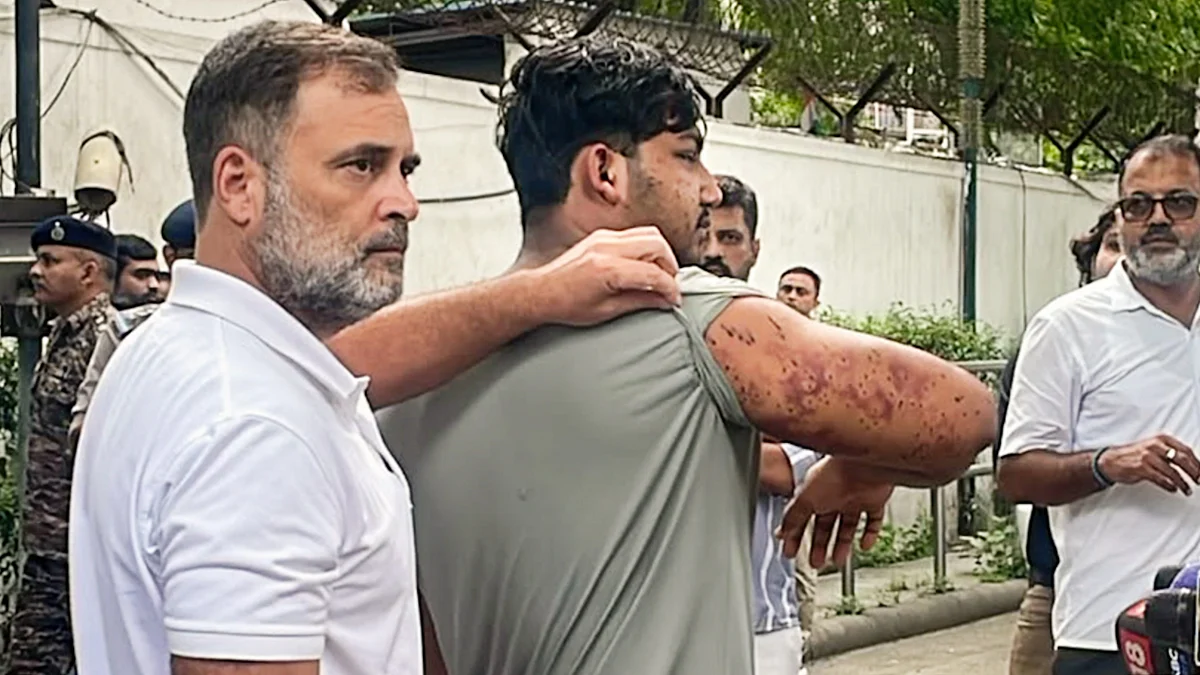


The Supreme Court has refused to reconstitute the High-Powered Enquiry Committee (HPEC) investigating allegations of pellet-gun use, targeted violence, harassment of female protesters and destruction of property during the 20th of July protests over the NEET-UG paper leak.
A three-judge Bench headed by Chief Justice of India Surya Kant expressed “disquiet” over aspersions cast on the committee before it had begun its work, describing the petitioners’ objections as premature and based on conjecture.
The court constituted the HPEC on 20th August to examine the police crackdown on Cockroach Janta Party protests and other incidents reported during the nationwide agitation.
The committee’s immediate inquiry will cover allegations that police used pellet guns and excessive force against students, female protesters were subjected to targeted harassment and violence, and both protesters and the authorities were responsible for violent acts and damage to property.
Headed by former Supreme Court judge Justice R. Subhash Reddy, the committee also includes former Punjab and Haryana High Court Chief Justice Ravi Shankar Jha, former Delhi High Court judge Justice Shalinder Kaur, former Central Bureau of Investigation Director Rishi Kumar Shukla and retired Meghalaya Director General of Police L.R. Bishnoi.
The petitioners, represented by senior advocates N. Hariharan and Gopal Sankaranarayanan and advocates Prashant Bhushan, Vrinda Grover and Neha Rathi, maintained that they were not alleging bias. They argued, however, that the panel’s composition should inspire confidence among the protesters and other stakeholders.
The Bench rejected the request, observing that doubts had been raised about the committee before it had commenced its inquiry. In its 10th September order, published on Wednesday, the court said there was no basis for changing the panel merely on the strength of preconceived assumptions.
The judges stressed that the HPEC had been created to assist the Supreme Court and was expected to follow the highest standards of fairness, transparency and impartiality. It was not constituted to advance the case of either side, the court said.
The Bench also directed the creation of a separate online portal through which vulnerable witnesses can confidentially submit statements, documents and other evidence to the committee.
It ordered the HPEC to protect the identity and participation of such witnesses, recognising that some of them could be reluctant to testify openly because of safety concerns or fear of reprisals.
Senior advocate Monika Gusain and advocate-on-record C. Solomon were appointed amici curiae to assist the Supreme Court and act as independent intermediaries among the parties.
The court said wider constitutional questions would be considered at a later stage. These include allegations that police used facial-recognition technology to monitor people at the Jantar Mantar protest site and that the collected data was stored with private entities.
With PTI inputs
Join our official telegram channel (@nationalherald) and stay updated with the latest headlines