


Noida police ‘criminalising trade union activity’, says IFTU; calls it an attack on constitutional rights
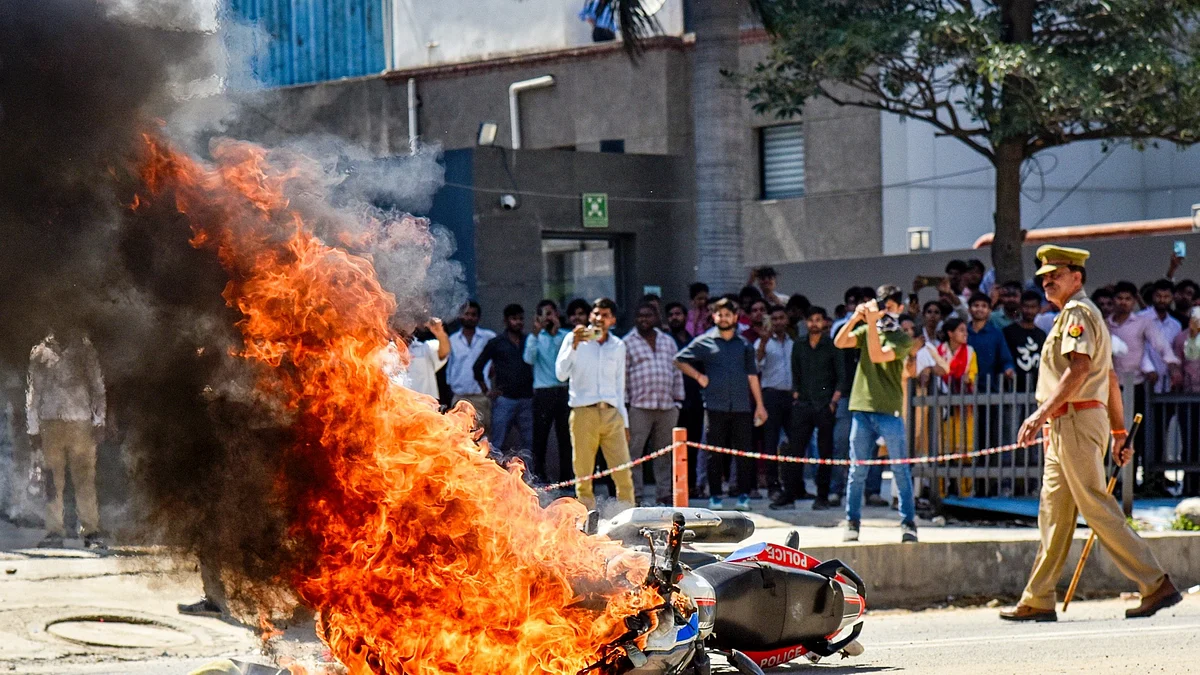
The 13 April protests in Noida saw thousands of factory workers take to the streets demanding increase in wages, over 350 people were arrested in the unrest that followed


The Indian Federation of Trade Unions (IFTU) has accused the Noida police of “criminalising trade union activity” under the guise of investigating recent industrial unrest, calling it a direct assault on the fundamental rights guaranteed by the Constitution.
The labour body alleged that the police is attempting to delegitimise and suppress legitimate trade union activity. “The right to organise workers, to make them aware of their legal rights, and even to struggle for their demands are all guaranteed by the Constitution of India,” the IFTU said.
Criticising a recent court order, the IFTU said that an ACJM court in Gautam Budh Nagar had permitted the police to access electronic devices, including mobile phones, of three activists—Satyem, Aditya Anand and Himanshu Thakur—and examine their interactions with workers and organisational material.
“In the name of investigating the April 13 violence, the court has accepted the flawed position of the police, allowing access not just to the activists’ devices but potentially to any worker who may have been in contact with them at any point,” it said.
The union body argued that the order overlooks settled legal principles upheld in previous judgments that workers have the right to organise, unionise, collectively raise demands and engage in collective bargaining.
The 13 April protests in Noida saw thousands of factory workers take to the streets demanding wage hikes, during which alleged violence was reported. Following the unrest, police arrested between 350 and 396 people.
Notably, under mounting pressure after the protests, the Yogi government ensured the disbursal of over ₹1 crore in pending wages under the Minimum Wages Act and announced an interim hike of ₹2,000 in minimum wages. It also initiated action against contractors, filed charges against 50 of them, cancelled licences of 10 and blacklisted several others.
Demanding the withdrawal of all FIRs, release of those arrested, strict implementation of labour laws, repeal of the four Labour Codes, and a nationwide minimum wage of ₹30,000, the IFTU said: “The four Labour Codes being enforced by the Central government weaken labour law enforcement mechanisms and curtail trade union rights, particularly through the Industrial Relations Code. The actions of the Noida police are furthering this agenda.”
Noida—one of the NCR’s most heavily industrialised hubs—home to nearly 15,000 registered units spread across three police zones. These include everything from small-scale enterprises to multinational firms, together representing over two lakh business entities and employing an estimated four lakh workers.
To 'prevent' any protest in the future, the Gautam Budh Nagar Police Commissionerate has formed a dedicated industrial cell and appointed an ad hoc Deputy Commissioner of Police to oversee industrial affairs.
Also Read: What are the factory workers fighting for?
Join our official telegram channel (@nationalherald) and stay updated with the latest headlines