


POCSO Act applies if victim of commercial sex trafficking is minor: SC
In cases involving minors, court says POCSO Act must be invoked wherever the facts disclose sexual offences against a child
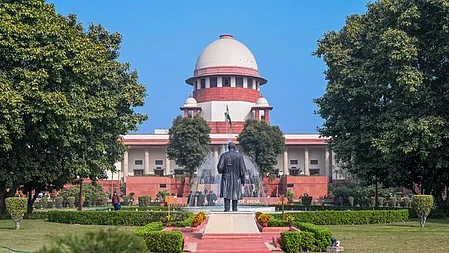


The Supreme Court has ruled that cases involving the trafficking of children for commercial sexual exploitation (CSE) can be prosecuted under the Protection of Children from Sexual Offences (POCSO) Act, in addition to relevant provisions of the Bharatiya Nyaya Sanhita (BNS) and the Immoral Traffic (Prevention) Act (ITPA).
A bench of justices J.B. Pardiwala and R. Mahadevan also issued a series of directions aimed at strengthening victim protection and rehabilitation while clarifying the legal framework governing trafficking-related offences.
The court made it clear that the consent of a trafficking victim cannot be used as a defence when coercion, deception, abuse of power or other prohibited means are involved.
"The consent of a child victim of trafficking is irrelevant, regardless of whether or not 'means' have been used. Lack of consent is not an element of the crime of trafficking in persons," the bench observed.
It added that once the ingredients of trafficking are established, any claim that the victim consented to the exploitation becomes legally irrelevant.
"The focus should be firmly on the actions and intentions of the perpetrators," the court said.
The bench further clarified that even if a person was aware they were entering the sex industry, they may still qualify as a trafficking victim if they were deceived about the nature or conditions of the work and later subjected to exploitation.
Emphasising constitutional protections, the court noted that Article 23 prohibits human trafficking and all similar forms of forced labour, and that its protection extends not only against the State but also against private individuals engaged in exploitative practices.
In cases involving minors, the court said the POCSO Act must be invoked wherever the facts disclose sexual offences against a child.
"Every act of sexual exploitation involving a child is non-consensual as a matter of law," the bench said.
The court observed that the POCSO Act was specifically designed to address all forms of child sexual abuse, including aggravated sexual assault, sexual harassment and offences involving child sexual abuse material.
Accordingly, perpetrators in such cases must be charged and prosecuted under POCSO in addition to other applicable laws.
The judgment came in a petition filed by NGO Prajwala seeking stronger measures to combat human trafficking and protect the rights of victims of commercial sexual exploitation.
The bench stressed that trafficking cases require a comprehensive legal approach and warned investigators against viewing individual laws in isolation.
"No single piece of legislation operates in isolation when it comes to the crime of trafficking for CSE," the court said, adding that investigating officers must consider the victim's age, the methods used by traffickers and the nature of the exploitation while framing charges.
The court also underlined the importance of rehabilitation, saying rescue alone cannot break the cycle of exploitation.
"Without rehabilitation, the victim returns to the very same conditions that made her a target in the first place," the bench observed.
It said the rights guaranteed under Articles 21 and 23 of the Constitution require the State to ensure meaningful rehabilitation and empowerment of trafficking survivors, rather than treating them merely as passive recipients of rescue operations.
The ruling is expected to strengthen the prosecution of trafficking networks while reinforcing legal protections and rehabilitation measures for victims, particularly children subjected to commercial sexual exploitation.
With PTI inputs
Join our official telegram channel (@nationalherald) and stay updated with the latest headlines