


Sabarimala gold heist case: ED raids 21 places in Kerala, TN, Karnataka
Action comes amid growing scrutiny over alleged gold siphoning from famed hill shrine, a case that has rocked political and religious circles
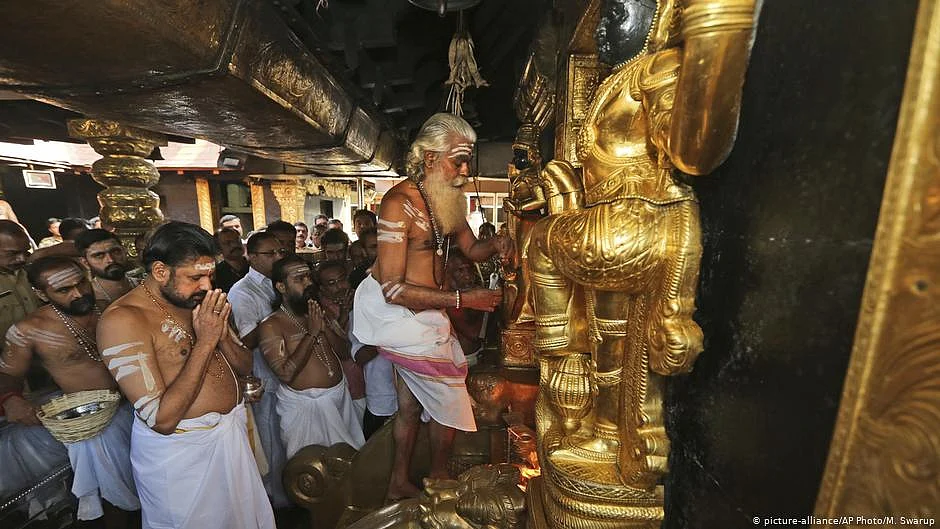


The Enforcement Directorate (ED) on Tuesday dramatically stepped up its investigation into the alleged money laundering angle of the Sabarimala gold robbery case, launching a series of coordinated raids across three southern states — Kerala, Tamil Nadu and Karnataka.
ED teams fanned out to as many as 21 locations, targeting the homes and business premises of several key accused and associates as the probe entered a more intense phase. The action comes amid mounting scrutiny over the alleged siphoning of gold from the famed hill shrine, a case that has sent shockwaves through political and religious circles alike.
So far, the Special Investigation Team (SIT) probing the case has arrested 13 people, all of whom are currently in judicial custody. The SIT is conducting a parallel criminal investigation under the direct supervision of the Kerala High Court, even as the ED pursues the financial trail linked to the alleged crime.
Among the locations searched on Tuesday were the residences of the prime accused, Unnikrishnan Potti, CPI(M) leaders Murari Babu, A. Padmakumar and N. Vasu, as well as the premises of Bellary-based gold trader Govardhan. ED officials also raided establishments connected to Pankaj Bhandari, the chief executive officer of Chennai-based Smart Creations, who is alleged to have played a role in melting and disposing of the gold plates removed from the shrine.
In a move that underscored the gravity of the investigation, ED teams also carried out searches at the Travancore Devaswom Board headquarters in Thiruvananthapuram, the body that manages the Sabarimala temple.
Raids were reported at Unnikrishnan Potti’s residences in Kilimanoor near Thiruvananthapuram and in Bengaluru’s Srirampura locality, Murari Babu’s house in Kottayam, N. Vasu’s residence in Petta, and A. Padmakumar’s home in Aranmula. ED sources, however, said that no search had so far been conducted at the residence of Tantri Kantarar Rajeevar.
The agency has registered an Enforcement Case Information Report (ECIR), similar to a police FIR, to investigate the alleged laundering of proceeds generated from the crime. Investigators are now tracing the source of funds, the movement of money and any attempts to conceal assets linked to the case.
Officials indicated that attachment proceedings could follow if assets disproportionate to known sources of income are identified during the probe. The investigation is being supervised by Rakesh Kumar, Additional Director of the ED’s Kochi unit.
Meanwhile, the SIT has been directed by the Kerala High Court to carry out a detailed probe within the Sabarimala temple itself, with the aim of piecing together the conspiracy and uncovering the exact modus operandi behind the alleged removal of gold.
Scientific evidence collection is currently underway in and around the sanctum sanctorum. The SIT is also scheduled to hold consultations with scientists from the Vikram Sarabhai Space Centre, who had earlier examined the gold plates and reported significant differences between those installed in 1998 and layers added later.
Notably, the ED’s sweeping action came just hours before the 16th and final session of the 15th Kerala Legislative Assembly is set to commence, with the customary address by Kerala governor Rajendra V. Arlekar—adding a sharp political edge to an already explosive investigation.
With IANS inputs
Join our official telegram channel (@nationalherald) and stay updated with the latest headlines