


Taratala warehouse collapse: Crackdown stalls Kolkata's construction, leaving workers and developers in limbo
Developers report daily losses of up to Rs 25 crore, while thousands of labourers face an uncertain future as projects remain suspended after the Taratala collapse
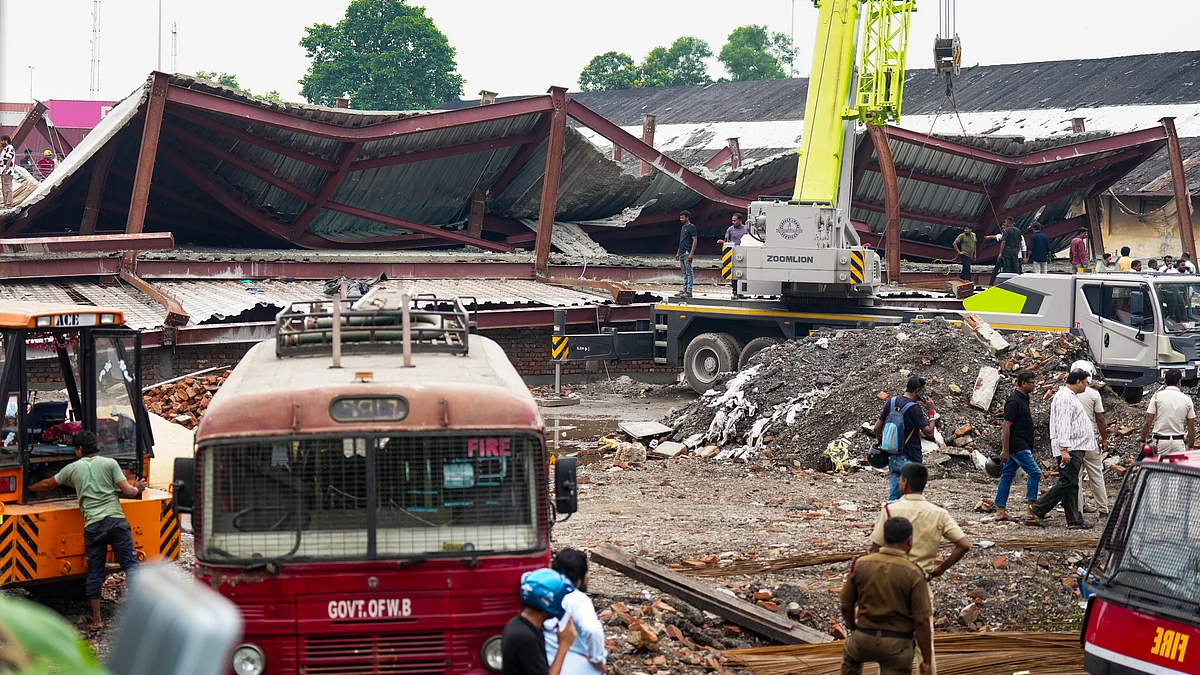


The West Bengal government's decision to halt construction work across the city following the deadly Taratala warehouse collapse has pushed Kolkata's building industry into deep uncertainty, leaving contractors counting heavy losses and thousands of construction workers worried about their livelihoods.
While the state government has defended the suspension as a necessary safety measure, the fallout has spread rapidly across the sector. Developers say projects worth crores of rupees have come to a standstill, contractors are struggling to retain workers, and daily wage labourers are leaving the city in search of employment elsewhere.
The crisis comes even as Chief Minister Suvendu Adhikari appealed to construction companies to provide food and other essential supplies to workers who have travelled from distant districts and are unable to return home because of the sudden stoppage of work.
The Chief Minister said the request was being made on humanitarian grounds and would be conveyed to developers through Kolkata Municipal Corporation Commissioner Smita Pandey and Kolkata Police Commissioner Ajay Nanda.
Industry representatives, however, say humanitarian assistance alone will not address the growing crisis facing the construction sector.
Leading developer Vinay Kundalia said, "The organised real estate projects are executed under the strict supervision of qualified engineers, adhere to sanctioned plans and maintain rigid quality controls. The government should focus on illegal and unauthorised construction instead of imposing a blanket suspension."
Developers estimate that the industry is losing between Rs 20 crore and Rs 25 crore every day the shutdown continues. Several companies have expressed hope that the government-appointed committee auditing under-construction projects will complete its work quickly so that safe projects can resume.
Labour contractors say the biggest victims are the thousands of daily wage workers whose incomes have stopped overnight.
"The vast majority of our workforce depends on daily wages. Every day without work means no money to feed their families," labour contractor Sadikul Sheikh said.
Contractors estimate that between 35,000 and 40,000 workers have been directly affected by the suspension. Many have already begun returning to their villages or seeking work in neighbouring states, fearing that the uncertainty could continue for weeks.
Developers warn that if skilled workers leave Kolkata in large numbers, restarting projects after the restrictions are lifted will become even more difficult.
Apart from the suspension itself, some contractors have alleged that workers are becoming increasingly frightened because they are being stopped or questioned while working, even on projects that they believe are not covered by the government's order.
Contractor Sanjay Basu claimed that the situation has created confusion on the ground.
"The Chief Minister's order was to stop work at commercial construction sites and buildings above G+5. However, workers engaged in repair work or at sites that do not fall within those categories are also being stopped," Basu alleged.
He added, "This is creating panic among labourers. Many of them do not want to take any chances and are simply leaving the city. Contractors are losing manpower every day."
Basu further alleged that some workers have faced harassment while travelling to work and that fear has spread rapidly across labour camps.
Adding to the controversy, BJP worker from South Kolkata Abhijit Sarkar, popularly known as Tuba, said with a sense of pride that he and other BJP workers had visited several construction sites and asked labourers to stop work and leave.
"We went to several buildings and told the workers to stop work and leave," Sarkar said. The BJP, however, has not publicly indicated that such actions formed part of any official party programme.
Contractors argue that if political workers intervene at construction sites, it only adds to the confusion and fear already created by the government's safety restrictions.
Basu said, "Our workers are scared. Some are afraid of police action, while others are worried about being confronted by political workers. Even where work is legally permitted, many labourers simply refuse to continue."
The Licensed Building Surveyors Association has also urged the state government to review the blanket suspension, warning that several projects have reached critical stages such as excavation, piling and basement construction.
Association president Animesh Guria cautioned that leaving partially completed foundations exposed during the monsoon could create fresh safety hazards, including excavation failures, unstable foundations, and damage to neighbouring buildings and roads.
Developers say they are fully prepared to cooperate with the government's audit committee and submit all technical documents required for inspection.
Another developer, Amit Paul, said, "We are ready to submit every document the committee asks for. We only hope that projects complying with all safety norms are allowed to resume at the earliest."
For thousands of migrant workers, however, the immediate concern is survival rather than project schedules.
Many labourers, uncertain about when work will restart and anxious about the atmosphere surrounding construction sites, have already packed their belongings and left Kolkata. Others are preparing to follow.
Contractors fear that if the exodus continues, the city's construction industry could face not only financial losses running into crores of rupees but also a severe shortage of skilled manpower long after the restrictions are eventually lifted.