


Supreme Court refuses relief to 27 lakh deleted voters in West Bengal
Apex court cites tribunal process, concerns over due process remain
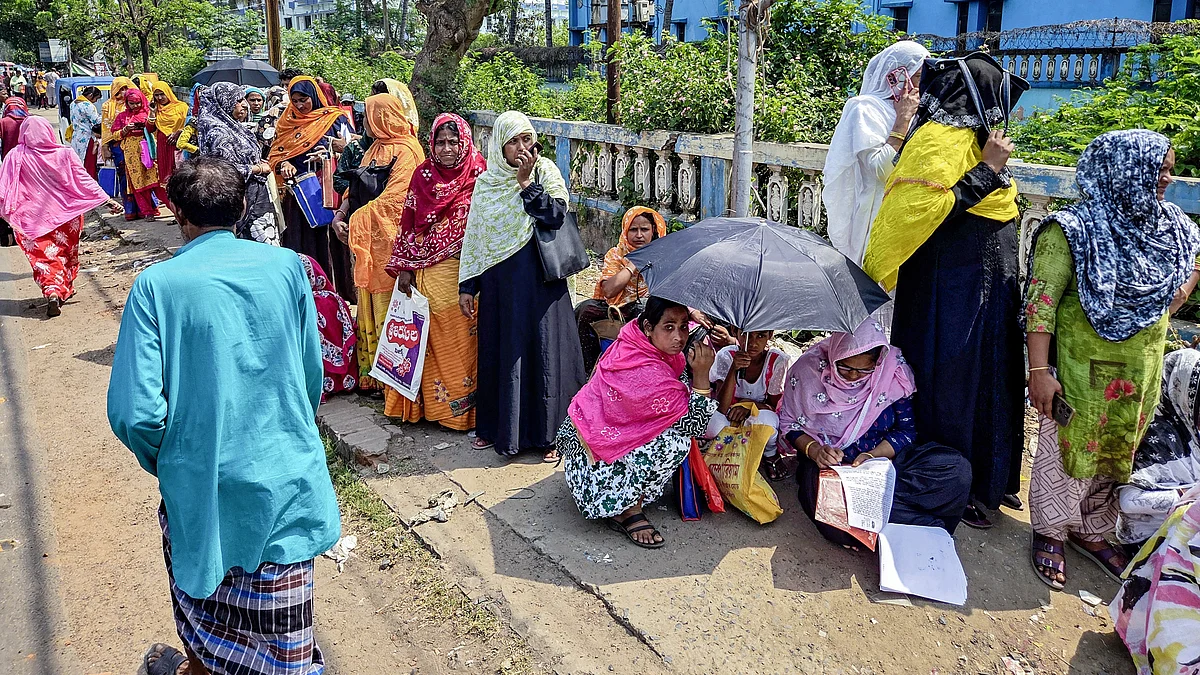


A bench headed by Chief Justice of India Justice Surya Kant on Monday, 13 April virtually turned down the plea of petitioners, including the West Bengal government, seeking permission for 27 lakh deleted voters to exercise their franchise in the Assembly elections due on 23 and 29 April.
These 27 lakh voters were removed from the electoral rolls by judicial officers without recorded reasons. They include voters successfully mapped to the 2002 electoral roll in the state who had submitted the documents required by the Election Commission of India (ECI). Many hold Indian passports, some have been assigned polling duties as presiding officers by the ECI, and most have voted in previous elections.
The Supreme Court did not address the issue of judicial officers excluding voters without assigning reasons, nor did it examine the ECI’s failure to serve notices and hear voters before deleting their names, as required under the Representation of the People Act.
The court also made no observation on the ECI’s failure to provide reasons for deletion in the four-odd cases heard by the appellate tribunals, despite earlier directions that both tribunals and voters must be given reasons for exclusion.
Justice Joymalya Bagchi did remind the ECI that it had earlier told the court that voters whose names appeared in the 2002 rolls and were successfully mapped would not be excluded. The ECI had also submitted that such voters would not be required to provide any additional documents. Court reporting on Monday did not indicate what response, if any, the ECI offered on this point.
Senior advocate Prashant Bhushan and activists Yogendra Yadav and Parakala Prabhakar had urged the Supreme Court, barely 10 days before the first phase of polling, to exercise its powers under Article 142 of the Constitution to ensure “complete justice”. They argued that the court could invoke the same extraordinary powers it had used earlier to direct judicial officers to adjudicate the matter and issue necessary instructions to the ECI.
The court was informed that the chief justice of Calcutta High Court had stated that 34 lakh voters had filed appeals before the 19 appellate tribunals as of Saturday, 11 April. However, the Supreme Court said it could not allow individuals whose appeals are pending before the tribunals — which began functioning from Monday, 13 April — to vote in the upcoming elections.
“Where is the question of allowing them to vote? If we allow this, then let us also stop the voting rights of people who are included,” CJI Surya Kant observed in court.
Justice Bagchi noted that voters whose appeals were allowed by 9 April, the last day for filing nominations in the state, would be included in the electoral rolls. The court, however, indicated that it may consider permitting publication of supplementary rolls to include those whose appeals are allowed before the two-phase polling on 23 and 29 April.
The bench again expressed reluctance to fix a timeline for the appellate tribunals to complete the exercise or expedite hearings. “We cannot create a situation where we burden the appellate tribunal judges. There is another plea before us today which seeks to stop the appeals,” CJI Kant said.
The CJI also noted that appeals are pending against rejection of objections to inclusion of certain voters. If interim inclusion of excluded voters were permitted, similar interim exclusion could also be sought in such cases. “Fifty-five per cent of the objections have been rejected. Objectors have also gone in appeal. They will also ask for the same order,” he observed.
Advocate Ashwini Upadhyay, who has filed an application seeking interim exclusion of voters whose inclusion has been challenged before the tribunals, said in court: “We know how the demography of Bengal was changed.”
Join our official telegram channel (@nationalherald) and stay updated with the latest headlines