


Election Commission must allow 27 lakh voters in West Bengal to vote
Rights-based approach demands inclusion first, verification later, writes former deputy EC
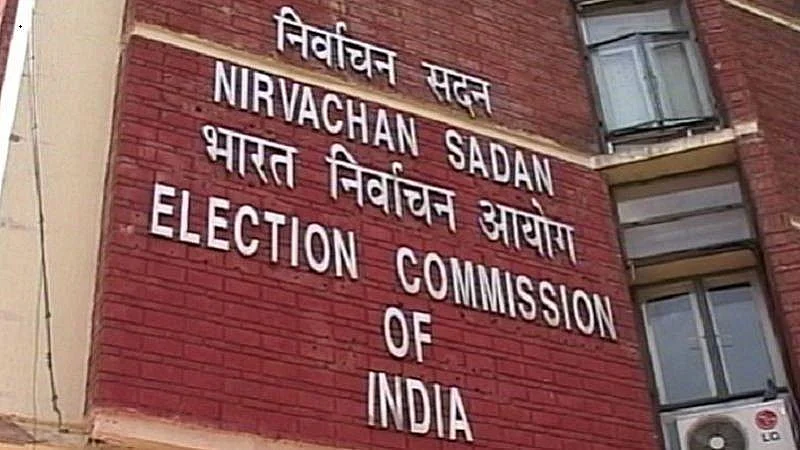


Appellate tribunals in West Bengal are yet to start functioning and according to media reports they have so far ordered the restoration of just two voters as a special case since both wanted to file their nomination to contest the election. Thursday, 9 April 2026 being the last day for filing nominations in the state, the tribunals heard their appeal and restored their names as a special case. Why not restore all 27 lakh (2.7 million) voters whose appeals are still pending?
Removing names while appeals are pending violates both due process and people’s constitutional right to vote. The Election Commission of India faces a narrow but clear path forward. To preserve electoral integrity, it must provisionally restore all voters whose appeals remain undecided. A rights-based approach demands inclusion first, verification later, not the reverse. What is at stake is not just administrative accuracy, but credibility of India’s democratic promise.
These 27 lakh voters are not Bangladeshi infiltrators but Indian citizens who have voted in past elections. They seem to have valid documents and have successfully been ‘mapped’ with the electoral roll of 2002 in the state. They made it to the electoral roll and were among the 60 lakh voters who were placed ‘under adjudication’ by judicial officers for apparently minor discrepancies in names, addresses or documents. None of the 27 lakh voters appears to have been given a reasoned order by judicial officers for leaving them out of the electoral roll even when they seem to have cleared and restored the remaining 32-33 lakh voters.
Indeed, media reports suggest that the Election Commission of India failed to cite reasons for dropping the two voters who managed to reach up to the appellate tribunals, a fact which the tribunals recorded. This was in violation of the Supreme Court’s direction that both the tribunal and the voters must be given reasons for leaving them out.
Unfortunately, the Supreme Court of India on 6 April 2026 declined to set a deadline for disposal of appeals by the Appellate Tribunals. The rolls have effectively been frozen on the last dates for filing nominations on 6 April for the 152 Assembly constituencies where polling is due on 23 April and on 9 April for the remaining 142 constituencies where polling will be held on 29 April.
This has created a troubling paradox: lakhs of appeals remain unresolved even as the voters’ list becomes final. The implications are profound. A large number of voters — whose linkage to the 2002 electoral rolls has already been established — now risk losing their franchise simply because their appeals could not be adjudicated in time. Reports indicate that nearly 90 lakh names have been deleted in the state, including 58 lakh voters in the first phase alone. Even more paradoxically, the Election Commission of India has not ruled out margins of error and the possibility that some of those deletions in the first phase were erroneous.
These are not abstract numbers; many of these individuals voted in the 2024 general elections. If they were ineligible, it raises questions about the integrity of the 2024 revision of rolls and, by extension, the legitimacy of that electoral exercise. If they are genuine voters, then the credibility of the upcoming 2026 elections stands compromised. Either way, the democratic process has been placed under severe strain.
Traditionally, intensive roll revisions have relied on house-to-house enumeration, where officials collect and verify voter information directly, followed by publication of a draft roll inviting claims and objections. This time-tested method ensures minimal exclusion errors.
However, the current SIR marked a significant departure. Instead of field verifications, pre-filled enumeration forms based on old rolls were distributed, placing the burden on voters to verify and submit their own details with documentary proof. This reverses the foundational principle of voter registration, where the state bears the responsibility of ensuring inclusion. Even in Assam’s intensive revision—often cited as a precedent—pre-filled forms were verified and corrected by enumerators and not left entirely to voters.
In West Bengal, the process began with voter slips derived from the 2002 rolls. These were collected and digitised, followed by “mapping” voters to historical entries. Of roughly 7 crore voters, 6.68 crore were successfully mapped and included in the draft list. Of the remaining 32 lakh, about 12.8 lakh were deleted. Eventually, the draft roll stood at 6.872 crore voters.
At this stage, any modification should have followed due legal process — prescribed forms or reasoned orders by Electoral Registration Officers (EROs). Instead, over one crore cases of suo motu deletion were initiated — an unprecedented scale. Media reports suggest that notices were generated using AI tools flagging “logical discrepancies”, such as mismatched parental names or age inconsistencies, often without application of mind by EROs.
This approach is technically sophisticated but administratively and socially misaligned. Discrepancies in age, spelling, or familial details are common in India. Variations like “Ajoy” and “Ajay,” or erroneous birth records, are routine. Historical data quality issues — especially from earlier digitisation exercises — further compound the problem.
Treating such inconsistencies as grounds for deletion, rather than triggers for verification, risks systemic disenfranchisement of the poor, migrants, and linguistically diverse populations.
Moreover, once a draft roll is published after enumeration, it carries legal sanctity. Deletions must follow adjudication and appeal; and voters’ lists should not be finalised before the exercise is completed. That is the reason why the right course for the Election Commission would be to provisionally allow all 27 lakh voters waiting for appellate tribunals to start functioning and take a call on each case, to vote.
Dr Noor Mohammad served as chief electoral officer of Uttar Pradesh for nine years, followed by another nine years as deputy election commissioner in the Election Commission of India (ECI). He was selected by the UN to oversee elections in Afghanistan and later served as advisor to the India International Institute of Democracy and Election Management, New Delhi, set up by the ECI.
Join our official telegram channel (@nationalherald) and stay updated with the latest headlines