


SC upholds EC’s SIR of electoral rolls, cites free and fair polls
Poll panel says electoral roll revision is essential to ensure accurate and credible voter lists, the foundation of democratic elections
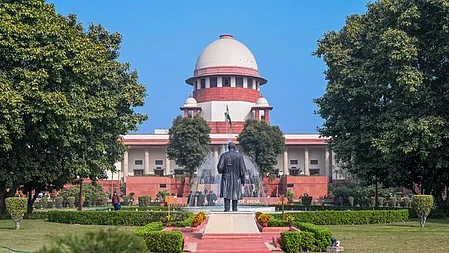


The Supreme Court on Wednesday upheld the Election Commission’s authority to conduct a Special Intensive Revision (SIR) of electoral rolls, ruling that the exercise strengthens the constitutional mandate of “free and fair elections”.
A bench headed by Chief Justice of India Surya Kant, along with justice Joymalya Bagchi, said the process, though appearing exclusionary at the outset, can be made constitutionally valid through adequate safeguards.
“The process that may initially appear exclusionary can, through appropriate safeguards, be rendered constitutionally compliant. We are satisfied that the impugned SIR exercise meets requirements of proportionality,” the bench observed.
The court further held that the Election Commission had acted within its statutory powers and could not be said to have exceeded its mandate.
“It can’t be said that the poll panel acted outside statutory powers by exercising SIR,” the bench said.
Rejecting claims that the exercise was undertaken merely for administrative convenience, the court noted that the process serves a larger constitutional objective.
“We are unable to conclude that the impugned exercise is a process resorted to solely for administrative convenience. On the contrary, we hold that the electoral SIR advances the constitutional imperative of free and fair elections,” it said.
The judgment came on a batch of petitions challenging the SIR exercise conducted in Bihar. The petitioners, including the NGO Association for Democratic Reforms, had argued that the Election Commission lacked the authority under Article 326 of the Constitution and the Representation of the People Act, 1950 to carry out such a large-scale revision.
The Election Commission maintained that the revision of electoral rolls is essential to ensure accuracy and integrity in voter lists, which form the foundation of democratic elections. It also argued that Aadhaar and voter ID cards cannot be treated as conclusive proof of citizenship.
According to the EC, the SIR exercise in Bihar led to the removal of around 65 lakh names from draft electoral rolls, based on eligibility verification criteria, including absence from earlier voter lists of 2002 or 2003 and lack of ancestral linkage.
The petitioners had alleged that the exercise amounted to an “NRC-like process”, claiming that the poll body was effectively determining citizenship — a power they argued lies with the Union government.
The Supreme Court, however, held that maintaining accurate and credible electoral rolls is central to ensuring free and fair elections, and that the EC’s actions fall within its constitutional framework.
With PTI inputs
Join our official telegram channel (@nationalherald) and stay updated with the latest headlines