


SIR is exclusionary, but states must act before more citizens lose voting rights
State governments can intervene to prevent wrongful deletions through document correction drives, audits and targeted support for vulnerable groups
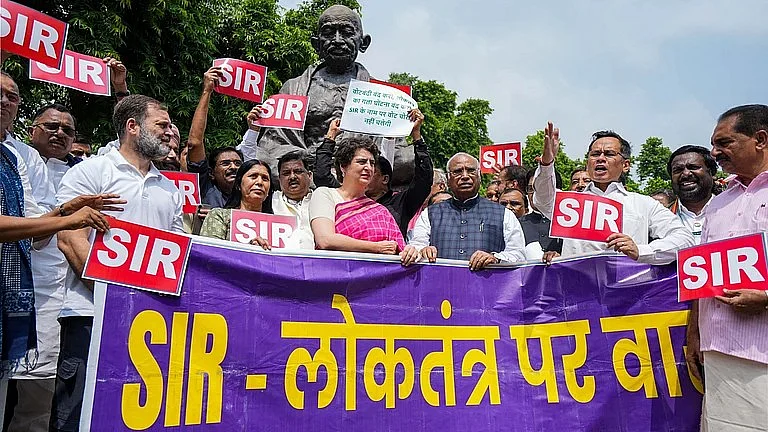


The Special Intensive Revision (SIR) of electoral rolls, launched in June 2025, has reportedly deleted almost 10 per cent of the voters in every state where it has been conducted. That totals to nearly six crore voters. At this rate, four crore more will be dropped by the end of the third phase of the SIR.
Not all of those deleted are foreigners or deceased. Many of them are also mapped and have voted in the past. Yet, they have been disenfranchised with not much rhyme or reason or clarity on the grounds for deletion.
It is now evident and acknowledged that the SIR is exclusionary by design. The Election Commission of India (ECI) is yet to explain what made it change the process of revision being followed since 1951; and why it launched an exercise from scratch without doing even a basic homework. The SIR remains opaque and instructions have changed repeatedly over time and across states since it was first launched in Bihar in June last year, ahead of assembly elections there.
There is no handbook or manual to serve as a guideline. In many cases, directions seem to be arbitrary, informal verbal instructions or conveyed through WhatsApp messages to the Booth Level Officers (BLOs) and Returning Officers.
While the primary reason for the exercise was said to be the need to remove foreigners from the electoral rolls, the ECI yet to disclose the number of foreigners, if any, detected in each state.
The process also relies heavily on digital access to enumeration forms, electoral rolls and booth-wise deletion lists, making it difficult for the poor, the illiterate and the marginalised communities to navigate the exercise.
SIR is also systematically rewriting the Constitution, taking away the universal adult franchise guaranteed to every citizen. People are being denied their voting rights on grounds of discrepancies in name, age or address across different official documents or because a computer software flags age discrepancies. Does the ECI have the right to take away a constitutionally guaranteed right, especially when government records in India have long been riddled with clerical and data-entry errors—errors created not by citizens, but by state agencies themselves?
The exercise begins by dividing citizens into two categories—‘mapped’ and ‘unmapped’. Mapping simply means to trace your own name or that of your ancestors to the electoral roll of 2002-03, when SIR was first conducted under very different rules. However, there is a third category—of citizens born before 1987—who are exempt from mapping. What SIR has demonstrated, however, is that being mapped too is no guarantee for retaining the right to vote.
In West Bengal, for example, the 27 lakh citizens whose names were deleted from the electoral rolls were all mapped. All had filled enumeration forms, were presumably visited and verified by BLOs, produced documents and attended hearings. Most of them had also voted in earlier elections. Yet, their names were removed.
Remarkably, the specially constituted appellate tribunals, upheld nearly 96 per cent of the 1,600 plus appeals before polling in West Bengal. Their deletions were wrong, said the tribunals and ordered their restoration.
Neither the ECI nor the Supreme Court has publicly clarified who was responsible for these errors, or whether any corrective action has been taken.
Meanwhile, the third phase of SIR is all set to begin from 30 May in 16 states and three Union territories. The governments in these states appear to be passive onlookers. States ruled by opposition parties have made brave statements they will not allow any bona fide citizen to be disenfranchised, but at the same time maintaining they would not interfere with the ECI’s constitutional role. They all have stopped short of any meaningful intervention.
So what can the state governments still do?
1. Launch a drive to correct the discrepancies— caused by state government employees at different stages and by data entry operator—in documents. Citizens who have different documents showing discrepancies should get a chance to correct them before SIR
2. Conduct a survey of the homeless and the destitute with no fixed address and document them to facilitate their inclusion
3. Collect a polling booth-wise list of women and ensure that documents clearly mention their maiden name and current marital status, changed name and addresses or change in religion, if any.
4. A similar list of people from the minority communities could be drawn up because of the widely held suspicion that the SIR is designed to target them
5. Approach the President of India, the ECI and the judiciary to point out why SIR requires more time and care
6. Demand the provision of an audit of the SIR in the state and also create a special cell to address grievances
7. Conduct a survey of migrant workers, coordinate and work out a verification mechanism with their home states, including a work permit with photographs and family details.
The onus is on opposition-ruled states to take the lead before any large-scale irreversible disenfranchisement.
Also Read: A people’s mandate lost in the fog of SIR
Join our official telegram channel (@nationalherald) and stay updated with the latest headlines