


The freedom to think critically
Amal Chandra on the centrality of ‘scientific temper’ in free India’s national imagination, and its erosion in present-day India
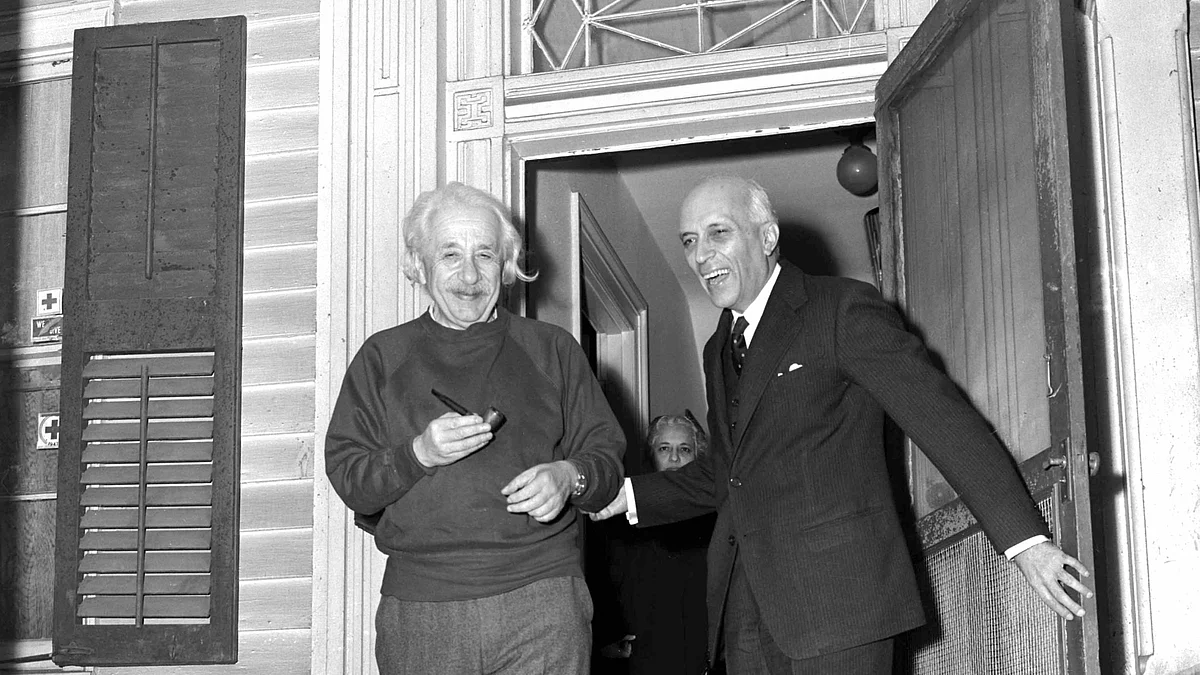


National Science Day, observed annually on 28 February to mark C.V. Raman’s discovery of the Raman Effect, honours India’s enduring faith in reason, evidence and the courage to question.
Conceived not as a ritual tribute to laboratories but as a reaffirmation of rational inquiry, it echoes the Indian Constitution’s unique mandate under Article 51A(h), which calls on citizens to develop ‘the scientific temper, humanism and a spirit of inquiry’. Yet, mounting evidence suggests this constitutional promise is being eroded, not strengthened, by current political priorities.
Independent India’s relationship with science was not accidental. It was shaped by visionaries like Jawaharlal Nehru, who saw scientific temper as a cultural value rather than a technical skill. In his words, ‘the scientific temper is a way of life, a process of thinking, a method of acting and associating with our fellow men’. Pandit Nehru’s correspondence and personal friendship with Albert Einstein reflected a shared conviction that scientific thinking was inseparable from freedom and democracy. Einstein warned repeatedly that ‘nationalism and dogma were enemies of reason’, while Nehru argued that a ‘scientific temper was essential to resist superstition, communalism and blind authority’. This vision informed the creation of institutions such as the IITs, the Council of Scientific and Industrial Research and the Tata Institute of Fundamental Research. Science, in this imagination, was not subservient to political power but a check on it.
Embedding ‘scientific temper’ in the Constitution was not symbolic. When Article 51A was expanded in 1976, the inclusion of ‘scientific temper’ alongside secularism and harmony reflected the recognition that democracy could not survive without a rational public culture. For decades, this ethos translated into a steady expansion of higher education, public-funded research and scientific autonomy. Even amid political instability, the principle that scientific knowledge must be evidence-driven and open to challenge was broadly respected across governments.
However, since 2014, a discernible shift has taken shape. According to the latest Economic Survey, India’s public expenditure on research and development has remained static at roughly 0.7 per cent of GDP—far below economies such as the United States, China and Israel, which invest anywhere between 2.5 and 5 per cent. Despite sustained policy rhetoric around innovation and self-reliance, funding for fundamental research has stagnated, while allocations for fellowships, laboratory grants and university infrastructure have failed to keep pace with inflation, leading to delays, cutbacks and growing insecurity among early career researchers.
Concerns about the broader intellectual climate have also intensified. In the words of Leader of the Opposition Rahul Gandhi, “the idea of free thinking, being open, scientific and logical is under tremendous attack.” Such anxieties have been amplified by certain public statements: prime minister Narendra Modi cited the elephant headed deity Ganesha as evidence of the existence of advanced plastic surgery and genetic science in ancient India. Union minister of human resource development Ramesh Pokhriyal ‘Nishank’ called modern science a “pygmy” compared to ancient Indian astrology, while former Tripura chief minister Biplab Deb claimed that internet and satellite technology existed in ancient times. Such statements blur the boundary between civilisational pride and empirical science, complicating efforts to uphold evidence-based inquiry.
Einstein warned that ‘nationalism and dogma are enemies of reason’. Nehru argued that ‘a scientific temper is essential to resist superstition, communalism and blind authority’
A broad cross-section of India’s scientific community has objected to the legitimisation of unverified claims on official platforms. At the 2015 Indian Science Congress, a presentation asserting the existence of ‘ancient aircraft’ in the Vedic age prompted protests from leading scientists, who described it as unscientific and unsupported by evidence, while similar objections followed claims that stem-cell technology existed in the ‘Mahabharata era’. These episodes, scientists warned, blur the boundary between mythology and science, eroding institutional credibility and public trust in the scientific method.
The concerns were articulated at the national convention of the All India People’s Science Network, where more than 100 serving and retired scientists cautioned that scientific temper in India is being steadily undermined, criticising what they described as an increasingly antagonistic stance towards evidence-based reasoning and warning that the promotion of unproven claims and false narratives ‘not only disseminate pseudo-science, blind faith and unreason but also promote obscurantism, communitarian prejudices and discrimination, striking at the core of a humanist approach’.
The shift is most visible in universities, where once-vibrant centres of debate now grapple with faculty shortages, shrinking research budgets and growing administrative centralisation. Recruitment has slowed and become more opaque, while funding is concentrated in a narrow set of centrally defined priorities, sidelining curiosity-driven basic science. Academic surveys point to declining morale, especially in disciplines without immediate commercial payoff. Simultaneously, curricular revisions have diluted or removed material on evolution, scientific method and the contested nature of knowledge; educationists warn that students risk being trained to memorise conclusions rather than question processes.
India has sought to project itself as a leader in emerging technologies, hosting global events on artificial intelligence and digital governance. Yet at the recently concluded global AI summit in Delhi, the country faced international embarrassment following misrepresentations, factual errors and exaggerated claims that were widely flagged by foreign media and experts. These episodes did not merely reflect logistical lapses; they highlighted a deeper discomfort with admitting uncertainty or error, qualities central to scientific practice. In science, credibility rests not on grand claims but on the willingness to revise positions when evidence demands it.
Perhaps the most telling sign of erosion lies in the changing relationship between power and expertise. In recent years, scientists and academics who have questioned official narratives on issues ranging from environmental impact assessments to public health data have faced professional and institutional pressures.
Environmental clearances for large infrastructure projects like the Great Nicobar Project have been granted despite warnings from expert committees, while the lack of data transparency in areas such as employment and health has drawn criticism from economists and statisticians. When expert advice is sidelined or selectively invoked, the message sent to society is that evidence is secondary, authority is all.The recent weakening of the scientific temper reflects governance choices made under the BJP and prime minister Modi, where rhetoric, funding priorities and institutional interferences have strained—if not yet entirely undone—academic freedom and evidence-based policymaking. Reversing course demands sustained investment in research, the insulation of universities from ideological pressure, transparency in data and decision-making, and an education system that teaches our youth how to think, not what to think. Above all, it requires the political humility to accept that truth is discovered through rigorous inquiry, not proclaimed by supreme authority
This stands in sharp contrast to the Nehruvian conception of science as a moral discipline.
Nehru believed that the scientific temper required humility before facts and the courage to discard cherished beliefs when evidence contradicted them. His exchanges with Einstein repeatedly returned to the idea that the freedom to think critically was inseparable from political freedom. The weakening of that ethos today is not the result of a single policy failure but of an accumulation of choices that privilege spectacle over substance and conformity over critique.
None of this suggests that India lacks scientific talent or potential. Indian researchers continue to contribute to global knowledge, often excelling despite systemic constraints. Startups and applied research initiatives have grown, particularly in technology and pharmaceuticals. But innovation divorced from inquiry risks becoming mere imitation, and ‘technological progress’ without the scientific temper leans on misinformation, superstition and authoritarianism. The framers of the Constitution understood this danger when they elevated scientific temper to a civic duty rather than leaving it to the specialists alone.
National Science Day prompts an urgent question: is science to be valued as a method of critical inquiry or merely paraded as national pride? The difference is decisive. A society committed to the scientific temper protects dissent, embraces uncertainty and respects expertise, even when it unsettles power. A society that does not may still launch satellites and build supercomputers, but on brittle intellectual ground.
The recent weakening of the scientific temper reflects governance choices made under the BJP and prime minister Modi, where rhetoric, funding priorities and institutional interferences have strained—if not yet entirely undone—academic freedom and evidence-based policymaking. Reversing course demands sustained investment in research, the insulation of universities from ideological pressure, transparency in data and decision-making, and an education system that teaches our youth how to think, not what to think.
Above all, it requires the political humility to accept that truth is discovered through rigorous inquiry, not proclaimed by supreme authority
AMAL CHANDRA is an author, policy analyst and for leading publications. He can be found on X @ens_sociali
More of his writing may be found here
Join our official telegram channel (@nationalherald) and stay updated with the latest headlines