


Kerala: Congress campaign faces electoral complexities
Party’s recent two-day Lakshya leadership summit emerges as defining moment in Kerala politics
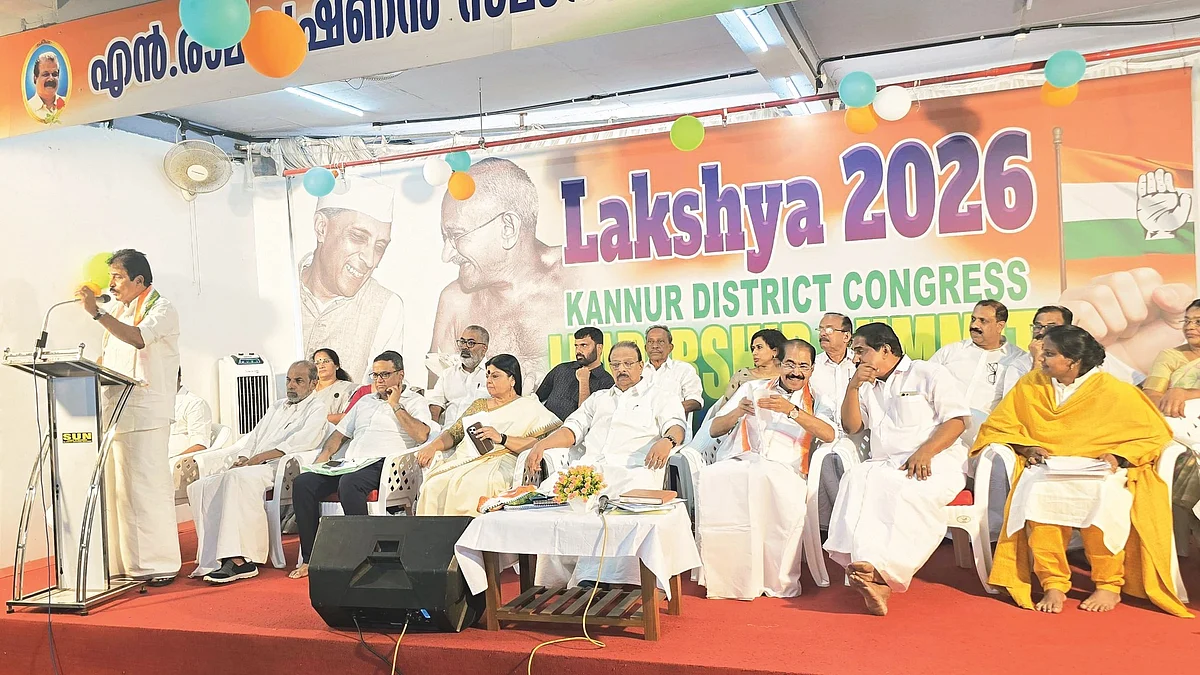


In the verdant hills of Sultan Bathery in Wayanad, far from the clamour of Assembly constituencies and electioneering, the Congress party’s recent two-day Lakshya leadership summit emerged as a defining moment in Kerala politics.
What was seemingly another pre-election strategy meet, in substance and spirit, galvanised the United Democratic Front (UDF), of which Congress is the core, into what strategists now describe as a “moment of political recalibration” as Kerala heads for Assembly elections in April.
At the heart of this resurgence are the twin catalysts of the recent performance in the local body polls and a firm strategic direction from senior party elders. The UDF delivered remarkable results in the December 2025 local body elections — winning 505 gram panchayats, 79 block panchayats, 54 municipalities and seven district panchayats. The resurgence dwarfed the ruling Left Democratic Front (LDF), which is enjoying its second consecutive term in office.
While the National Democratic Alliance (NDA) grabbed headlines by capturing the Thiruvananthapuram Corporation, ending 45 years of Left dominance, the broader picture across Kerala showed that UDF’s grassroots strength remained robust and widespread, a critical advantage in the run up to the polls.
The local body results provided a narrative shift for the Congress. At the inaugural session of the summit, AICC general-secretary (organisation) K.C. Venugopal framed the electoral calculus firmly in this context. Stressing the value of empirical performance and political groundwork, he asserted that the party would rigorously evaluate both its victories and setbacks from the local body polls to shape its strategy for the Assembly campaign.
Underscoring the importance of not giving in to complacency, Venugopal had said before the session that the party would evaluate its victories as well as setbacks. At the session his message was clear: internal factionalism must end and discipline strictly maintained to avoid perceptions of a party in disarray. “We should not make self-announcements about candidature… Let us wait for the party’s declared decision,” Venugopal stressed.
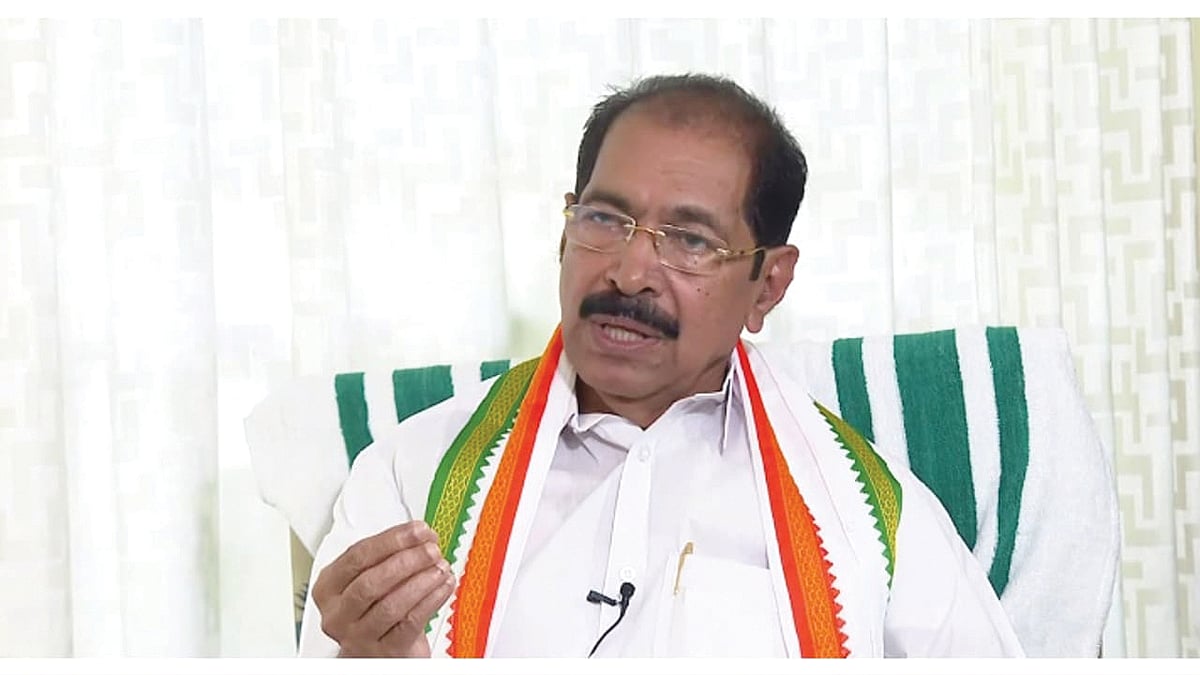
The disciplined approach is strategic: it signals that Congress intends to shape, not merely react to, the political narrative leading to the assembly elections.
The deliberations at the session were businesslike, resulting in a concrete road map for statewide mobilisation. Key initiatives include a Kerala Yatra — to be led by Satheesan, starting in February — booth restructuring, social media campaign and early groundwork to finalise candidates.
For Satheesan, the summit reaffirmed trust in his leadership, after a vigilance report was leaked ahead of the summit seeking a CBI probe into issues involving him. Speaking to reporters, Satheesan dismissed the allegations as a “poll gimmick” by the LDF and said he would remain focused on connecting with the people on issues that matter to them.
****
Across party ranks, there was a noticeable shift — from internal squabbles to disciplined strategy and unity. Shashi Tharoor, MP and CWC member, used Lakshya to underscore this cohesion. Taking to social media, he said he “enjoyed interacting with senior Congress colleagues” and stressed that the local body results had “intensified self-belief and confidence” within the party. Tharoor also articulated the dual perspective of confidence and caution that now defines UDF’s campaign narrative.
Senior leaders sharpened their critique of the LDF government. Ramesh Chennithala accused chief minister Pinarayi Vijayan of ‘divide and rule’ policies to deepen communal rifts rather than address real governance issues. He even alleged complicity between the CPM and the BJP in pushing divisive narratives. KPCC president Sunny Joseph interpreted the sweeping gains in the local body polls as “a strong rejection of the LDF government’s anti-people policies.”
****
Meanwhile, the chief minister dismissed talk of any anti-incumbency wave and was confident of securing a majority once again. PWD minister P.A. Mohamed Riyas echoed this sentiment and reiterated an ambitious target of 110 seats.
However Congress leaders see this as mere posturing by a government on the defensive. Venugopal was particularly scathing of the CM’s recent press conference, describing it as “the lament of a losing captain”.
By strategising its campaign around governance and accountability on everyday issues such as voter list revisions and socio-economic concerns, the Congress hopes to neutralise the LDF’s attempts at polarisation and counter any BJP narratives that could chip away at the UDF base. The party’s emphasis on strengthening booth committees, early candidate selection, campaigning and streamlined internal discipline indicate lessons learnt from past setbacks in 2016 and 2021.
Yet the challenges are formidable. Kerala’s electorate is discerning, with diverse issues ranging from unemployment to agrarian distress, and from urban infrastructure pressures to youth aspirations. The success of the Congress will depend not just on organisational prowess or electoral arithmetic, but on its ability to weave these socio-economic themes into a cohesive narrative across constituencies.
Participants left the summit with a strong message: this is not an ordinary election; more than winning, it is about demonstrating unity and strategic execution.
For the first time in years, the Congress in Kerala seems to have found a coherent strategic compass — one that projects confidence, unity and a credible path to electoral success.
Amal Chandra is an author, political analyst and columnist. He tweets @ens_socialis
Join our official telegram channel (@nationalherald) and stay updated with the latest headlines