


TMC split: SC gives ECI 4 months, Assembly speaker asked to decide MLAs' fate
Rival factions get four weeks to complete ECI pleadings; Speaker expected to decide disqualification pleas against 10 MLAs by 8 Oct
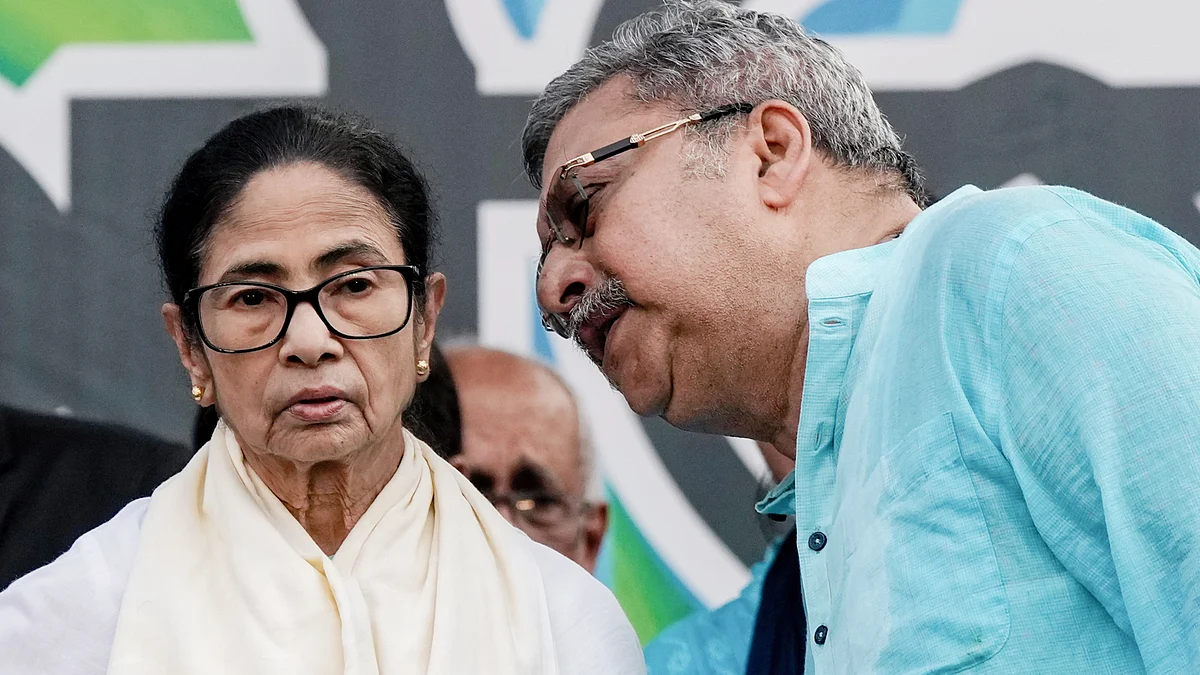


Supreme Court directs Election Commission to decide TMC name and symbol dispute within three months after rival factions complete their pleadings within four weeks.
Court also disposes of plea seeking early decision on disqualification of 10 rebel TMC MLAs, says it has every reason to believe West Bengal Assembly speaker will act within existing three-month timeframe, which ends on 8 October.
Twin proceedings stem from TMC's post-election factional split, with ECI having frozen party's original name and symbol and speaker facing disqualification pleas against 10 MLAs aligned with the rival faction.
The Supreme Court on Monday, 28 September fixed timelines for two key proceedings arising from the factional split in the Trinamool Congress (TMC), directing the Election Commission of India (ECI) to decide the dispute over the party's name and 'twin flowers & grass' symbol within three months after the rival factions complete their pleadings, while expressing confidence that the West Bengal Assembly speaker would decide disqualification pleas against 10 rebel MLAs within the existing three-month timeframe.
A bench comprising Chief Justice of India Surya Kant and Justices Joymalya Bagchi and V. Mohana directed the two factions to complete pleadings before the ECI within four weeks. The poll panel will then have three months to decide which faction is entitled to the party's name and reserved symbol.
The order came while the court was hearing a plea filed by former West Bengal chief minister Mamata Banerjee challenging the ECI's interim decision to freeze the TMC's name and symbol.
"We grant four weeks' time to the contesting respondents/petitioners to place on record their affidavits/additional affidavits etc. The pleadings be completed within four weeks," the bench said, adding that the ECI would then have three months to decide the matter.
During the previous hearing on 24 September, the Supreme Court had asked the ECI to indicate how much time it would require to finally decide the dispute between the rival factions. On Monday, senior advocate D.S. Naidu, appearing for the poll panel, referred to four previous instances involving party-symbol disputes and said such proceedings could take time because of the large volume of documents and affidavits submitted by party workers.
"Three months have gone by. Within the next three months, you decide this," the bench told Naidu.
The court also observed that the ECI could use artificial intelligence tools and other technology to expedite the process. Naidu sought that the three-month period be calculated from the date on which the parties completed their pleadings.
Senior advocate Kapil Sibal, appearing for Banerjee, said her faction had already filed its responses in July, but the opposing side had not yet done so. Naidu also pointed to upcoming Assembly elections in some states and said the ECI needed to deploy its resources there.
When the bench directed the ECI to decide the matter within three months of completion of pleadings, Naidu sought additional time. The court said the poll panel could approach it in case of any exigency.
Speaker asked to decide rebel MLAs' disqualification pleas
In a separate but closely linked proceeding on Monday, the Supreme Court expressed confidence that the West Bengal Assembly speaker would decide disqualification petitions against 10 rebel TMC MLAs within the three-month period laid down by the court.
The bench was hearing a plea filed by Mamata Banerjee-led TMC MLA Sohandeb Chattopadhyay seeking an early decision on petitions filed against 10 MLAs, including leader of the opposition Ritabrata Banerjee. The petitions allege that the MLAs acted against the interests of the party. "We will say the speaker will follow the law laid down," the bench observed.
Sibal, appearing for Chattopadhyay, referred to what he described as a pattern of delay in deciding disqualification petitions.
The bench, however, cautioned against imposing judicial timelines when courts themselves often fail to meet statutory deadlines. "We should see the mirror before giving such directions. There are so many statutes where the judiciary is required to complete the proceedings within a time frame. We are gloriously in breach of it..." Justice Bagchi observed.
The court noted that the three-month period in the present matter would expire on 8 October. It referred to its January 2020 ruling in a Manipur disqualification case, in which it had held that a speaker exercising the constitutional power to decide a disqualification petition was expected to do so within a reasonable period, ordinarily three months.
"We have every reason to believe that the speaker is fully cognisant of the decision of this court and will make an endeavour to take an appropriate decision within the time frame fixed," the bench said while disposing of Chattopadhyay's plea.
Chattopadhyay had earlier approached Assembly speaker Rathindra Nath Bose seeking the disqualification of the 10 MLAs. The petitions were filed on 8 July. The disqualification proceedings form part of the wider factional dispute that emerged after the TMC's defeat in the Assembly election in May. The split has also resulted in competing claims over the party's identity before the ECI.
The Supreme Court is also dealing with a similar dispute involving the Shiv Sena. On 24 September, it had asked the EC to suggest a 'reasonable' timeframe for deciding that dispute, while ensuring both sides had a fair opportunity to present their evidence.
With PTI inputs
Join our official telegram channel (@nationalherald) and stay updated with the latest headlines