


Unparalleled storyteller and editor of 'Pahal', Gyanranjan is no more
With his passing, a powerful voice of the country's progressive literary consciousness has fallen silent
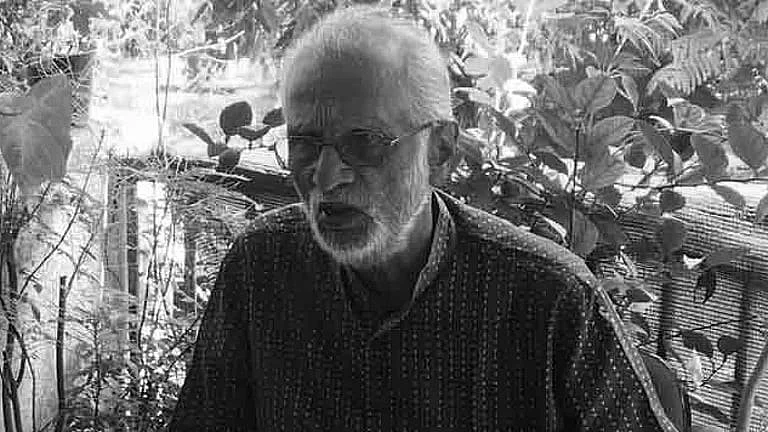


With the passing of Gyanranjan on Wednesday, 7 January, an era of progressive consciousness and literary journalism in Hindi short stories has come to an end. The official Facebook page of 'Pahal' shared the news of his demise.
Gyanranjan (90) is known as much for his stories as for 'Pahal' magazine, which he successfully edited for 35 years. whose motto was "For the scientific and progressive intellectual development of this subcontinent." Started in the 1960s, the magazine became a powerful voice and an inspiration for the progressive consciousness of the country at that time.
Known as an unparalleled storyteller, a powerful prose writer and a successful editor Gyanranjan is counted among the leading figures of the post-60s short story movement, and it is no coincidence that despite writing very few stories, he remains a powerful and an essential part of any discussion on Hindi short stories. With his passing, a powerful voice of the country's progressive literary consciousness has fallen silent.
'Kuch Hamari, Kuch Tumhari', published in 2023, is perhaps his last book, containing his scattered writings.
Gyanranjan was born on 21 November 1936, in Akola, Maharashtra. He was the son of senior litterateur Ramnath Suman. His childhood and adolescence were mostly spent in Delhi, Ajmer and Banaras, and he received his higher education from Allahabad University, later shifting to GS College in Jabalpur as a professor of Hindi.
He gave a new prose style to Hindi short story writing through stories like 'Ghanta', 'Bahirgaman', 'Amrood' and 'Pita'. It is important to note that Gyanranjan was also mentoring other writers acquire linguistic skill to express the numerous contradictions in the lives of his middle-class characters. His stories were particularly known for their distinctive poetic quality, unique use of language, sharp tone, and new narrative style.
He was honored with numerous prestigious awards, including the Soviet Land Nehru Award, Sahitya Bhushan Samman, Shikhar Samman, Maithilisharan Gupta Samman, and the Jnanpith's Gyan Garima Honorary Award. His stories have been translated into Indian and foreign languages and are included in the curricula of several universities abroad too.
A film about his life and work was also produced by Indian Doordarshan.
Join our official telegram channel (@nationalherald) and stay updated with the latest headlines