


US-India trade deal sparks farmer fury, nationwide strike on 12 Feb
BKU national convener says long agitation will mirror strategy of year-long 2021 sit-in that forced govt to repeal farm laws
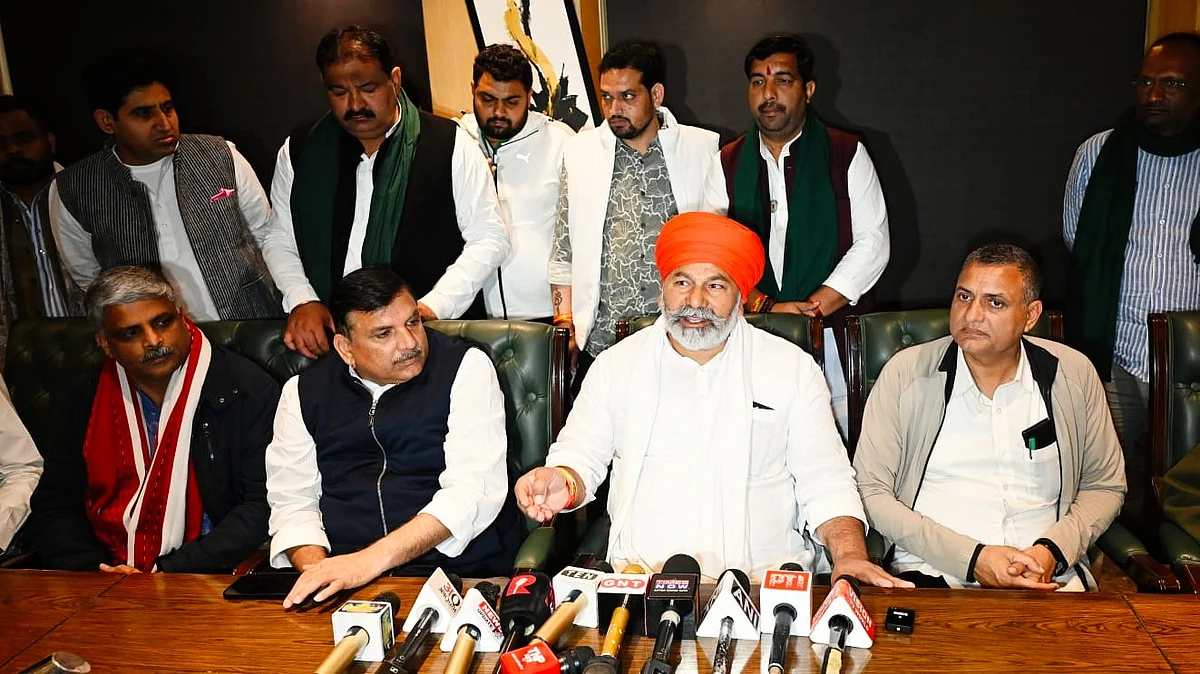


Calling the US–India trade agreement opaque and anti-farmer, major farmers’ organisations have stepped up pressure on the Modi government, announcing a nationwide strike on 12 February and signalling a long-drawn protest reminiscent of the 2020–21 farm laws agitation.
Rakesh Tikait, national convener of the Bharatiya Kisan Union (BKU), said the agitation would mirror the strategy of the year-long sit-in on Delhi’s borders that eventually forced the government to repeal three contentious farm laws.
Speaking at a press conference at the Constitution Club of India, Tikait said the current moment reminded him of 1992, when India opened up its economy without adequately safeguarding farmers’ interests.
The Samyukt Kisan Morcha (SKM), the largest umbrella body of farmers’ unions, has formally called for the nationwide strike, with the All India Kisan Sabha (AIKS) and the BKU extending support to “the biggest general strikes” since the farm laws protest.
AIKS national convener Bijoo Krishnan said effigies of US President Donald Trump and Prime Minister Narendra Modi would be burnt in villages across the country.
Drawing parallels with past trade agreements, Krishnan cited the ASEAN Free Trade Agreement, which he said had devastated Kerala’s spice and rubber economy. “Similarly, these free trade agreements will destroy the backbone of Indian agriculture,” he warned.
Also Read: The story behind the surrender
It is important to note that while US officials, including agriculture secretary Brooke Rollins and US trade representative Jamieson Greer, have publicly indicated that the deal would significantly benefit American farmers and agribusiness, the Modi government has remained tight-lipped — particularly on its implications for India’s agriculture and dairy sectors.
According to official US statements, the agreement is expected to boost American agricultural exports to India, ensure better prices for US farmers, and channel more capital into rural America.
Farmers’ organisations, however, argue that these gains will come at a direct cost to Indian cultivators. Under the agreement, India has opened its markets to a range of US agricultural and food products, including dried distillers’ grains with solubles (DDGs), red sorghum for animal feed, tree nuts, fresh and processed fruits, soybean oil, wine, and spirits.
The US had earlier imposed a tariff of 3.3 per cent on Indian imports, which has now been raised to 18 per cent, even as market access for American products has expanded.
Farm leaders warn that increased imports into India — particularly of soybean oil — could have a devastating impact on domestic farmgate prices.
Soybean prices are already significantly below the minimum support price (MSP) of Rs 5,328 per quintal, leaving farmers in Madhya Pradesh, Maharashtra, Telangana, and Rajasthan grappling with a deepening crisis.
“It is extremely unfortunate that the government has signed this agreement without any consultation with farmers’ organisations or a credible assessment of its impact on agriculture and rural livelihoods,” Tikait said.
Farmers' unions have also flagged the unequal playing field created by massive subsidies in developed economies.
Both the US and the European Union provide extensive support to their farmers and hold large agricultural surpluses, which unions say are routinely dumped in markets like India. By some estimates, US farm subsidies amount to nearly Rs 1 crore (around $120,000) per farming entity.
Indian farmers simply cannot compete with such heavily subsidised agriculture, farm leaders argue, warning that the trade deal could trigger structural damage to India’s agrarian economy — much like the fears that fuelled the historic farm laws protest.
Join our official telegram channel (@nationalherald) and stay updated with the latest headlines