


West Bengal SIR: Questions arise over Supreme Court’s expanded role
Departure from Representation of the People Act framework raises concerns over transparency and accountability
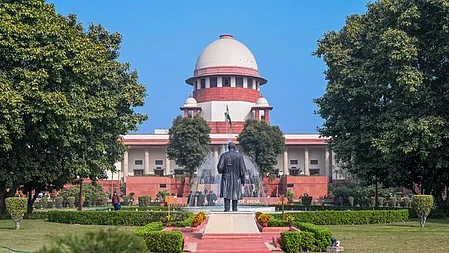


Was it prudent for the Supreme Court of India to step beyond the framework of the Representation of the People Act (RPA) and assume a direct role in overseeing the contentious Special Intensive Revision (SIR) exercise in West Bengal? Or has the move created a precedent that complicates electoral processes designed to function within a clearly defined statutory mechanism?
Under the Representation of the People Act, the responsibility for including or deleting names from electoral rolls rests with electoral registration officers (EROs). However, on 20 February, the Supreme Court took the unusual step of transferring key adjudicatory functions to the state judiciary.
When the Calcutta High Court indicated that the exercise would require three months, the apex court permitted the deployment of judicial officers from Jharkhand and Odisha — a move that, according to observers, has added to the complexity of the process.
These judicial officers were given the authority to effectively override decisions taken by EROs on the ground, introducing an additional layer of decision-making that has drawn scrutiny. The Election Commission of India (ECI) also deployed “micro-observers” with oversight functions in the SIR process, while the Supreme Court directed the West Bengal government to ensure that an additional 8,505 state officials report for SIR-related duties in order to accelerate the exercise.
The court also went beyond the RPA framework to order the creation of appellate tribunals comprising retired high court judges to hear online appeals against decisions taken earlier by judicial officers. Concerns have been raised that no “speaking orders” were issued in several cases at the adjudication stage, and the ECI did not initially disclose reasons explaining why certain voters were excluded from draft rolls.
The Supreme Court has since directed that the appellate tribunals must have access to the recorded reasons and that these must also be communicated to affected voters. However, despite these directions, the tribunals had yet to become functional as of Thursday, 2 April.
The RPA and the Registration of Electors Rules provide a structured process for resolving disputes relating to electoral rolls: first, a reasoned order by the ERO; second, an appeal before the district election officer or other notified district-level authority; and third, a further appeal before the chief electoral officer at the state level. The current arrangement represents a departure from this statutory chain of accountability.
During hearings on Wednesday, Justice Joymalya Bagchi observed that voters unable to exercise their franchise in the present election could still vote in future elections once eligibility is established. Critics argue that such an observation sits uneasily with the principle of universal adult suffrage guaranteed under the Constitution, as well as the ECI’s stated commitment to ensure that no eligible voter is left out of the electoral roll.
Questions over transparency and institutional responsibility continue to surround the SIR exercise in West Bengal. The series of judicial directions has shifted a substantial part of the process from the ECI to the judiciary, with the Commission maintaining that the exercise has now assumed the character of a judicial process.
Uncertainty also persists regarding whether the ECI will publish detailed reasons for deletions on its website, how the appellate tribunals will function in practice, and what recourse will remain available to voters whose appeals are rejected at the tribunal stage.
As the process unfolds, the lack of clarity on procedural safeguards and institutional roles has contributed to concerns about whether the objective of producing an accurate and inclusive electoral roll can be achieved within the compressed timeline.
Join our official telegram channel (@nationalherald) and stay updated with the latest headlines