


Bengal SIR: Kolkata-only tribunals may deny thousands chance to appeal
Online hearings and tight timelines raise concerns over access before 23 and 29 April polling
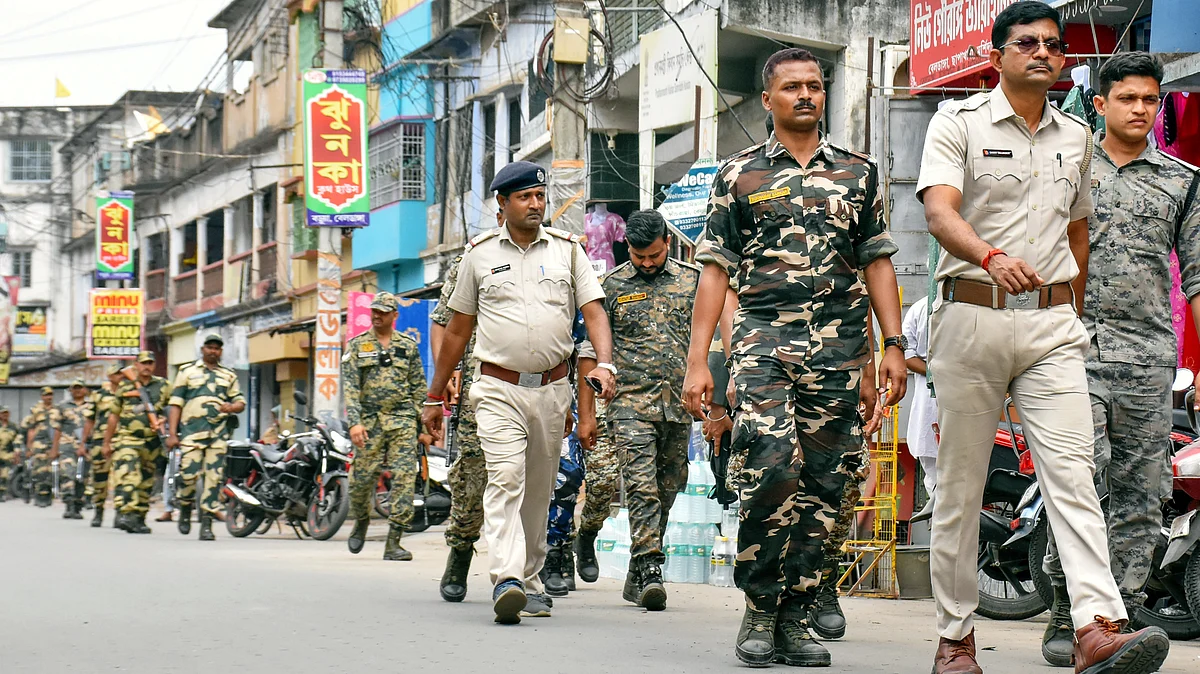


All 19 appellate tribunals constituted to hear appeals from voters excluded after “adjudication” will function from Kolkata, the Supreme Court confirmed on Wednesday, 1 April, raising concerns over the accessibility of the appeals process for voters across West Bengal. Earlier indications had suggested that tribunals would operate from multiple district headquarters.
Dr Syama Prasad Mookerjee – National Institute of Water and Sanitation (SPM-NIWAS), an autonomous institution in Joka inaugurated by Prime Minister Narendra Modi in 2022, has been selected as the venue after an inspection by representatives of Calcutta High Court, the Election Commission of India (ECI) and the state government found the premises “ready” with 21 chambers.
The order, passed by a bench comprising Chief Justice of India Justice Surya Kant and Justices Joymalya Bagchi and Vipul Pancholi, states: “ECI has notified constitution of 19 Appellate Tribunals in the state. These are headed by former CJs/judges of HC. A team of representatives of HC, ECI and State inspected...Shyama Prasad Mukherjee Institute shortlisted after finding it to be ready (having 21 chambers) ...necessary permission from Ministry of Jal Shakti has been obtained for 8 weeks so that tribunals become functional forthwith. Orientation/training to members/presiding judges will be undertaken today, so that they can conveniently deal with appeals filed online.”
The order further notes: “…Although, Appellate Tribunal shall function at Kolkata. As pointed out by ld. CJ, Sh. Naidu for ECI informs that ATs will have access to record...it will be ensured that members have access to said record for deciding appeals that will be filed (i) by person whose names have been excluded (ii) authorities of ECI aggrieved by inclusion of certain persons. Court indicates that parties shall be provided with reasons…ATs can develop their own procedure, in accordance with natural justice principles…”.
With the tribunals expected to begin functioning from Thursday, 2 April, concerns have been raised over whether sufficient time exists to adjudicate appeals relating to millions of voters excluded during the Special Intensive Revision (SIR) process. The tribunals are expected to function for eight weeks, with the possibility of extension. However, many voters excluded during the revision may not be able to exercise their franchise in the Assembly elections scheduled for 23 and 29 April.
This concern appeared to be acknowledged during the hearing, when Justice Bagchi observed that exclusion from the current election would not necessarily prevent correction of the rolls later.
“Even if a person is excluded today, and is unable to vote in this particular election, but (if) that exclusion appears to be unjustified to a Tribunal headed by a former Chief Justice, we see no reason why the decision cannot be altered and he can be included. And likewise, a person incorrectly included, and (still) votes in this election, and your representative makes a report to the Tribunal, we see no reason why the entire cleaning exercise taken by you should not be taken to its logical conclusion.”
The decision to centralise all tribunals in Kolkata, combined with the indication that appeals will largely be heard online, has raised apprehensions that many voters may find it difficult to pursue remedies within the limited time available. Those seeking to file appeals in person may also face logistical challenges travelling from districts to Kolkata, with no certainty regarding timelines for disposal.
The court has also not laid down detailed procedural guidelines for the functioning of the tribunals, leaving it to each body to determine its own processes. Questions have also been raised about the limited window available for relief. Under election law, electoral rolls for 152 constituencies going to polls in the first phase on 23 April will be frozen on 6 April, the last date for filing nominations.
This effectively leaves a narrow window — until 5 April — for tribunals to hear appeals affecting these constituencies. With the court noting that around 47 lakh of the 60 lakh objections have already been decided by judicial officers, and the chief justice of the Calcutta High Court indicating that the remaining 13 lakh cases are likely to be cleared by 7 April, supplementary lists of eligible voters are continuing to be issued by the ECI. Observers say this compressed timeline could result in the exclusion of a significant number of voters from the upcoming polls.
One positive direction from the court is that appellate tribunals must have access to the reasons recorded during adjudication for inclusion or deletion of names. The court observed that these reasons must also be supplied to the concerned parties.
During the hearing, Justice Bagchi noted: “The architecture of the software provides for a field for remarks, which are reasons given by the officers concerned while deciding whether the logical discrepancy was justified and therefore deletion was warranted or it was not justified and therefore inclusion is directed. In such cases, whenever an appeal is filed by an aggrieved person, be it the representative of the ECI who feels that the inclusion is unjustified or be it the person who has been excluded, the reason shall be supplied to the person concerned.”
Join our official telegram channel (@nationalherald) and stay updated with the latest headlines