


West Bengal: TMC MP, SC advocate’s mothers summoned for SIR hearing
Hearing of 32 lakh ‘unmapped voters’ began in West Bengal on Saturday, 27 December
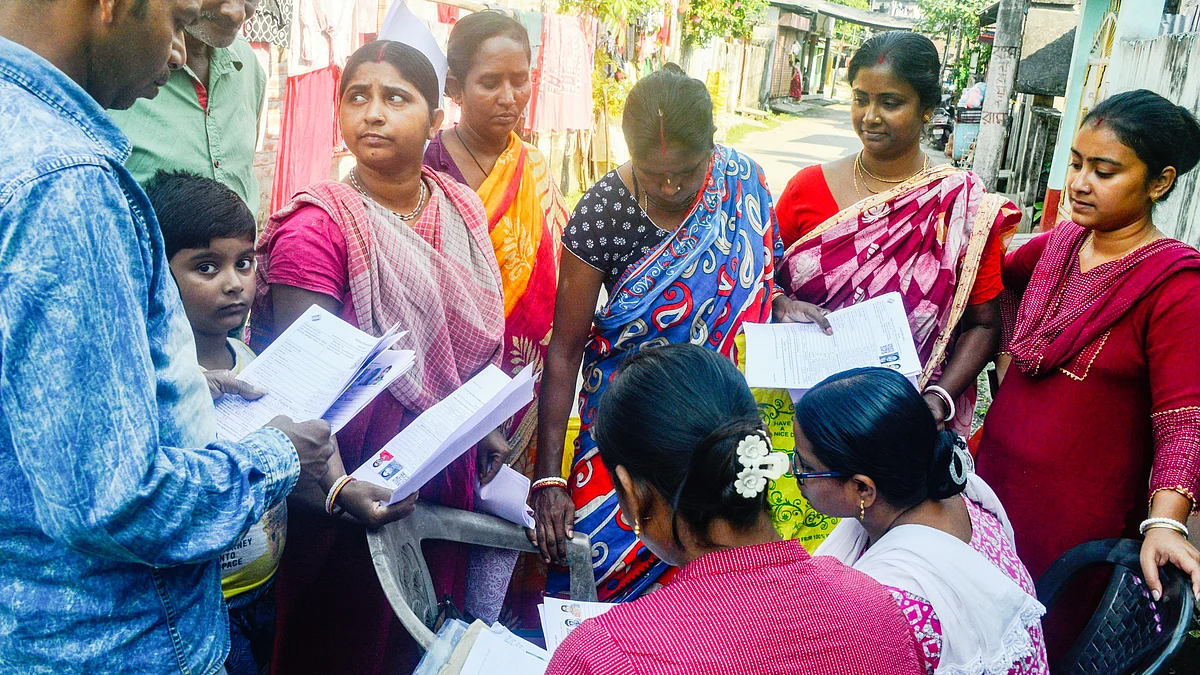


Hearings commenced on Saturday,27 December, to determine the eligibility of 32 lakh unmapped voters in West Bengal, who are among the 1.67 crore ‘suspicious’ voters flagged in the state by the Election Commission of India (ECI).
The hearing began across the state in the presence of electoral registration officers (EROs), booth-level officers (BLOs), their supervisors and the micro-observers deputed by the ECI. Conspicuous by their absence are the booth-level agents (BLAs) of political parties. It was done to avoid ‘chaos’, said media reports quoting officials.
As reported earlier, the ECI had published the draft roll in the state on 16 December. A total of 7,66,37,529 electors were enrolled in West Bengal’s voter list as of 27 October this year, before the SIR exercise started. Of them, 7,08,16,630 names have featured in the draft voters’ list and 58,20,899 electors have been dropped on grounds of being absent, shifted, dead and duplicate (ASDD). The ‘suspicious voters’ were flagged centrally by the ECI after finding ‘logical inconsistencies, failure to map the family tree in the electoral roll’ etc.
While the ECI was quick to point out inconsistencies like both the father and the son shown as born in the same year, observers believe such anomalies have occurred owing to mistakes made by officials while recording or printing the rolls and EPIC.
For example, they say, if the father was born in 1955 and the son in 1985, it is possible that both have been shown as born in 1985.
A livid Trinamool Congress MP Kakoli Ghosh Dastidar on Saturday alleged that the ECI was acting at the behest of the BJP after four members of her family, including her mother and sons, were summoned for a hearing. Dastidar’s 90-year-old mother, two sons and sister are among the 32 lakh voters who have been summoned by the ECI across the state for the primary hearing.
The West Bengal CEO’s office was quoted in local newspapers as cautioning the voters, asking them to be careful of what they say at the hearing. Giving false or wrong information, they stressed, could lead to prosecution.
The 78-year-old mother of Supreme Court advocate Sanjoy Ghose was also served notice, asking her to produce her birth certificate. While Ghose posted a video and questioned the logic of harassing senior citizens, his mother can be heard asking if she should even bother about the exercise at her age.
Such absurd situations have arisen because the inconsistencies have been flagged by the ‘system’, alleged the WBCS (Executive) Officers’ Association. In a representation to the West Bengal CEO, the association also pointed out that “on the date of the draft publication, a considerable number of electors, whose enumeration forms (EFs) have not been returned on alleged grounds such as death, migration, absence, or duplication, were deleted by the ‘system’ from the draft electoral rolls”.
While the deletions can be made in cases when "the person concerned has ceased to be ordinarily resident in the constituency or he is otherwise not entitled to be registered in that constituency", rules prescribe the procedure to be followed before deletions. The ERO concerned must give the person concerned a "reasonable opportunity of being heard in respect of the action proposed to be taken in relation to him as provided under Section 22 of the Representation of the People Act, 1950", the Association wrote in the representation.
The state government officers' organisation said the act of "system-driven deletion of so many electors, all at once, appears to infringe upon the natural rights of electors who might well be otherwise eligible under existing provisions of the law, yet for some reasons or other, could not be present during the enumeration process". It also cautioned that names of electors might be deleted from the electoral roll "without the knowledge of the ERO, who is the competent authority as per the statute".
Join our official telegram channel (@nationalherald) and stay updated with the latest headlines