


When tap water remains a pipe dream
Rural India is reeling from water shortages and satellite images forecast a ‘below-average monsoon’. Are we on the verge of water bankruptcy?


In the remote village of Rewa in Chhattisgarh, 60-year-old Bhuddadevi spends her entire day in search of water. Her neighbour has a functioning borewell, a kilometre away. She sets out early morning with one container balanced on her head and a smaller one in her hand. She admits to sleepless nights, worrying. There’s a government-installed hand pump that runs on solar energy, but where’s the water? Through the summer months, the well runs dry and there’s not a drop in the taps installed by the Jal Jeevan mission.
In Madhya Pradesh, the water shortage is so acute that rural women of Dhar district’s Uttawa village trek several miles in this intense heat, then make a dangerous descent of 50 feet into a rocky ravine to collect water. No water gushes from the pipeline installed in their village two years ago under the Jal Jeevan Mission. Spending crores on piped facilities has been a complete waste.
In MP’s Umaria and Panna districts, the severe heatwave has dried up the hand-pumps, so families are drinking contaminated water at risk to their health. Phagram, an activist with the Samajwadi Jan Parishad in MP attributes the water crisis to the “over-exploitation of ground water and steady destruction of traditional water recharging methods’’.
The situation is equally bad in western India. Vast swathes of rural Maharashtra, including districts like Marathwada, Vidarbha, Latur, Osmanabad, Beed, Jalna, Nasik, Pune and Satara, are reeling from an acute water crisis.
Shivaji Gaikwad, a farmer in Aurangabad zilla points out, “Over 633 villages and 1,652 hamlets are dependent on private tankers but these are expensive and often involve a wait of eight to ten days.” Earlier, he adds, villagers relied on river water. “But now with sand mining rampant across all our rivers, there is no water percolation and our rivers are running dry,” he says.
In Nasik’s Borichivari village, women are using ropes to lower themselves into steep and dangerous wells to collect muddy water.
Says Leelabai, “For two months in summer, all we do is forage for water. Our children are falling sick drinking this water, but we have no choice. By the time, evening comes, I’m lucky if I have managed four buckets of water. It leaves me exhausted.”
These hard-won buckets of water do not meet even half the 55 litre minimum that the ministry of housing and urban affairs has recommended for each rural household.
The villagers of Ambegaon, Junnar, Bhor, Mulshi and Purandar are acutely aware of the irony of a water crisis in a rain-rich region with reservoirs that supply water to urban and industrial centres across Pune district.
“We are literally counting every drop of water despite living in some of the highest rainfall zones,” says one villager.
For many families in Ambegaon taluka’s Bhimashankar temple area, fetching water is a daily struggle.
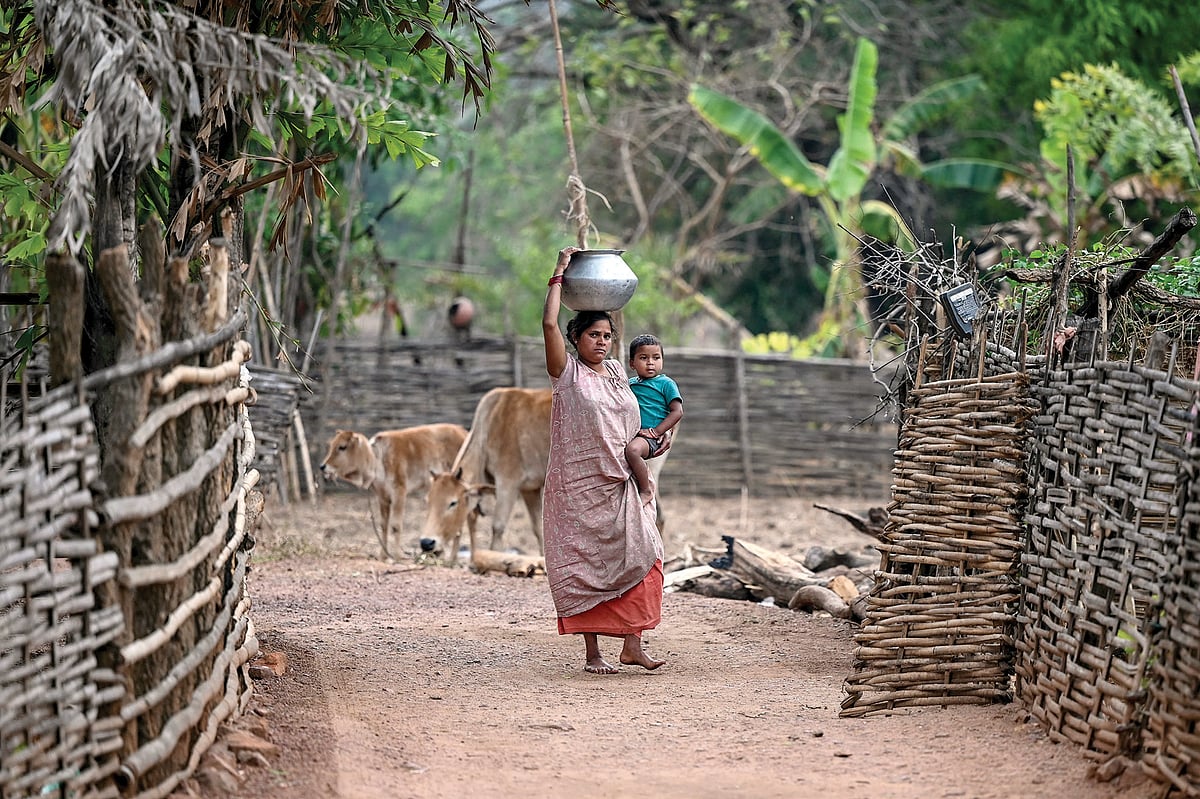
“Our area is largely tribal,” Rupesh Ambekar, resident of Eklahare village near Bhimashankar told Indian Express (15 June 2026). “Women from remote hamlets have to walk across steep, rocky hillsides in search of water. They return carrying pots on their heads through difficult terrain.” (It’s known that severe loads cause spinal injuries.)
“Bhimashankar receives approximately 2,000 mm of rainfall every year. Dimbhe dam is nearby, yet many villages, including Khamkarwadi, Dhamangaon and others, face severe water crises every summer. A water tank and pipeline network were built nearly five years ago, but water has still not reached us,” Ambekar said.
This is a complaint that resounds across villages in this region. Speaking to Indian Express, Maruti Dhanawale of Dhanawale village said, “The streams from our village feed the Nira-Deoghar dam, which supplies water to parts of Baramati, Indapur and Purandar. The dam is right in front of us, yet we still struggle for water.”
Also Read: Disease on tap, government in denial
Pradip Purandare, a water management activist and former professor at the Water and Land Management Institute in Aurangabad, blames excessive growth of sugarcane, a highly water-intensive crop, for Maharashtra’s present water crisis.
“Politicians have grabbed control of the water mechanisms in their respective regions. They appoint the irrigation officers who then do their bidding. The state government has little control over what is happening on the ground,” says Purandare.
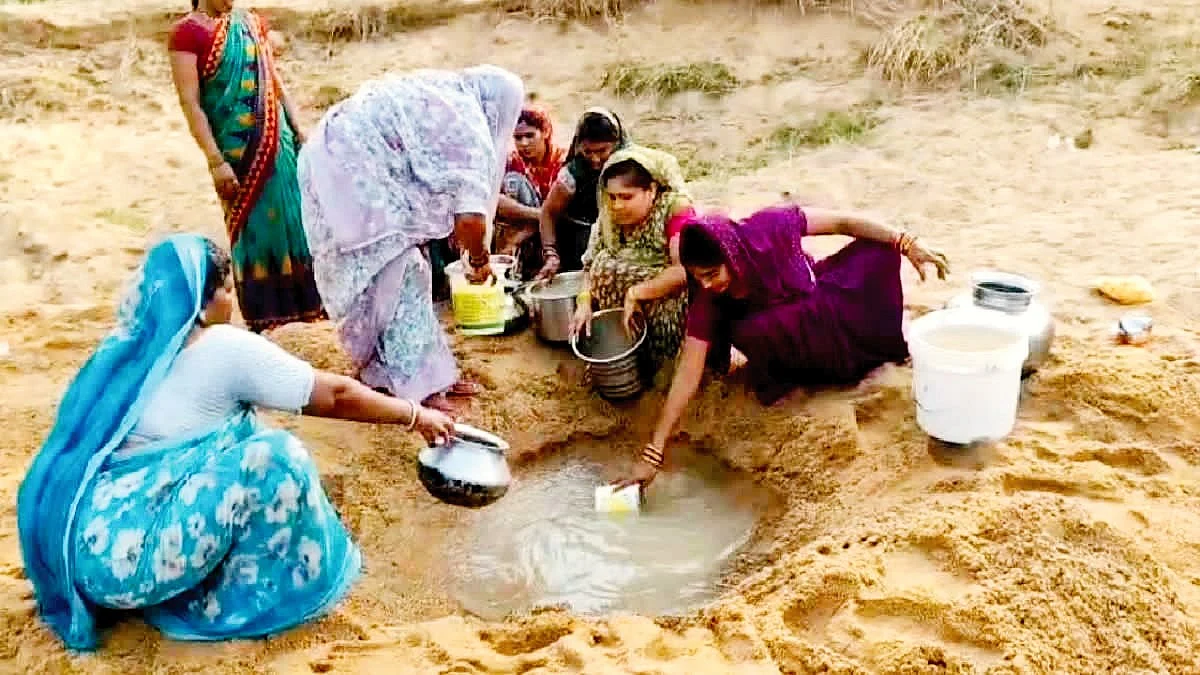
The situation in Jharkhand is no better. In Chatra, tribal communities are forced to extract water from sand pits, often drinking contaminated water due to lack of alternatives. In villages like Komay in Kharsawan, residents rely on small hill streams and makeshift water sources called ‘chua’ for drinking water. During the rainy season, these sources become muddy, forcing villagers to travel long distances to fetch clean water.
Down south, reports of the Central Water Commission indicate that all major reservoirs across rural Karnataka, Telangana and Andhra Pradesh are filled to less than 20 per cent of their capacity with some dams not even holding five per cent of total capacity.
Hyderabad-based water expert Satyanarayana Bolisetty points out, “Every CM’s dashboard has the daily figures of water levels across dams, rivers and reservoirs. None of them is in the dark about how critical the supply situation is.”
Meet Maan, coordinator for Jaladhikar Foundation (North India) cites the example of Haryana moving from a water-surplus state to a water-deficit one in four decades.
“Up to 1985, Haryana had a functioning system of canals that provided both drinking water and drainage. These are now criminally neglected, with illegal encroachments, and severe transmission and evaporation losses due to lack of proper maintenance,” says Mann.
He is critical of the Gurugram and Jawaharlal Nehru canals being used to provide water to large cities such as Gurugram and Faridabad.
“Local administration across our villages and towns should work to revive our local water bodies,” he adds.
Few states were as water-abundant as Uttar Pradesh. A detailed investigation reveals that UP is now reaching a point of no return, having used up at least 80 per cent of its available groundwater. This state, like most others, is withdrawing more freshwater than it can replenish.
In neighbouring Uttarakhand, water woes are turning into water wars. On 13 June, a man was killed and his family members attacked by neighbours over an irrigation dispute in Sahaspur, rural Dehradun.
Villagers in Hinsariyakhal and Patakhal areas of Devprayag have taken to the streets to highlight their plight. Administrative offices are being gheraoed and villagers say they will intensify their agitation if their water needs are not met.
The World Meteorological Organisation has warned that the El Niño in the Pacific Ocean will lead to ‘below average’ rainfall in India. This will prove disastrous. Not only will it intensify heat and drought, it will also put additional stress on our agriculture, power grids and already fragile water security. The latest data released by IMD and verified by INSAT-3DS satellite imaging show “completely clear cloudless skies over the peninsula at a time when seasonal rainfall should be peaking,” says Bolisetty. “This does not bode well.”
Join our official telegram channel (@nationalherald) and stay updated with the latest headlines