


Why European democracies turned back to ballot paper from EVMs
EVMs failed fundamental tests of transparency, public verifiability and technical accountability
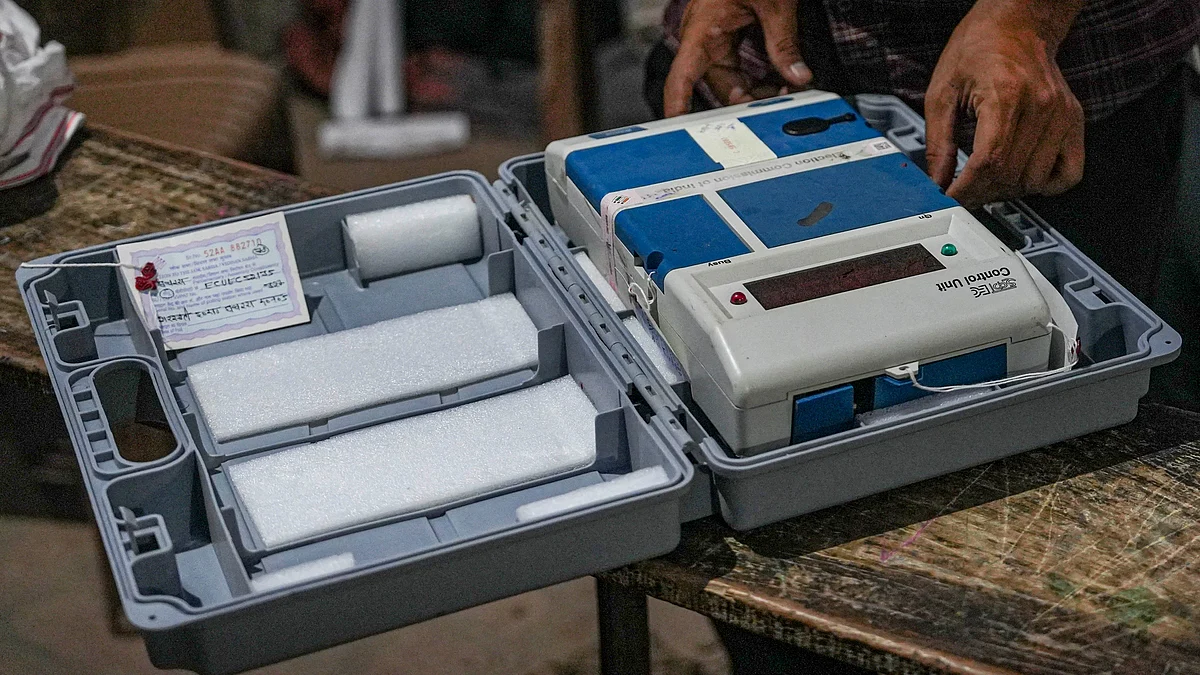


What prompted several democracies to swap the electronic voting machines and opt for ballot again? The decision was rarely the result of a single dramatic failure or proven mass fraud. It emerged instead from a growing recognition that certain electronic systems failed fundamental tests of transparency, public verifiability and technical accountability.
Across Europe and beyond, governments and courts found that machines recording votes solely in electronic memory created a black box that ordinary citizens and observers could not meaningfully inspect. The technical shortcomings proved decisive. India’s experience has followed a different path, yet questions of verification and public confidence continue to feature in electoral discussions.
In the Netherlands, electronic voting machines — predominantly Nedap models — had been widely used since the 1990s. By 2006 independent researchers showed that the machines could be compromised in minutes by replacing the EEPROM chips containing the firmware.
The attack required no sophisticated equipment and left no obvious external trace. The machines also emitted electromagnetic radiation that could, in principle, be captured to reconstruct individual votes. There was no voter-verifiable paper record. Once a vote was cast, it existed only as data inside the machine. Recounts simply reprinted the same electronic totals.
After parliamentary commissions confirmed the absence of adequate certification, source-code transparency and public auditability, the government withdrew regulatory approval in 2007 and restored manual paper ballots and hand counting.
Germany’s experience turned the same technical objection into constitutional doctrine. Nedap machines were used in parts of the 2005 federal election. In 2009 the Federal Constitutional Court ruled that the essential steps of an election — casting and counting — must be capable of being understood and verified by any citizen without specialised knowledge.
The machines stored votes only in electronic memory, with no independent physical record that a voter or observer could examine. The court did not ban electronic voting in principle; it held that any system placing the decisive recording and counting steps beyond ordinary public scrutiny violated the democratic principle of public election control. Germany returned to paper.
Ireland followed a similar path. After limited pilots in 2002, the government purchased thousands of Nedap machines at a cost that eventually exceeded €50 million. Technical reviews centred on the same issues: the machines produced no durable paper trail, the software was proprietary and closed, and independent verification of the recorded vote was impossible.
Storage, maintenance and the risk of undetected firmware alteration added further costs. In 2009 the project was abandoned and the machines were later scrapped. Elections continued with pencil and paper.
Finland’s 2008 municipal pilots ended with court-ordered re-runs after technical and procedural failures. Later official evaluations of internet-enabled electronic voting concluded that the risks of undetectable manipulation and software vulnerabilities outweighed any gains in convenience.
Kazakhstan discontinued its Sailau system after persistent problems of public confidence, software updates and the absence of a reliable audit trail. Bangladesh used electronic machines in a limited number of constituencies in 2018 and returned to paper for the 2023 general election amid opposition concerns about opacity and the lack of an independent verification mechanism.
These cases share recurring technical deficiencies. First is the absence of a voter-verifiable paper audit trail. Without a physical record that the voter can inspect, there is no independent check against the electronic total. Second is the opacity of the software and firmware. When source code is proprietary or insufficiently open to independent inspection, outsiders cannot confirm that the machine records votes as intended.
Third is vulnerability to side-channel attacks and physical tampering — electromagnetic emissions, chip replacement and supply-chain risks were demonstrated on already-certified machines.
Fourth is the difficulty of meaningful recounts: electronic systems that simply re-read the same memory cannot resolve disputes the way a physical recount of paper ballots can.
Fifth is the problem of long-term maintenance and certification. Hardware ages, software requires updates, and each change reintroduces the need for re-certification under political pressure and limited technical expertise among election officials.
India introduced Electronic Voting Machines on a limited scale in the 1990s and extended them to all constituencies for the 2004 Lok Sabha elections. The Election Commission of India has stated that the machines are standalone devices with no network connectivity, that their software is stored on one-time programmable chips, and that administrative measures such as randomisation of machines, sealing, presence of candidate agents and mock polls are designed to prevent tampering.
In 2013 the Supreme Court held that a paper trail was an indispensable requirement for free and fair elections. This led to the introduction of the Voter Verifiable Paper Audit Trail (VVPAT). Under the system, a voter presses a button on the control unit and a printed slip becomes visible for seven seconds, showing the candidate and symbol selected, before falling into a sealed compartment.
A prescribed sample of VVPAT slips is later counted and matched against the electronic results. Several opposition parties have called for a substantially larger sample or for 100 per cent counting of VVPAT slips, citing the need for greater verification.
The Election Commission has maintained that the existing sample size, combined with other safeguards, is adequate and that full counting would significantly extend the time required for results. The debate has therefore focused on the appropriate scale of physical verification within the hybrid system rather than on a return to pure paper ballots.
India’s arrangement differs from the pure direct-recording electronic systems abandoned elsewhere because it incorporates a paper record that the voter can see. At the same time, the limited mandatory audit of those paper records and the reliance on proprietary hardware remain points of discussion among political parties and civil society groups.
The technical critique does not claim that electronic systems are inherently unworkable. Brazil has operated a nationwide electronic voting system for decades, and India’s hybrid model has been used across an electorate of nearly a billion people.
The decisive difference lies in design choices. Systems that produce an independent paper record that the voter can verify, and that allow robust statistical audits of that paper trail against electronic totals, address many of the objections that led other countries to abandon pure direct-recording electronic machines. Systems that leave the vote solely in electronic memory, or that severely restrict the physical audit, do not.
Underlying these technical objections is a deeper institutional insight. Elections are not merely exercises in efficient data collection. They are public rituals whose legitimacy rests on the ability of ordinary citizens to understand and oversee the process. When the recording and counting of votes disappear into proprietary hardware and closed software, that oversight becomes impossible for non-specialists.
Trust then rests on faith in vendors, certification bodies and election officials rather than on observable procedures. In polarised political environments, such faith is fragile.
Several democracies concluded that the slower, more tangible process of marking and counting paper ballots, for all its logistical imperfections, better satisfied the requirement of public verifiability.
India’s continuing discussion over the scale of VVPAT verification shows that even a hybrid system remains subject to the same fundamental test: can the ordinary citizen, without specialised knowledge, be confident that every vote has been recorded and counted as cast?
The author is a senior journalist from Telangana and a political analyst. More of his writing here
Join our official telegram channel (@nationalherald) and stay updated with the latest headlines