


Why Kerala needs a law against black magic
The state is overcoming its resistance to confront faith-based coercion
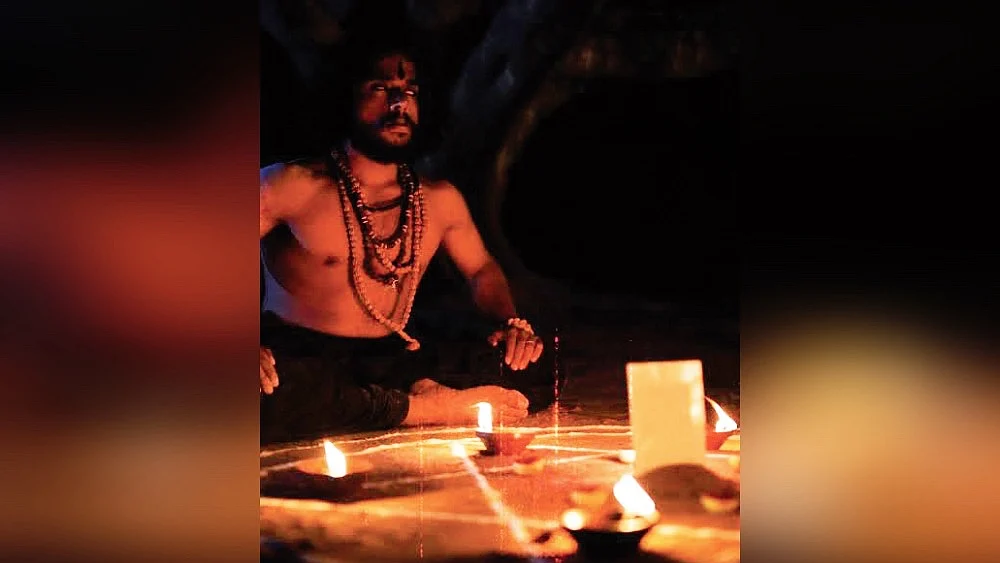


Occult practitioners? Miracle cures? Exorcisms? In a state built around literacy, education and social reform? That’s the contradiction of Kerala. Alongside its progressive ethos a parallel world survives, where people are willing to surrender their money, property, even their bodies to those claiming supernatural powers.
Kerala is preparing to legislate against this world. The V.D. Satheesan government has received the report of an expert committee constituted to recommend a law against black magic, sorcery and inhuman practices. The proposed legislation seeks to criminalise harmful practices carried out in the name of supernatural powers while protecting genuine religious belief and harmless cultural practices.
The committee was constituted in November 2025 following proceedings before the Kerala High Court. Comprising retired DGP Jacob Punnoose and K. Sasidharan Nair, vice-chairman of the Kerala Law Reforms Commission, former law secretary and district judge, the committee was asked to examine the legal dimensions of such a move, study similar laws in other states and revisit the draft prepared by the Law Reforms Commission of 2019, led by Justice K.T. Thomas. Most importantly, the new committee was tasked with the difficult question: how can Kerala criminalise superstition without criminalising belief?
Its preliminary exercise identified 34 harmful practices in three broad categories. The first covered death, grave bodily harm, sexual offences and life-threatening rituals. The second dealt with physical harm, coercion and degrading practices. The third concerned fraud, deception, financial exploitation and digital manipulation carried out under the guise of occult practices. The final recommendations narrow it down to 22 offences, of which human sacrifice and acts causing death would attract the severest punishment.
The proposed legislation does not attempt to determine whether religious belief is rational or irrational. It seeks to identify the point at which belief becomes an instrument of coercion, violence or fraud.
It comes after years of political reluctance to confront practices that might be claimed as a matter of faith. The 2019 draft was the most substantial attempt, but it never reached the statute book. The Elanthoor human-sacrifice of 2022 — when Roslin and Padmam were murdered in Elanthoor, Pathanamthitta — revived the debate. The killings exposed the disturbing intersection of money, manipulation and occult belief. In 2023, the Pinarayi Vijayan government decided not to proceed with the earlier Bill.
There were other cases. In 2017, there were the Nanthancode killings in Thiruvananthapuram. Cadell Jeanson Raja was arrested after four members of his family were found dead. Investigators said Raja went on about astral projection and supernatural powers. In 2018, a family of four was killed at Vannappuram in Idukki. Investigators linked the murders to a dispute involving occult practices.
Some were subjected to brutal attempts at exorcism. When illness, mental distress or family problems are attributed to an evil spirit, the victim is trapped between fear of the supernatural and dependence on the person claiming to possess the power to remove it.
Existing criminal law already covers murder, rape, assault and cheating. But it does not always directly address the mechanism through which a victim is controlled: the claim that an unseen power has identified a disease, demanded an offering or ordered a particular act.
The proposed legislation attempts to recognise that mechanism when it becomes an instrument of exploitation. The committee’s preliminary classification included extortion through threats of supernatural harm, fraudulent diagnosis of illness as black magic, false predictions of calamities for financial gain, exploitation of grief through claims of communication with the dead, fraudulent supernatural cures, coercion to surrender money or property, fake supernatural objects, manipulated miracle content and online platforms offering prohibited services.
The last category reflects a shift — the village sorcerer has become passé. The occult economy has entered the digital marketplace, packaged and sold through videos, ads, messages across geographical boundaries.
Kerala has a thriving market for astrology, faith healing, spirit appeasement and occult remedies. People approach practitioners over illness, infertility, marital disputes, bereavement, business failures, fears about enemies... Some are persuaded that their problems are caused by curses, evil spirits or black magic.
“See the classified section in any Malayalam daily,” says writer and social observer M.N. Karassery. “See how many ads promise magical cures and miraculous healing!”
While literacy is clearly not enough to address the hunger for certainty, thinker and writer Sunil P. Elayidom believes authentic studies are required to understand why Kerala society “harbours so much superstition despite its radicalisation over the years through reformist movements and popular science organisations”.
Psychiatrist Arun B. Nair has highlighted another dimension: people involved in such practices use social acceptability as a mask to avoid scrutiny of illegal activities.
Kerala’s cultural landscape makes the legislative challenge harder. Its religious traditions include piercing, fasting, trances, physical endurance, trial by fire, many defended as centuries-old community practice. Theyyam is perhaps the clearest example, simultaneously understood as ritual, religious expression, performance and heritage.
A law that is too broad could interfere with religious freedom. A law that is too narrow could become ineffective against the practices it seeks to prevent.
The proposed framework attempts to resolve this by concentrating on consequences. A prayer is one thing. Forcing a sick person to abandon medical treatment is another. A ritual is one thing. Burning, mutilating or killing someone is another.
The state does not have to determine whether a deity exists, whether an astrologer’s prediction is correct or whether a ritual has spiritual value. Its legal concern is whether a person has been deceived, coerced, injured, sexually exploited, robbed or killed.
The problem also includes children subjected to dangerous rituals, women branded as possessed or bearers of misfortune, patients diverted from medical treatment, vulnerable people persuaded to part with their money or property.
“A criminal statute alone cannot end superstition. It can punish the person who converts belief into violence or fraud, but it cannot legislate scientific temper. Schools, doctors, mental-health professionals, women’s groups, child-protection agencies, police and communities will all have roles to play,” Elayidom says.
“The Satheesan government’s challenge is not simply to pass a law. It is to pass one that is constitutionally sound, precise enough to prevent misuse and strong enough to protect people who become victims of occult exploitation,” says social observer Prof. M.C. Vasisht.
The proposed law will not eliminate superstition from Kerala’s social life. It will hopefully establish, in no uncertain terms, what the law will not tolerate.
As Karassery put it, “The question before Kerala is not whether people should be allowed to believe. They should. It is whether belief can be used to justify violence, fraud, coercion or exploitation.”
Join our official telegram channel (@nationalherald) and stay updated with the latest headlines