


Whatever be the verdict on 4 May, thank West Bengal’s women for it
In the 2024 Lok Sabha polls, 53% of women supported TMC, up by 11% from 2019, showing consolidation amid welfare focus
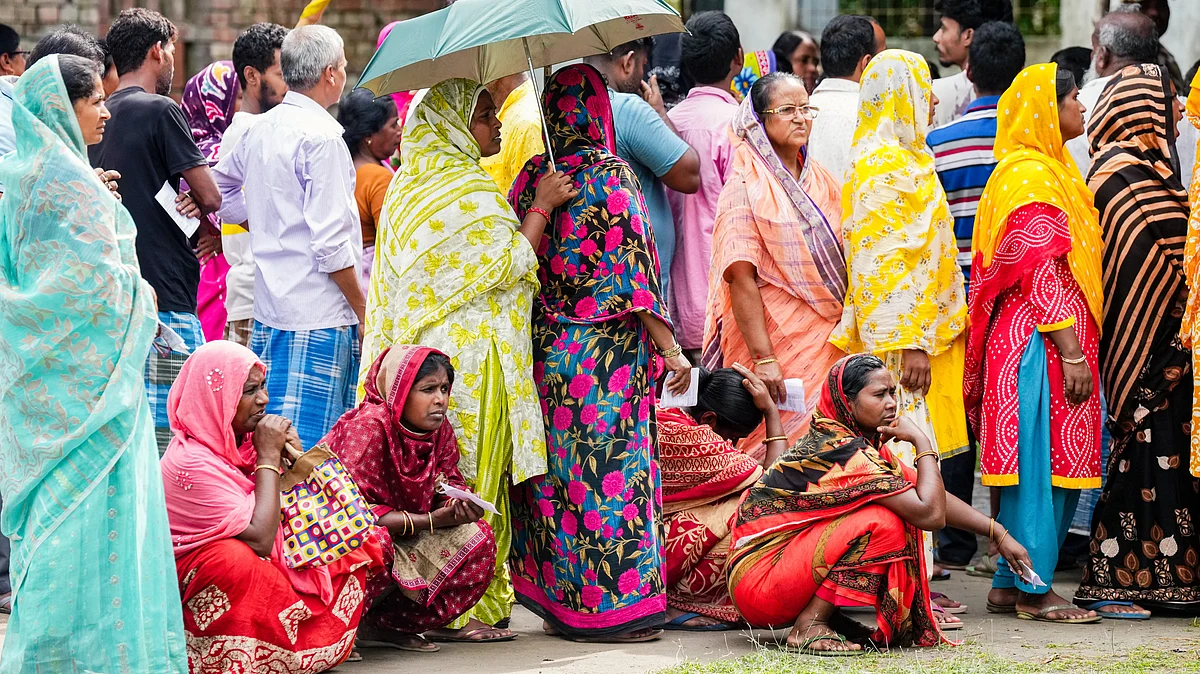


As the dust settles on the second phase of the 2026 West Bengal Assembly elections, one reality stands out amid the intense contest between the Trinamool Congress (TMC) and the Bharatiya Janata Party (BJP): women voters will ultimately determine the outcome. With nearly half the electorate comprising women — around 3.44 crore out of over 7 crore eligible voters before the special intensive revision (SIR) — they have consistently shown higher turnout and consolidated preferences that transcend simple arithmetic.
This election occurs against a backdrop of unprecedented scrutiny. The Election Commission of India’s (ECI) SIR of electoral rolls led to the deletion of approximately 91 lakh names, shrinking the electorate by about 12 per cent.
Analyses indicate a disproportionate impact on women, who accounted for over 61 lakh of those affected — roughly 61.8 per cent of deletions. Rural women, in particular, faced challenges owing to name changes after marriage, spelling discrepancies in documents, and legacy data issues, leading to higher exclusion rates compared to men.
Despite these hurdles and claims of bias, women’s participation remains robust. Long queues of women voters in districts like North and South 24 Parganas highlight their engagement. Historically, West Bengal’s female electorate has not voted in a fragmented manner but often consolidated behind leaders and parties delivering tangible benefits and a sense of security.
From the Left Front and Congress eras to Mamata Banerjee’s rise in 2011, women have been pivotal. Banerjee’s TMC built a formidable base through targeted schemes, turning women into a reliable vote bank that cuts across caste, class, and, to some extent, religion.
The BJP has mounted a strong challenge, promising higher financial support and highlighting governance issues like jobs and safety. Exit polls suggest a potential shift, but past predictions in Bengal have often faltered. What remains constant is that women’s choices — driven by welfare delivery, emotional connect, documentation struggles, and leadership appeal — will define whether the TMC retains power or the BJP breaks through.
Also Read: Women still hold the key in Bengal
This is not mere symbolism; it reflects deeper socio-political shifts in a state where women’s turnout frequently matches or exceeds men’s, and their pragmatic assessment of stability sways results.
How women voted in Bengal: Insights from patterns
Lokniti-CSDS post-poll data from the 2021 West Bengal Assembly elections provides a clear benchmark. Around 50 per cent of women voted for the TMC, compared to 46 per cent of men, while the BJP received 37 per cent of the women’s vote versus 40 per cent from men. Women from poorer income brackets, Adivasi communities, and certain upper-caste and Dalit groups showed an even stronger preference for the TMC. This gender gap, though narrowing slightly from previous cycles, underscored Banerjee’s appeal as a fighter and provider.
In the 2024 Lok Sabha polls, CSDS-Lokniti noted 53 per cent of women supporting the TMC — an 11 per cent increase from 2019 — demonstrating consolidation amid welfare focus. Unlike men, whose votes often split more along ideological or anti-incumbency lines, women have tended to prioritise direct household benefits and personal security. This pattern aligns with national trends where female voters increasingly act independently, not as proxies for male family members.
The SIR effect
The SIR process has emerged as a major flashpoint and raised concerns about disenfranchisement, particularly in rural areas. Marriage-related name changes, lack of updated documents, and higher migration rates for women due to social norms has led to 'logical discrepancies', resulting in deletions for 'permanently shifted', 'untraceable', or other categories.
This has not created emotional detachment from the TMC, as many affected women and their families attribute the rigorous process to Central initiatives backed by the BJP. In Muslim and SC/ST-heavy areas, where women deletions were pronounced, resentment may consolidate support for the incumbent as a defender against perceived external interference.
Far from eroding loyalty to the TMC, the SIR could galvanise women to assert their franchise more vigorously, viewing it as an attack on their participatory rights. Higher female turnout in sensitive phases, aided by Central forces reducing violence, further amplifies this dynamic.
Also Read: West Bengal: Has the ECI done enough?
The enduring welfare net
Mamata Banerjee’s government has engineered one of India’s most comprehensive women-centric welfare architectures since 2011. Schemes like Kanyashree (incentivising girls’ education and delaying marriage with annual stipends and one-time grants), Rupashree (Rs 25,000 marriage assistance for poor families), Swasthya Sathi (cashless health insurance with women as primary cardholders), and the flagship Lakshmir Bhandar (Rs 1,500-1,700 monthly direct benefit transfer to women aged 25-60, covering over 2 crore beneficiaries) have created deep penetration.
Lakshmir Bhandar, in particular, provides financial autonomy, credited with boosting household stability and women’s self-worth. These programmes target women directly, bypassing intermediaries, and have demonstrable electoral returns. Even the BJP’s promises, such as higher stipends of around Rs 3,000, implicitly acknowledge this model’s popularity by pledging to retain or enhance core elements rather than dismantle them.
Incumbents delivering consistent welfare often reap rewards, as seen in multiple states. If women prioritise this safety net amid anti-incumbency on jobs and corruption, it could blunt opposition gains. A BJP victory would signal a historic defiance of this net, indicating women voters valued change over continuity — a seismic shift in Bengal’s politics.
The appeal of ‘Didi’
Mamata Banerjee’s personal image as a resilient, self-made leader resonates profoundly with Bengal’s culturally women-influenced rural society. Portrayed as embodying strength against adversity, her narrative fosters an emotional bond transcending policy. Many women see her as a 'didi' (elder sister) who ensures safety and dignity, a perception reinforced by her confrontational style and direct outreach.
This popularity, built over 15 years, has withstood a myriad of challenges. Even amid criticism, surveys show sustained leads among women. A shift toward the BJP would mean anti-incumbency has eclipsed this appeal, marking a watershed. Conversely, retention would reaffirm women’s preference for stability and familiar leadership.
West Bengal’s political history underscores women’s role. They consolidated behind the Left and Congress earlier, then shifted decisively to TMC. Nationally, the 2025 Bihar Assembly election offers a parallel: Nitish Kumar’s NDA retained power largely on women’s support for welfare schemes, with female turnout outpacing men’s and delivering a landslide.
Sayantan Ghosh is the author of two books, Battleground Bengal and The Aam Aadmi Party
Join our official telegram channel (@nationalherald) and stay updated with the latest headlines