


Women still hold the key in Bengal
Even though the dubious SIR exercise has significantly reduced the female voter ratio in the state — a first in over a decade
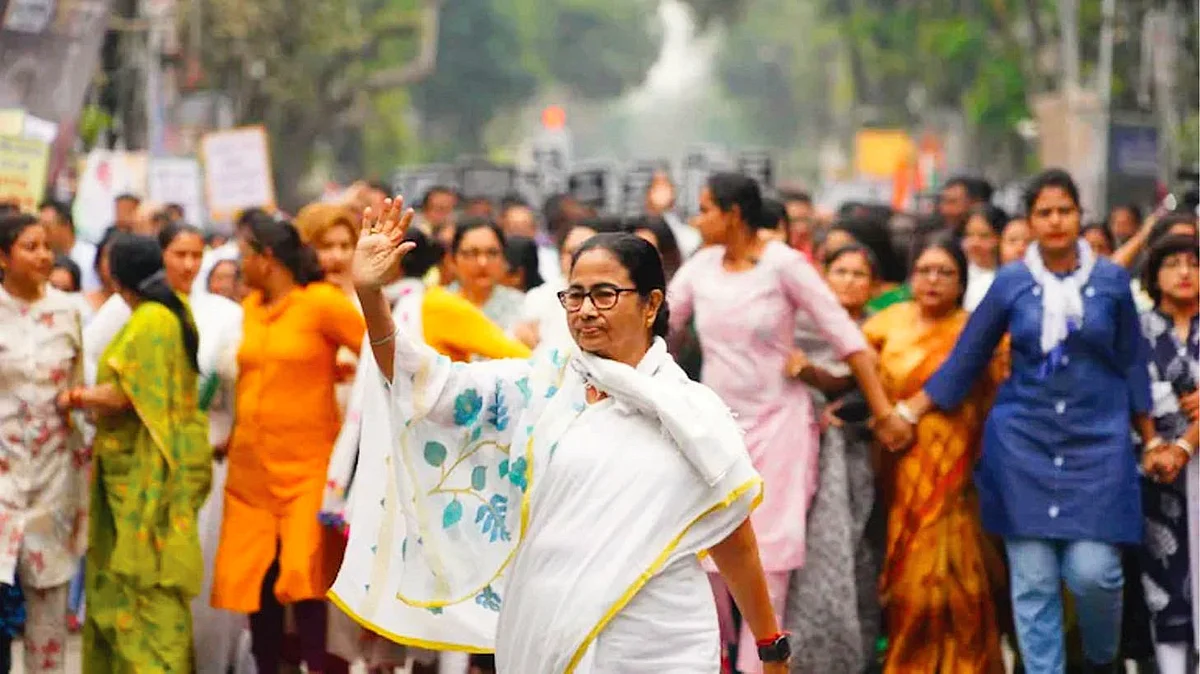


At her election rallies, West Bengal chief minister Mamata Banerjee repeatedly asks: “How many of you have had your names deleted from the voter list, raise your hands.” She then picks out a few who do, says they have “nothing to fear”, urges her party workers to help them file their appeals for re-inclusion, and proceeds to rail against the Election Commission of India (ECI) and its “bid to deny them their right to vote and much else” via the Special Intensive Revision (SIR).
Banerjee is possibly fighting her toughest electoral battle yet. After three terms, she faces anti-incumbency, corruption charges against several colleagues and growing frustration with the lack of jobs and industrial development in the state.
She is now in her 70s and up against a formidable rival in the BJP, which will stop at nothing to unseat her. But in the 2016 and 2021 elections, women voted overwhelmingly for their ‘Didi’, and if the trend endures, Banerjee is likely to retain power. The question is: will the trend endure?
The SIR has significantly reduced the female voter ratio in the state — a first in over a decade. Election Commission data, disclosed in a Rajya Sabha reply, show female electors in Bengal dropped to their lowest in 10 years, with the gender ratio falling from about 966 women per 1,000 men in the 2024 Lok Sabha rolls to roughly 956 after the SIR.
How will the deletions impact the electoral outcome? Trinamool Congress leader and state minister Chandrima Bhattacharya is blunt: “The Election Commission,” she says, “has deliberately targeted women voters. Our booth-level agents were not allowed at the hearing sessions to help voters.”
The hitherto unheard of category of ‘logical discrepancy’, she adds, “was not even mentioned when the SIR started.” It was introduced later with the sole intention of deleting the names of genuine voters, she says, even while maintaining that the ploy will not work.
Political analyst and academic Prof. Biswanath Chakraborty admits that the SIR adds a new layer of uncertainty to the electoral math. “The gender-ratio decline poses a more serious headache for the TMC than the deletion of Muslim voters,” he notes, adding that it may become a decisive factor in closely fought seats. Yet, he expects that “a consolidation of this vote bank” (read women) and a higher turnout will help Banerjee make up lost ground.
****
Mamata Banerjee’s brand of welfarism, criticised by both the Left and the Right, for prioritising doles over industry, has nevertheless cemented her bond with women voters. Some observers point out that her welfare schemes for women are better targeted and budgeted for — unlike the pre-election cash transfers to women that go by names like Ladli Behna and Ladki Bahin in BJP-ruled Madhya Pradesh and Maharashtra, the kind of ad hoc, pre-election largesse that has become the new standard.
Another important difference is the consultative process. The TMC’s first finance minister, noted economist Dr Amit Mitra, is credited with the introduction of Kanyashree in 2013 — a conditional cash transfer tied to delaying child marriages. Girls attending school and staying unmarried receive annual scholarships, going up to Rs 25,000 after finishing their higher secondary. The scheme has even won recognition from the United Nations and has benefited 10 million girls, as per state government claims.
Next came Rupashree (2018), a one-time grant of Rs 25,000 to cover wedding expenses of adult women from poor families. In 2021 came Lakshmir Bhandar — covering about 2.4 crore women — a universal cash transfer scheme to all eligible women aged 25-60. While the amount is small, ranging from Rs 500 to Rs 1,700, graded for general categories and for SC/ST women, the money is regularly transferred to the accounts of all eligible women.
These cash transfers are over and beyond the old-age and widow pensions, the universal health insurance scheme Swasthya Sathi (2016) — launched long before Ayushman Bharat — with women controlling the family card, Sabuj Sathi (2025), which offers bicycles to school-going boys and girls, and the grants to build toilets and houses.
Months ahead of the upcoming Assembly elections, the state government increased amounts paid under these schemes and the 2025-26 budget allocated over Rs 1.18 lakh crore for gender-specific schemes and Rs 59,000 crore for child-related initiatives.
The women & child development department’s budget was increased to Rs 38,000 crore. The honorarium for ASHA frontline health workers increased, and the newly introduced Yuba Sathi scheme offers Rs 1,500 per month for up to five years to unemployed youth aged 21-40.
Other programmes like Muktidhara empower rural and tribal women with micro-enterprise aid, while the Mahila Samriddhi Yojana provides credit and subsidies to SCs and marginalised women entrepreneurs.
****
The difference is visible on the ground. Dipali Santra, a flower seller, thanks Didi for bailing her out when her husband lost his job as a driver during the Covid pandemic. She has since expanded to selling bottled water, sattu sherbet and snacks. “We’re grateful to Didi,” says her son Surajit. “Mamata Banerjee gave my mother the strength to fight back.”
On Kolkata’s Amherst Street, Puja Ghosh runs a small roadside stall selling sindoor, incense and garlands — another testimony to how these cash transfers have enabled livelihoods.
Trinamool Rajya Sabha MP Rachana Banerjee hosts the popular TV show Didi No. 1 on Zee Bangla, which showcases success stories of gritty women. “Many village women have used their allowances to start poultry farms, buy sewing machines or open tiny grocery shops,” she says. “These allowances don’t make life easy, but they do reduce precarity; they give these women breathing room — and often a dream that better days may lie ahead.”
Commentator Sudipta Sengupta notes: “Mamata Banerjee knew which issues mattered and developed these schemes with inputs from her core team.”
But not everyone is convinced that these cash doles are just what the doctor ordered. Former CPI(M) councillor Niyoti Dasgupta, for example, who laments failed attempts to convince women to pursue education and prefer steady employment over cash doles.
Political analyst Sujit Chatterjee says the BJP’s “bidding war” (read competitive doles) could win over a section of younger urban women but most women in rural areas will remain loyal to Mamata.
The BJP may have some credibility challenges as well, if this anec-dote is illustrative: a young man confronted BJP workers campaigning from an e-rickshaw in Greater Kolkata’s Howrah area. “Why are you spreading lies?” he charged, pointing out the BJP’s failure to deliver on a Delhi scheme that promised Rs 3,000 per month to women.
Voter sentiment aside, many political observers think the out-come of this election too will pivot on the SIR exercise, the impossible timelines for adjudication of disputes, and how many make it to the final voter list.
Join our official telegram channel (@nationalherald) and stay updated with the latest headlines