


Mamata Banerjee pitches Bengal polls as battle of identity, says Delhi next
Chief minister raises voter list concerns, Bengali identity and national ambitions at Debra rally
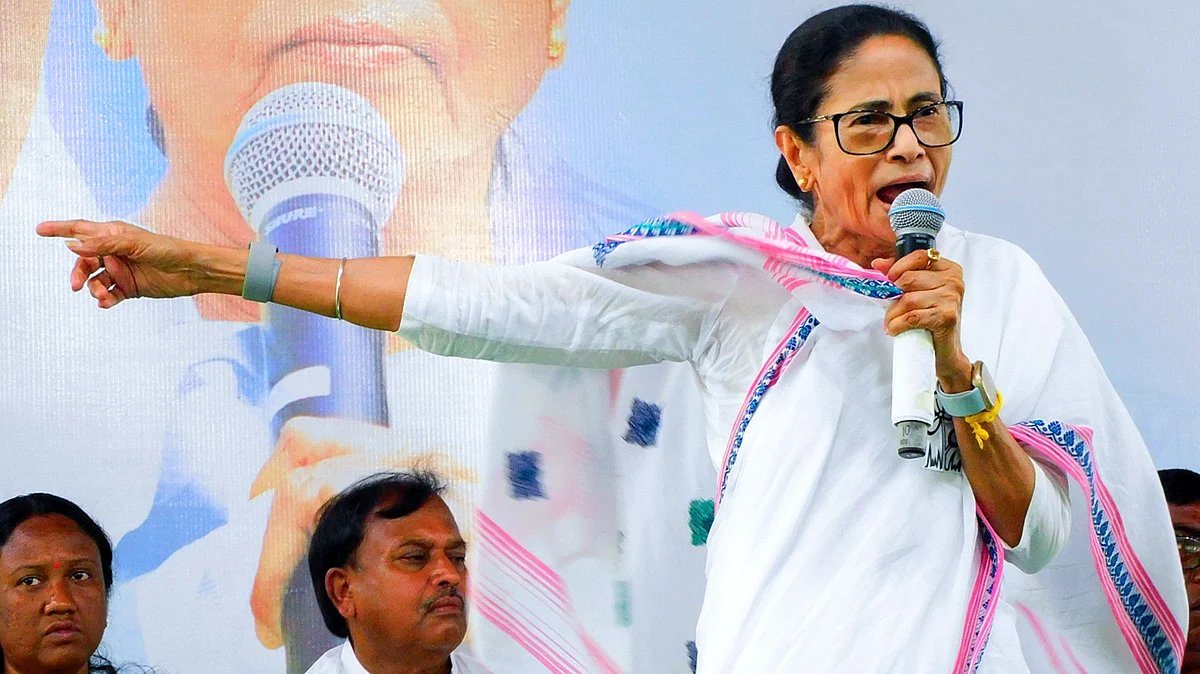


West Bengal chief minister Mamata Banerjee on Monday foregrounded Bengali identity, the Special Intensive Revision (SIR) of electoral rolls and the Trinamool Congress’ national ambitions during her campaign in Paschim Medinipur, declaring that after winning the upcoming election her party would work towards “capturing Delhi”.
Addressing a rally in Debra, a politically significant constituency where the BJP had made major gains in 2021 before the TMC regained ground in the 2024 Lok Sabha polls, Banerjee framed the election not merely as a contest for power in Bengal but as a wider political battle against what she described as attempts by the BJP to control the state politically, culturally and electorally.
“After winning in West Bengal, we will unite everyone across the country to capture Delhi,” the TMC supremo said, signalling her attempt to position herself as a key anti-BJP voice nationally while fighting a high-stakes electoral battle at home.
At the centre of Banerjee’s attack was the allegation that the Centre and the election commission were acting in tandem to weaken the state government and influence the electoral process.
“The landlords of Delhi have taken away all powers from my hands,” she said, invoking a long-standing political theme of Bengal versus Delhi that the TMC has frequently used to mobilise regional sentiment.
Banerjee repeatedly accused the BJP of being “anti-Bengal” and attempted to turn discontent surrounding the SIR process into a broader political issue.
“You have made people stand in queues. You have humiliated them. The people will take revenge for this humiliation through the ballot box,” she said, in remarks aimed at converting alleged voter list irregularities into electoral mobilisation.
With the opposition and the ruling party engaged in a sharp political contest over alleged deletion of names from voter lists, Banerjee claimed that lakhs of genuine voters, particularly women and Bengali-speaking citizens, had been removed.
“Many names have been deleted. Check online and apply. I will ask (Debra TMC nominee) Rajib Banerjee to look into it. We will provide lawyers,” she said. “There are still 60 lakh names under logistical discrepancies. Even if 50 per cent of those names have been restored, the credit goes to our legal battle. I myself went to the Supreme Court and fought.”
She further alleged that BJP leaders had spoken publicly about deletions even before the Election Commission had clarified the process, suggesting political foreknowledge of administrative action.
By foregrounding the SIR issue, the TMC appeared to pursue a twin strategy — energising sections of its traditional minority and Bengali-speaking support base while also appealing to women voters, a constituency that has consistently backed Banerjee in previous elections.
“They are anti-women. Most of the deleted names are of mothers and sisters,” she said, arguing that women may have faced difficulties in the revision process due to surname changes after marriage.
Banerjee also attempted to reinforce the TMC’s social coalition across caste, religion and community groups at a time when the BJP is seeking to expand its base among sections of Scheduled Castes, Scheduled Tribes and Other Backward Classes in south Bengal.
“Just as everyone fights for our tribal candidates, we must fight for Hindu candidates, and where there are Muslim candidates, we must fight for them too. Because we are the ones who will form the government,” she said, projecting the TMC as a broad umbrella formation cutting across social divisions.
Also Read: Of online battles and a ‘clerical error’
The choice of Debra as a campaign venue carries political significance. Located in Paschim Medinipur, a district where the BJP emerged as a strong challenger in the last Assembly election, the region has witnessed an intense contest for tribal, rural and lower middle-class voters in recent electoral cycles.
Banerjee also criticised what she described as attempts to impose cultural preferences on Bengal, particularly in relation to food habits. “Why are they so obsessed with Bengal’s food? They tell people not to eat fish, not to eat meat, and not to eat eggs. What do they want people to eat?” she said.
The remarks echoed a recurring TMC campaign theme that the BJP seeks to impose a north Indian cultural template on Bengal. “If you go outside West Bengal and speak in Bengali, you may not be allowed to stay in a hotel. You may be attacked or even beaten to death. Wherever the BJP is in power, they do not allow fish to be eaten. Fish and meat shops are shut,” she claimed.
Sharpening her attack on the BJP over religion, Banerjee accused the party of politicising faith. “They talk in the name of religion but mislead religion itself. They do not believe in any religion. We keep religion at home and respect it. They trade in religion, while we believe in humanity,” she said.
She also accused the BJP of disrespecting Bengal’s historical icons, including Ishwar Chandra Vidyasagar, Bankim Chandra Chattopadhyay, Raja Rammohan Roy and Khudiram Bose.
“Vidyasagar’s statue was broken during Amit Shah’s rally (in 2019 in Kolkata). They don’t respect icons of Bengal and don’t know our culture and heritage. Where was the BJP during the freedom struggle? Did it even exist?” Banerjee said.
With PTI inputs
Join our official telegram channel (@nationalherald) and stay updated with the latest headlines