


China steals another march on India
India has been caught flat-footed as Bangladesh pursues a deeper partnership with China, embracing strategic investments in its economy
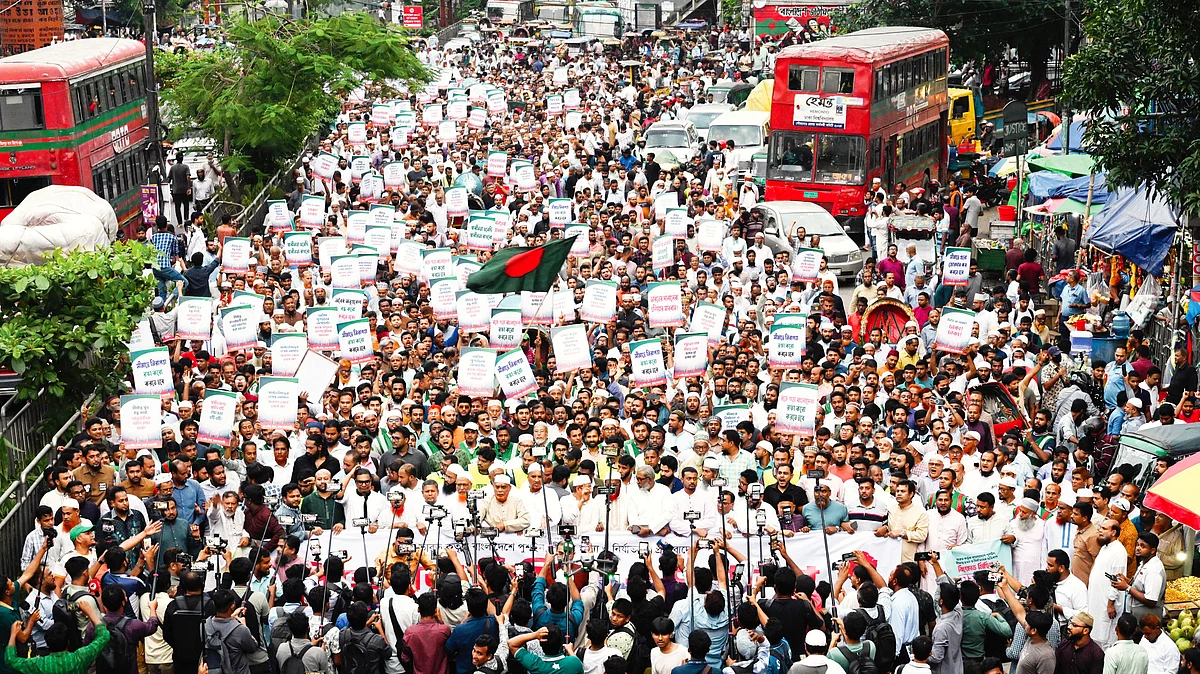


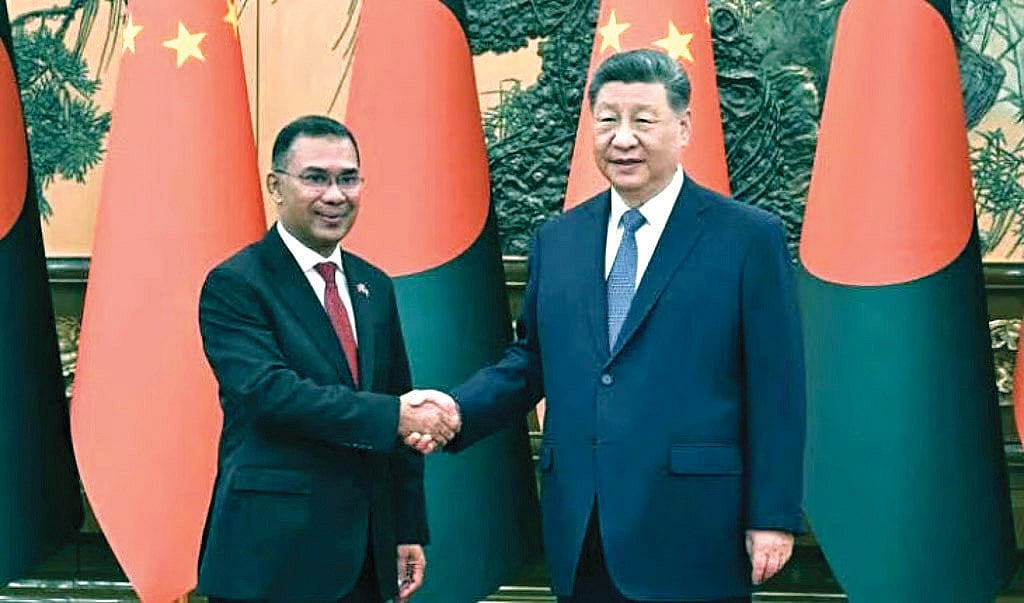
India’s policy towards Bangladesh remains mired in pushing back supposed illegal migrants or raising the bogey of Jamaat consolidation along the border — ‘issues’ highlighted ahead of the recently concluded elections in West Bengal. Meanwhile, Bangladesh’s new government has wasted no time in signalling where it sees the country’s economic future. Prime Minister Tarique Rahman’s recent visit to Beijing, his first official visit, saw a raft of agreements on investment, technology and infrastructure.
There was another more consequential shift. The visit revived three projects that have been on Bangladesh’s development agenda for years — the China-backed economic zone at Mongla Port, the long-delayed Teesta River Comprehensive Management and Restoration Project and the proposed China–Myanmar–Bangladesh Economic Corridor. Together, they reveal an intent to make economic development the pivot of its foreign policy and statecraft.
For decades, Bangladesh’s external engagements were shaped primarily by aid, trade preferences and development partnerships. Today, the country’s ambitions are markedly different. Having crossed the threshold into lower-middle-income status and preparing to graduate from the UN’s Least Developed Country category in 2029, Dhaka is increasingly seeking foreign relationships that will bring investments into the country — in its industry, infrastructure and towards greater integration with Asian supply chains.
That objective framed Rahman’s discussions with Chinese President Xi Jinping and Premier Li Qiang. The two governments elevated bilateral ties to what Beijing described as a ‘China–Bangladesh community with a shared future’. Both governments reaffirmed cooperation under the Belt and Road Initiative and committed to accelerate projects that Bangladesh considers central to its next phase of economic development.
Foremost among these is Mongla, Bangladesh’s second-largest seaport, long overshadowed by Chattogram the country’s busiest port, despite occupying a strategic position in the southwest. Considerable investments over the past decade have improved navigability, expanded cargo- handling capacity and strengthened road and rail connections through the Padma bridge and associated transport networks. Yet it has not become a major industrial hub.
The government’s solution is to develop an export-oriented economic zone adjacent to the port with Chinese participation, turning Mongla into a manufacturing and logistics cluster rather than merely a maritime gateway.
Officials expect this move to attract factories serving regional and international markets while encouraging investment in warehousing, transport, shipbuilding and supporting industries. This reflects a broader shift in Bangladesh’s industrial policy. Instead of viewing infrastructure as an end in itself, the government increasingly sees ports, highways and railways as platforms for industrial eco-systems capable of generating employment, expanding exports and raising productivity.
That also explains the renewed urgency surrounding the Teesta River Project. For over a decade, policymakers have discussed interventions along Bangladesh’s fourth-largest river. The proposals extend far beyond dredging and embankment construction.
The project seeks to reshape the economic geography of northern Bangladesh through river restoration, flood protection, irrigation modernisation, urban development and land reclamation. Officials argue that controlling seasonal flooding, while improving water availability during the dry season, could significantly enhance agricultural productivity across multiple districts.
Modernising major river systems is, therefore, seen not simply as environmental management but as an investment in productivity and long-term growth. Rahman’s announcement following his return from Beijing that the Teesta project would proceed “without delay” underscored the administration’s determination to move from planning to implementation.
Also Read: A welcome in Dhaka, a hold-up in Delhi
The third pillar of the visit was connectivity. Bangladesh and China reaffirmed their commitment to the China–Myanmar–Bangladesh Economic Corridor, an initiative intended to strengthen transport and commercial links across the eastern Bay of Bengal.
The proposal complements Bangladesh’s longstanding ambition to position itself as a logistical bridge between South Asia and Southeast Asia. Improved road, rail and maritime connectivity would lower transport costs, shorten delivery times and enable Bangladeshi manufacturers to participate more deeply in regional production networks. That objec-tive has become increasingly important as Bangladesh seeks to diversify beyond ready-made garments even as apparel remains the country’s dominant export sector.
The message from Dhaka is clear and unambiguous — China has emerged as one of the few partners capable of providing all three simultaneously.
****
From India’s perspective, the upgrade of Mongla Port — though not immediately impacting the commercial interests of the Kolkata and Haldia ports — will shift regional trade alignments and present strategic and security concerns. While it will introduce direct maritime competition in the Bay of Bengal, the core importance of the Syama Prasad Mookerjee Port (Kolkata and Haldia) is tied to serving India’s domestic hinterland in the east, including the northeast and landlocked neighbours like Nepal and Bhutan.
While Nepal actively utilises its northern passes with China at Rasuwagadhi-Gyirong and Tatopani-Zhangmu as secondary lifelines, Bhutan maintains a strict policy of zero direct land connectivity with China. However, ‘grey zone’ encroachments at Doklam in Western Bhutan in 2017 and satellite imagery reveal Chinese villages being constructed and ‘border guardians’ placed inside what Bhutan reckons as its own territory. Experts point out that it is a matter of time before such ‘encroachments’ get upgraded to all-weather roads connecting Nepal and Bhutan to China from the north, undermining India’s regional advantage.
Indian intelligence and defence experts are concerned that an upgraded Mongla — located 188 km from Kolkata and only 80 km from the Indian border — will be too close for comfort.
Although senior officials in India’s ministry of external affairs dismiss the Teesta River Project as non-viable due to lack of adequate water, security concerns similar to those over China’s involvement in Mongla port remains.
Tarique Rahman’s maiden foreign visit to China (instead of the customary first visit to India under earlier regimes) and the transfer of key infrastructure projects to China signals Bangladesh’s broader policy shift to reroute regional transit dependency away from Indian networks. The shift appears quite rational in light of the anti-Bangladesh rhetoric of BJP leaders in the run-up to the West Bengal elections and their preoccupation with the rise of radicalism along the border districts.
At the same time, the decision of the US department of war to rename the US Indo-Pacific Command back to its legacy title, US Pacific Command, dropping the ‘Indo’ prefix, leaves no room for doubt on who is filling the strategic vacuum.
“There is no doubt that China now has a stronger footprint in the Bay of Bengal region. While Bangladesh has expressed its willingness to work closely with India, there is no reason why it won’t deepen its engagement with China,” says Bangladesh watcher Sreeradha Datta, lamenting the demise of India-fronted regional initiatives like BIMSTEC.
Faisal Mahmud is a Dhaka-based journalist. Sourabh Sen is a Kolkata-based writer on politics and foreign affairs
Join our official telegram channel (@nationalherald) and stay updated with the latest headlines