


From American dominance to the China challenge
A rivalry that will define the modern age
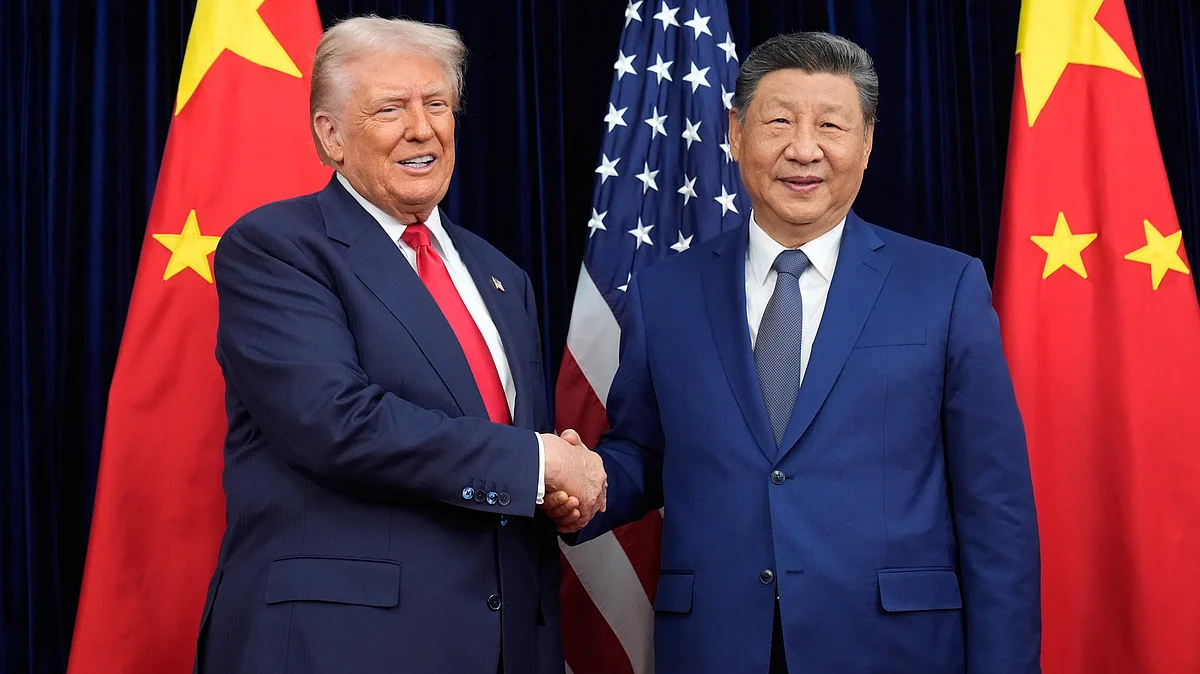


One of the more interesting things to look forward to in 2026 is the rivalry between the two great powers of our age. The United States has enjoyed a full century of global dominance from the end of the first world war (the US entry in the final stages of the trench-war standoff was though to be decisive against imperial Germany) in 1918 to the present time.
This period of dominance is ending if it is not over already. In 2000, the United States ruled over global trade. Today it is China which is the largest partner for more than 150 nations. For many there is no option: New India is reluctant to engage with Beijing but is forced to import more from China than from any other nation.
Winning the trade wars globally has given China the sort of leverage that perhaps even the US did not have at its peak a quarter century ago. China takes in $3 billion in trade surplus per day, which is astonishing, and that is what its $ 1.1 trillion surplus for 2025 means. This will increase this year because of momentum.
China exported 10 lakh cars in 2020 and five years later this became 70 lakh cars. And these cars are getting better and cheaper, meaning even more adoption globally. In renewable energy, making the devices that produce solar and wind energy, China has no competitor.
It has 85 per cent global market share in the former and some 60 per cent in the latter. Some 70 per cent of the world’s electric vehicle batteries are made in China. It makes half or more of the world’s steel, aluminium and cement. About three fourths of the world’s drones are Chinese.
More than half of the world’s ships are now made in China, particularly the most complicated ones: LNG tankers, cruise ships, large military vessels and of course container ships that carry all the goods around the globe. Under president Trump, the US tried to bully the world with tariffs. China alone stood and punched back successfully while most nations including New India have ‘eaten the tariffs’ as Trump puts it.
But China gave it back and won. Trump backed down from his escalation, and today the US defence industry has to go to Beijing cap in hand to beg for the magnets and materials without which they cannot make their missiles and jets. A few weeks ago Trump eased the export controls on high end chips from Nvidia to China but Xi Jinping said China would not buy them and would make their own, even if they were slightly less efficient for now.
Last month, a report came that China was had made a breakthrough in the only remaining high-tech sector where it had been denied access: lithography for chips. This did not surprise people because it is generally understood that if something is linked to manufacturing, however complicated it is, China will get it done.
The same applies to commercial aircraft, which for more than six decades has been a duopoly enjoyed by Boeing in the US and Airbus in Europe. China introduced its commercial jet last year and in 2026 we will see wider adoption of it. The bits that are for now imported: the engine turbines, the landing gear, some software, will be made local.
Also Read: The BJP's intent versus India's apathy
China commissioned its first indigenous high-end aircraft carrier a few months ago, and this year will likely bring out its first nuclear-powered one. After that happens, replicating and even improving it will be a piece of cake for the global manufacturing powerhouse.
A US defence report said that in 10 years’ time China would have almost as many carriers as the US has today (which is 11) and would in fact have more in the western Pacific, which is where the action is.
The same situation is to be found in the air and China in 2025 showed fighter aircraft which were ahead of the aging American fleet. The US dominance was in large part powered by the fact that the world’s talent migrated to America. This openness came with some advantages for Indians, particularly the middle class, because of our unique anglophone advantage.
The Trump policies have ended that as we can see with the H1B programme’s fees and the problems in the US universities. China, like India, has never welcomed immigrants. But it is comfortable with its uniformity and has headed off some of the issues that population stagnation has brought through vigorous deployment of industrial technology.
In 2018, China first felt open American hostility through trade. It anticipated what was coming and spent the next seven years preparing itself, the only nation to do so. It was ready by the time Trump returned to power a year ago and it has now become unstoppable. It spent that time in ensuring that it would not be dependent but would instead become atmanirbhar.
It achieved this so fully in such a short period of time that it is now the world that has become dependent on it. It has done so by going the opposite route the US has taken. It has increased the role of government, it has curbed the excesses of corporates, it has rejected the most advanced technology and chosen to make its own. It forced banks to stop lending to real estate and fund industry instead.
All of that planning and execution has put it in the place where it is today, the only serious challenger for global dominance to a US that is ageing in population, closing itself to the world and falling behind. It will be fascinating to see what new developments this year will bring in this great rivalry of our time between the two modern giants.
Views are personal. More of Aakar Patel’s writing may be read here
Join our official telegram channel (@nationalherald) and stay updated with the latest headlines