


Has Donald Trump met his Waterloo?
Not only has Iran not caved in, his misguided war has caused enormous damage to the economies of his Arab allies in the Persian Gulf


On 17 March, in the thick of the ongoing war in West Asia, a senior US intelligence official abruptly tendered his resignation. Joe Kent, director of the National Counterterrorism Center, posted on X, ‘After much reflection, I have decided to resign from my position…’
He went on to say, ‘I cannot in good conscience support the ongoing war in Iran. Iran posed no imminent threat to our nation, and it is clear that we started this war due to pressure from Israel and its powerful American lobby.’ Quite blunt in stating that the attack on Iran was unprovoked and unjustified.
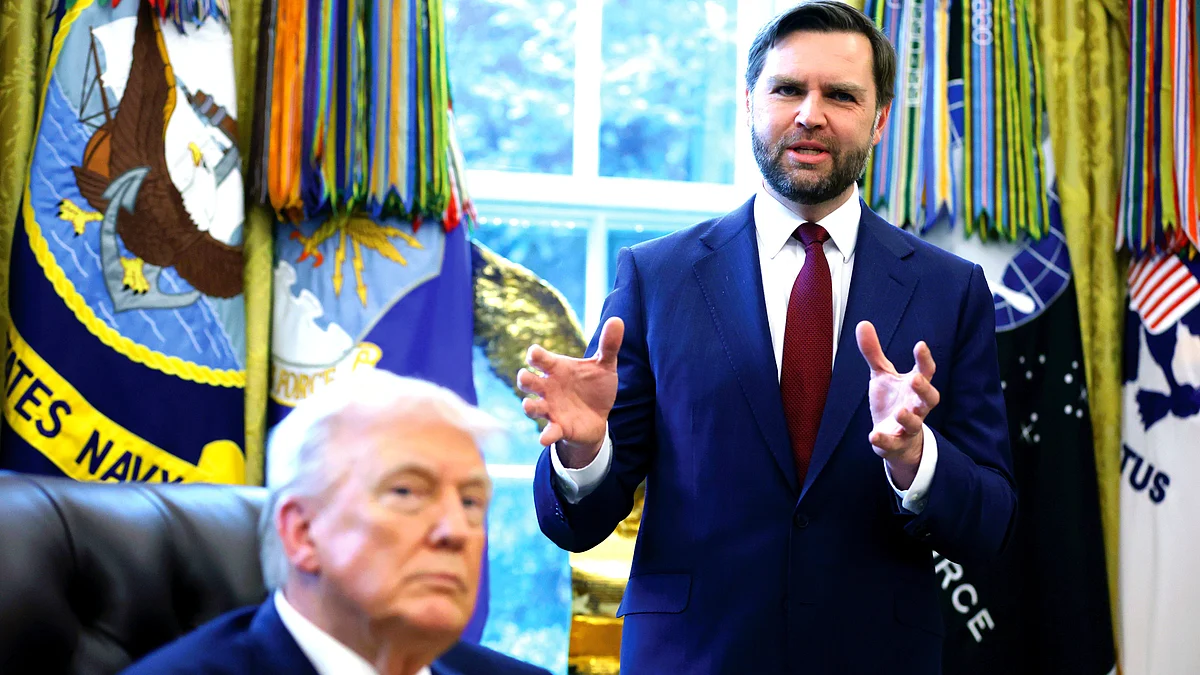
In a sense, Kent’s statement made public a view that several members in Trump’s cabinet privately hold but have not publicly aired. It is rumoured to be vice-president J.D. Vance’s opinion as well. Vance, however, was produced before the press in the Oval Office to support his boss. He said — and this was live on news networks — that he trusted Trump to make sure that ‘the mistakes of the past’ are not repeated. Vance may find it difficult to distance himself from the double-edged endorsement, if he runs for president in 2028.
CNN reported, ‘Kent was a staunch supporter of Trump and the MAGA (Make America Great Again) movement.’ His was the second public, headline-making departure from the Trump administration in this term after Elon Musk quit within weeks of being named the head of the short-lived and unpopular Department of Government Efficiency. It also exposed a fissure in the Trump regime, which could be the beginning of more dissent and possibly impact him in opinion polls.
At the presser where Vance spoke, Trump, while taking questions, said no intelligence had indicated that Iran might strike at its Arab neighbours in response to the US-Israel attack. This was ridiculed by commentators, who said this was surely to be expected given that these states had US military bases.
Also Read: How Trump and the mighty US were humbled
In his letter of resignation to Trump, Kent further says, ‘This echo chamber (meaning Israeli officials and a section of media) was used to deceive you into believing that Iran posed an imminent threat to the United States, and that should you strike now, there was a clear path to victory. This was a lie and is the same tactic the Israelis used to draw us into the disastrous Iraq war that cost our nation the lives of thousands of our best men and women. We cannot make this mistake again.’
He added, ‘You can reverse course and chart a new path for our nation, or you can allow us to slip further toward decline and chaos.’
Patty Murray, a Democrat Senator from Washington, once described Kent as a ‘conspiracy theorist’. But it’s undeniable that Kent possesses considerable experience in the military and counterintelligence, having done 11 combat tours in a 20-year career in the US Army and thereafter working as a CIA (Central Intelligence Agency) officer. His first wife Shannon was killed in a 2019 incident in Syria while serving as a US Navy cryptologist.
Trump characteristically rubbished Kent, describing him as ‘very weak on security’. After the initial wave of bombings on Iran, he had said it posed an ‘imminent threat’ to the US. Briefings by the Pentagon, the US department of war, to the Senate and the House of Representatives indicated that Iran had no such plans unless struck first.
Trump is putting up a brave face, but he will know from feedback that he has blundered. He didn’t expect the resistance Iran has mounted and didn’t expect the war to linger. By now, he surely knows he’s been taken for a ride by Netanyahu. Trump is capable of cutting him loose, of declaring suddenly that the US is done with this war, but he needs a face-saving exit — and Iran is not obliging.
Surveys in the US reveal that Americans, Republicans included, are not in favour of ground troops entering Iran. But there’s talk in Washington of a deployment to capture Iran’s Kharg island, which has a major oil export facility.
For over a month, the Strait of Hormuz, south of Iran, has been teeming with US Navy ships, including two aircraft carriers. An amphibious assault ship, the USS Tripoli, is said to have been detected by AIS (Automatic Identification System) tracking data off Singapore. The Tripoli was reportedly carrying a rapid response force of 2,200 marines.
At the White House media meet on 16 March, Trump was ambivalent — suggesting that the mission had almost been accomplished but also that Tehran was not agreeing to his terms. He didn’t spell out, though, what those terms were. The day after, he lashed out at the US’s NATO allies because they ‘don’t want to get involved’ in the conflict. If the US was indeed on the verge of victory, why was he calling on NATO allies?
Not only has Iran defiantly refused to end hostilities, Trump’s misguided war has caused enormous damage to the economies of his Arab allies in the Persian Gulf. Their oil and gas sectors have ground to a halt, with Iran choking shipments in the Strait of Hormuz.
Their operations as air transport hubs have had to be significantly curtailed. Their reputation as financial capitals, as thriving tourist destinations has taken a huge hit. And even after the war stops, it’ll be an uphill task to repair their reputation as safe and attractive destinations.
At an IISS (International Institute of Strategic Studies) seminar in London on the West Asia war, an analyst from the UAE indicated that Gulf nations that have taken a beating in this war would have to seriously rethink US military bases on their soil. The US security umbrella they had depended on for decades has evidently failed them, and now Tehran is demanding the closure of US bases in the region as a precondition for peace.
For the US, the promise of protecting its allies is really about protecting its strategic interests in the region. So, it won’t just up and leave, but how much credibility will its assurances now carry with these allies?
Ashis Ray was formerly editor-at-large of CNN. He is the author of The Trial that Shook Britain. More of his writing can be found here
Join our official telegram channel (@nationalherald) and stay updated with the latest headlines