


War without victory: Why Washington risks losing West Asia as missiles fly
Fourth week of war reveals a deeper shift: US power intact, but credibility under strain
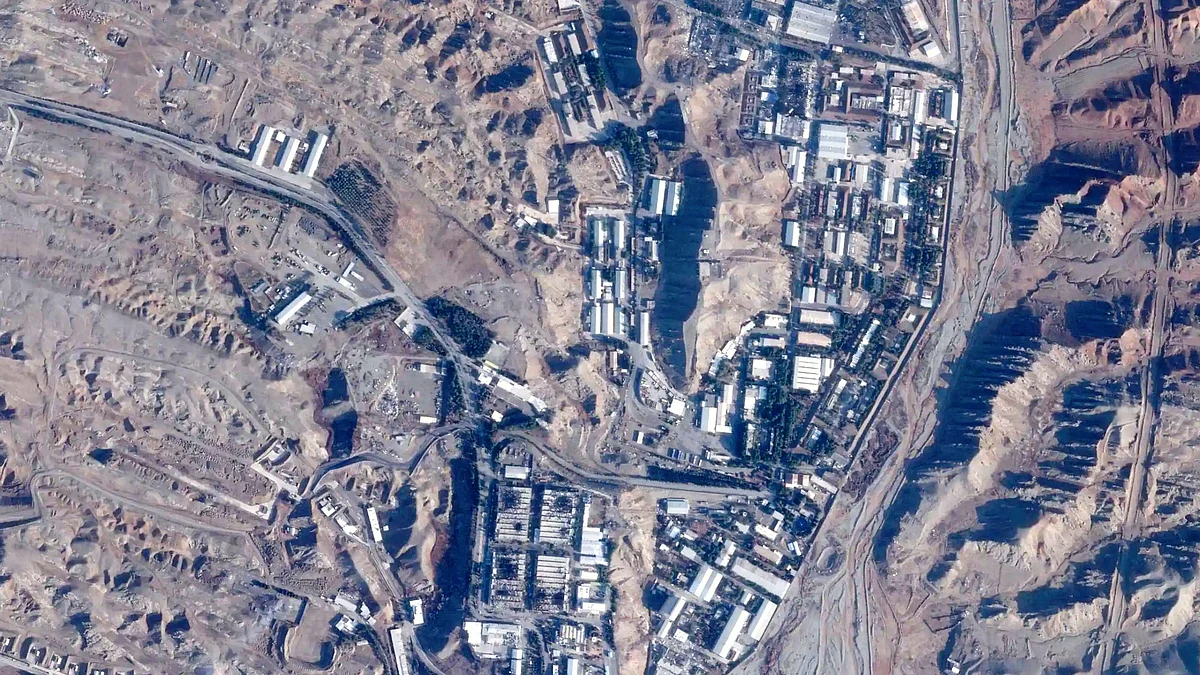


As the United States–Israel war on Iran approaches its fourth week, the conflict has settled into a dangerous rhythm of escalation without resolution. What began as a series of targeted strikes has now expanded into a theatre-wide confrontation stretching from the Persian Gulf to the Eastern Mediterranean.
Precision air raids, cyber operations, proxy engagements, and retaliatory missile strikes have created a volatile equilibrium — one in which neither side can decisively win, yet both continue to incur mounting strategic costs.
At first glance, the battlefield narrative appears ambiguous. Iran has demonstrated an unexpected capacity to absorb and respond to sustained military pressure, launching waves of ballistic and cruise missile attacks on American installations across Iraq, Syria, and the Gulf.
Several of these strikes have reportedly damaged critical infrastructure, including air defence systems and logistical hubs. In parallel, Iran’s regional allies — from Hezbollah in Lebanon to militia networks in Iraq and Syria — have intensified coordinated operations, opening multiple fronts that have stretched American and Israeli military resources.
The US and Israel, for their part, have escalated their campaign by targeting Iran’s military command structures, nuclear-linked facilities, and energy infrastructure. High-value assassinations of senior Iranian commanders and scientists have sought to degrade Tehran’s strategic capabilities.
Yet these actions have not produced the anticipated deterrence. Instead, they have hardened Iran’s resolve, transforming the conflict into a broader struggle over regional order rather than a limited military engagement.
Recent developments underline just how far the war has widened. Israeli strikes on Iran’s South Pars gas field — the world’s largest — have disrupted a significant share of Iran’s energy production, triggering immediate global market shocks and retaliatory Iranian attacks on energy infrastructure across the Gulf.
At the same time, US forces have intensified operations in and around the Strait of Hormuz, deploying advanced aircraft and striking Iranian naval and drone assets in an effort to secure one of the world’s most critical energy corridors.
Yet even as these operations demonstrate overwhelming firepower, they also reveal the limits of military escalation. Iran has continued to strike back — not only with missiles targeting Israel and US bases, but also through asymmetric means, including drone warfare and maritime disruption. The reported damaging of a US F-35 fighter jet and the interception of multiple drones suggest that Iran’s air defence and retaliatory capabilities remain far from neutralised.
It is within this widening arc of confrontation that a striking argument has gained traction among geopolitical analysts: regardless of how the war ends militarily, the United States may already have suffered a profound strategic defeat in West Asia.
The roots of this perceived loss lie not on the battlefield alone, but in the shifting perceptions of America’s role among its traditional allies. For decades, Washington’s security architecture in the Gulf rested on a simple premise: that American military presence would guarantee the sovereignty and stability of allied regimes. Today, that premise stands shaken.
Iran’s retaliatory strikes have exposed the vulnerability of American bases embedded within allied territories. From Qatar to Bahrain, the spectacle of incoming missiles has underscored an uncomfortable reality for host governments — that their alignment with Washington has made them targets rather than beneficiaries of security. Even where missile defence systems have intercepted incoming threats, the psychological impact has been profound.
Compounding this unease is a growing belief within Arab capitals that the US is no longer an impartial security guarantor, but a partisan actor prioritising Israeli interests over regional stability. Reports that American military assets stationed in Gulf countries have been redeployed to support Israeli operations have deepened this perception.
This erosion of trust is unfolding against a backdrop of intense public anger. The war in Gaza had already inflamed opinion across the Arab and Muslim world, with widespread condemnation of Israeli military actions and American diplomatic backing. The expansion of hostilities to Iran — widely perceived as an attack on a sovereign state — has amplified this resentment.
Also Read: Why America will not win this war
In cities across the region, protests have erupted despite stringent state controls. While many governments have sought to contain dissent, the scale and intensity of public outrage have made it increasingly difficult to ignore. Notably, the conflict has also blurred sectarian divides that have long shaped regional politics. Expressions of solidarity with Iran have emerged not only from Shia communities but also from Sunni populations traditionally wary of Tehran’s influence.
Beyond West Asia, the war has also strained America’s global alliances. Key European partners have adopted a cautious, and at times critical, stance towards the escalation. Calls for restraint, ceasefires, and renewed diplomacy have grown louder in European capitals. Even within the Western alliance, differences have surfaced, with reports indicating frustration in Washington over the reluctance of some NATO allies to provide full military backing.
Simultaneously, rival powers have moved to exploit the situation. China has maintained a calculated silence, positioning itself as a potential mediator while quietly reinforcing its economic and diplomatic ties across the region. Russia, though constrained by its own geopolitical commitments, has provided diplomatic backing to Iran and used the crisis to challenge American dominance in international forums.
Perhaps the most consequential dimension of the conflict lies in its economic implications. The Gulf remains the heart of the global energy market, and the war has already triggered volatility in oil prices and shipping routes. Iranian threats to disrupt traffic through the Strait of Hormuz — a critical chokepoint through which roughly a fifth of global oil supply passes — have heightened fears of a broader economic shock.
The recent targeting of energy infrastructure has further deepened these concerns. Attacks on gas fields, refineries, and shipping lanes have not only disrupted supply but also introduced long-term risks to the global energy system. Oil prices have surged past $110–$119 per barrel in recent days, reflecting the market’s growing anxiety.
The environmental consequences, too, are becoming impossible to ignore. Airstrikes on industrial and energy facilities have released toxic pollutants, with reports of hazardous emissions and even acid rain over parts of Iran—an unfolding ecological crisis that could outlast the war itself.
In this context, the credibility of the U.S.-led financial order is also under scrutiny. For decades, the petrodollar system—whereby oil transactions are conducted predominantly in U.S. dollars—has reinforced American economic primacy. However, growing geopolitical tensions have accelerated conversations around de-dollarisation, with several countries exploring alternative currency arrangements for energy trade.
Yet, to suggest that the United States has been entirely eclipsed would be premature. Washington retains formidable military capabilities, unmatched global reach, and deep institutional partnerships across the region. Its naval presence continues to secure critical maritime routes, and its intelligence networks remain deeply embedded. Moreover, many regional governments, despite their frustrations, have few viable alternatives to American security guarantees in the immediate term.
The paradox, therefore, is stark. The United States remains indispensable, yet increasingly mistrusted; powerful, yet strategically constrained. Its actions in the current conflict may succeed in degrading Iran’s military capabilities—Israeli claims suggest a significant reduction in Iran’s missile launch capacity—but they risk accelerating a longer-term decline in American influence.
For Iran, the war represents both peril and opportunity. While it has suffered significant material and human losses—including the assassination of key leaders and sustained strikes on its infrastructure—it has also managed to project resilience and defiance. By surviving sustained attacks and continuing to retaliate, Tehran has reinforced its image as a regional power capable of standing up to the United States and Israel.
However, Iran’s position is far from secure. Its economy remains under severe strain, its infrastructure has been damaged, and the risk of internal instability cannot be discounted. A prolonged conflict could erode the very gains it seeks to consolidate.
As the war enters its fourth week, the absence of a clear off-ramp is perhaps the most alarming feature. Diplomatic efforts, which had shown tentative promise just before the outbreak of hostilities, have collapsed under the weight of military escalation. Each new strike—whether on military, political, or energy targets—narrows the space for negotiation.
In the final analysis, this is a war that defies conventional metrics of victory and defeat. Even if the United States and Israel achieve their immediate military objectives, the broader strategic landscape may have already shifted against them. Trust, once eroded, is not easily restored; legitimacy, once questioned, is difficult to reclaim.
West Asia is entering a new phase—one defined not by clear hegemonies, but by contested influence and shifting alignments. In this emerging order, power will be measured not only by military strength, but by the ability to command confidence, build partnerships, and navigate complexity.
On that front, the United States faces its most difficult test yet.
Hasnain Naqvi is a former member of the history faculty at St Xavier’s College, Mumbai. More of his writing may be read here
Join our official telegram channel (@nationalherald) and stay updated with the latest headlines