


Why America will not win this war
What began with dramatic airstrikes and triumphant rhetoric is quickly turning into a prolonged confrontation with no achievable victory, writes Ashok Swain
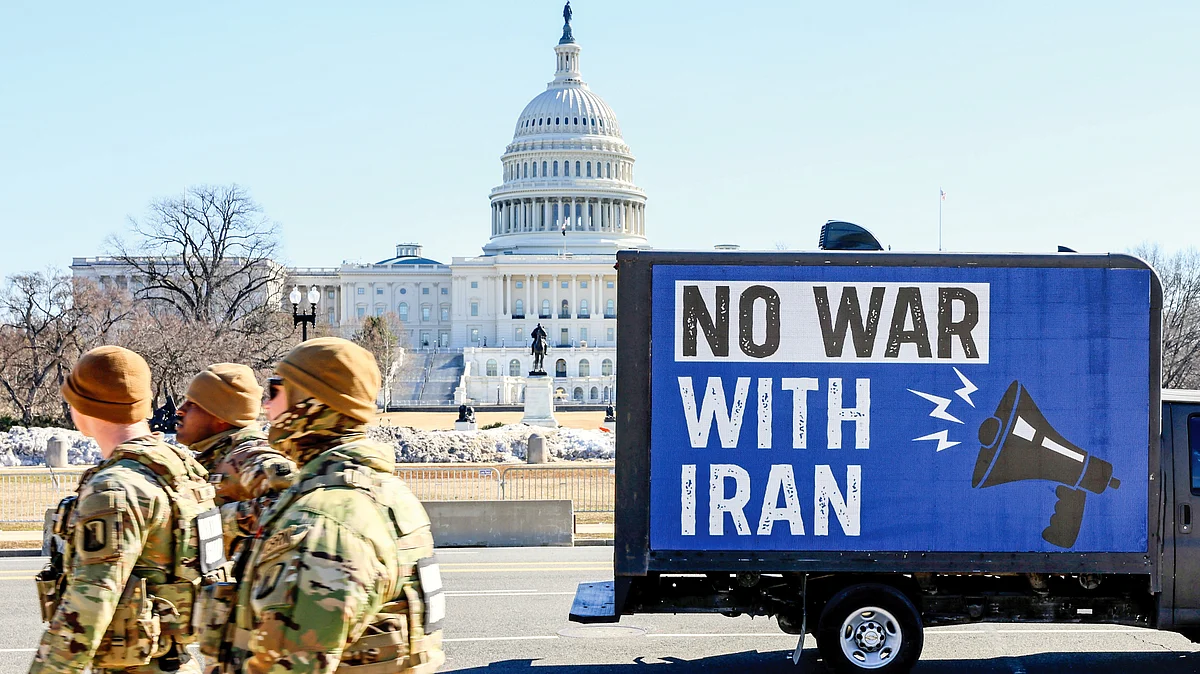


The United States, together with Israel, has once again stepped into a war in the Middle East without a clear objective, without a coherent strategy, and without any realistic understanding of how it will end. The decision to attack Iran appears driven less by security necessity than by domestic political calculations and the desire to reshape the regional balance of power.
What began with dramatic airstrikes and triumphant rhetoric is quickly turning into a prolonged confrontation with no achievable victory. The consequences are already extending far beyond West Asia, accelerating the erosion of international law and order.
Israel’s role in shaping the conflict also deserves careful attention. For decades, Israeli Prime Minister Netanyahu has argued that Iran represents an existential threat that must be neutralised. Netanyahu therefore has strong incentives to push for sustained military pressure on Tehran.
Yet the strategic burden of a prolonged war will fall primarily on the United States. As Washington becomes more deeply entangled, Israel can gradually reduce its exposure while American forces absorb most of the diplomatic, military and economic costs.
The most striking feature of this conflict is the absence of a consistent rationale. Washington’s stated objectives have shifted repeatedly. At first, the goal was to destroy Iran’s nuclear capabilities. Soon after, it expanded to eliminating ballistic missile programmes.
The mission was then described as dismantling Iran’s regional proxy networks. At other moments, the language suggested a regime change in Tehran. The shifts in the stated purpose of waging war on Iran reflect the reality that the war was launched without a clearly defined political purpose.
Even the explanations offered by senior American officials have exposed this confusion. At one point, US secretary of state Marco Rubio suggested that Washington acted because Israel was preparing to launch its own attack and the US wanted to strike first to prevent Iranian retaliation against American forces.
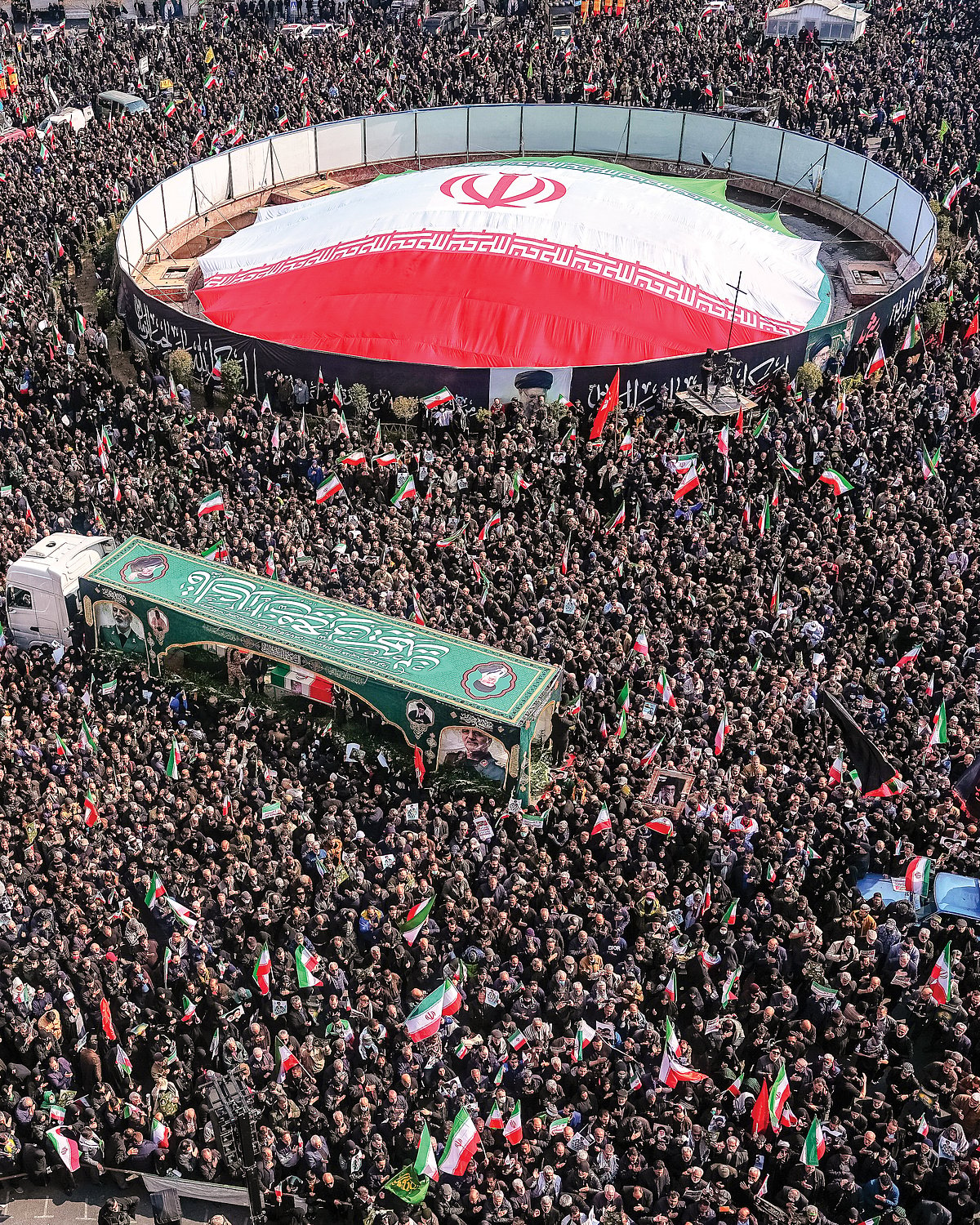
The implication was that Washington had entered the war partly because Israel had already decided to do so. The remark was later softened, but the episode revealed how improvised the rationale for war has been.
Wars are not won simply by destroying targets. They are won when military action produces a political outcome that advances national interests. In the case of Iran, the US has not articulated what such an outcome would look like. Is the goal to weaken Iran sufficiently to force negotiations? Is it to dismantle its military capabilities? Or is it to engineer a total collapse of the regime?
The underlying assumption behind the American attack appears to have been that a rapid decapitation of Iran’s leadership would destabilise the regime and force it to accept American demands. The killing of senior figures, including the country’s supreme leader, was expected to trigger internal collapse and/or swift capitulation. That expectation reflects a familiar pattern of strategic miscalculation.
Iran is not a fragile state that can be toppled through a few dramatic strikes. It is a deeply institutionalised political system with multiple centres of authority and a powerful security apparatus. Even after losing key leaders, the regime has installed a new supreme leader and continues to function through an extensive network of military, intelligence and ideological institutions.
The Islamic Revolutionary Guard Corps alone commands enormous resources, influence and manpower. A political system that has survived more than four decades of internal and external pressure is unlikely to disintegrate overnight.
The belief that Iran would quickly surrender also ignores the country’s history. In the 1980s, Iran fought a devastating war with Iraq that went on for eight years and cost hundreds of thousands of lives. Despite suffering massive casualties, economic hardship and international isolation — because Iraq was being supported by both the US and the then USSR — Tehran refused to capitulate.
That war profoundly shaped the political culture of Iran. It reinforced a powerful narrative of endurance and resistance against foreign aggression. Expecting that the same society would now surrender after a few weeks of bombardment is not strategic analysis, it is wishful thinking.
The US approach also betrays a fundamental contradiction. Political transformation in a country of more than 90 million people cannot be imposed through missile strikes. Yet sending American ground forces into Iran would mean entering a war of enormous scale and uncertainty.
Iran’s armed forces and affiliated militias together number close to a million fighters. Occupying such a vast country, with a difficult terrain, would require a commitment far greater than anything the US has attempted during its wars in Iraq or Afghanistan.
Even the idea of installing a more favourable leadership in Tehran now appears increasingly unrealistic. Trump himself acknowledged that many individuals once considered potential successors have already been killed in American and Israeli airstrikes.
Washington is trapped in a familiar dilemma. It can destroy infrastructure and eliminate leaders, but it cannot control what follows. Rather than producing a moderate new leadership, the decapitation strategy has hardened the regime. The succession of Mojtaba Khamenei following the assassination of Ayatollah Ali Khamenei has consolidated power among the most hardline elements of the political system.
Domestic politics in the United States further complicate the situation. Rising casualties, increasing oil prices and growing economic uncertainty are already generating pressure at home. Public support for another prolonged West Asian war is very limited.
As the costs mount, the temptation for the White House will be to declare victory prematurely and look for an exit. Yet a hurried withdrawal after partial destruction will not eliminate Iran’s capabilities or ambitions; it will simply leave the region even more unstable.
Iran understands this dynamic very well. Tehran has long known that American military power is formidable but politically constrained. By prolonging the conflict and raising its costs through regional retaliation, pressure on energy markets and asymmetric attacks, Iran exploits those constraints.
The longer the war continues, the more Washington will be forced to choose between escalation and retreat. Neither option guarantees success.
The broader geopolitical consequences could be profound. The United States has repeatedly declared that its primary strategic focus lies in the Indo-Pacific and the challenge posed by China. Yet a prolonged war with Iran would once again divert American attention, resources and military assets back to West Asia.
Munitions stockpiles will be depleted, naval deployments stretched and diplomatic energy consumed by crisis management in a region Washington has long wished to deprioritise.
For China, this distraction presents a strategic opportunity. Beijing does not need to intervene directly in the conflict to benefit from it. As the United States commits itself to another open-ended confrontation in West Asia, China can continue to expand its economic influence, strengthening military capabilities and deepening partnerships across the world.
Strategic competition between great powers is ultimately a contest of endurance. A superpower that repeatedly exhausts itself in wars weakens its ability to compete elsewhere.
This is the deeper irony of the current conflict. A war launched to demonstrate American power and reinforce its global leadership status may instead expose the limits of American leverage and strategic judgment.
Ashok Swain is a professor of peace and conflict research at Uppsala University, Sweden. More by the author here.
Join our official telegram channel (@nationalherald) and stay updated with the latest headlines