


Care needs a community
Karnataka’s decision to introduce Kerala-style palliative care builds on a quiet revolution that began in Kozhikode
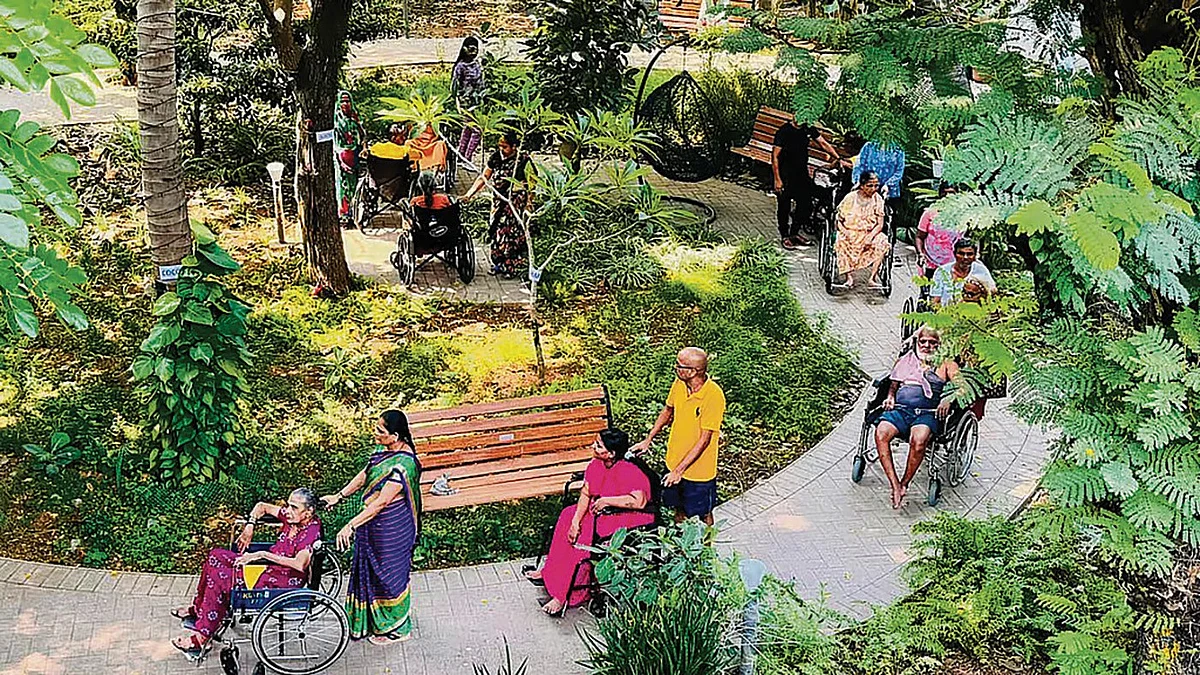


When Karnataka announced in its budget that it would introduce Kerala-style home-based palliative care in collaboration with Pallium India, the decision carried a significance that went beyond any health policy. It pointed to a quiet experiment that began in Kozhikode three decades ago and gradually transformed the way suffering could be understood within India’s healthcare system.
Across Kerala today, small teams of nurses, doctors and volunteers travel every day through narrow village roads and crowded town streets, stopping at addresses rarely recorded in hospital registers.
Inside these homes are patients who have exhausted curative treatment. Some are in the final stages of cancer. Others live with paralysis, dementia or severe neurological illness. For them, the arrival of a palliative care team brings what modern medicine often overlooks once treatment ends — relief from pain, guidance for families, the assurance that they will not be abandoned simply because their disease cannot be cured.
The idea that care should reach the patient rather than the patient chasing care is now widely known as the Kerala model of palliative care. Yet its origins were remarkably modest.
In the early 1990s, doctors at Kozhikode Medical College noticed a troubling pattern. Patients with advanced illness were discharged from hospitals with little support. Families were left to manage severe pain and complicated symptoms at home. Many patients spent their final weeks in silent suffering.
For anaesthesiologist M.R. Rajagopal, the situation raised a fundamental question about the purpose of medicine. “When a cure is not possible, care becomes even more important,” he says. “Care should reach the patient rather than forcing the patient to search for care.”
Together with surgeon Suresh Kumar and a small group of colleagues, Dr Rajagopal started the Pain and Palliative Care Society at Kozhikode Medical College in 1993.
The effort was small and informal. Doctors contributed modest amounts of money to run the clinic. Volunteers helped with patient registration and basic support. What distinguished the initiative was its philosophy: patients with incurable illnesses were not to be abandoned by the healthcare system.
Early years revealed another challenge: many patients were too weak to travel to hospital. Some lived in remote villages. Others could not afford repeated medical visits. And so, doctors and nurses began visiting patients at home. Those visits transformed the programme.
“When we started entering people’s homes, we realised that suffering was much larger than physical pain,” says Dr Kumar. “Families were under emotional strain. Many faced financial hardship. Illness affected the entire household.”
It became clear that palliative care had to extend beyond clinical treatment. Emotional support, practical assistance and community involvement were equally important. This realisation led to the most important innovation in the movement’s history.
In 1999, the programme expanded into what came to be known as the Neighbourhood Network in Palliative Care. Instead of depending entirely on doctors and nurses, it mobilised communities to participate in caring for patients in their own localities. Volunteers were trained to identify patients who required support. Medical teams organised home visits. Community groups raised funds to help families with medicines and other necessities.
Palliative care moved out of hospital wards and into neighbourhoods. Teachers, students, shopkeepers and retired people began joining as volunteers. Many had witnessed illness within their own families and understood how isolating it could be.
The network spread rapidly across Kerala. Today, hundreds of palliative care units operate with the help of thousands of trained volunteers. The services are not limited to cancer patients. Individuals recovering from stroke, those living with dementia or suffering from severe neurological disorders are all included.
Also Read: A matter of life and death
Despite accounting for a small share of India’s population, Kerala provides a large proportion of the country’s organised palliative care services. For Dr Rajagopal, the strength of the model lies in its social foundation. “This works because communities feel responsible for one another,” he says. “It is not simply a medical programme. It is a community response to suffering.”
For nearly a decade, the movement expanded largely through voluntary effort and local support. Eventually, the state government recognised its importance. In 2008, Kerala introduced the country’s first state policy dedicated to palliative care. The policy integrated these services into the public health system and encouraged local self-government institutions to support community initiatives. Primary health centres began operating palliative care programmes. Panchayats provided logistical and financial support for home visits.
The movement gained institutional backing without losing its community character. Training also expanded rapidly. The Institute of Palliative Medicine in Kozhikode, which grew from the original clinic, now attracts healthcare professionals from across India and other countries seeking to learn from Kerala’s experience. An important institution in spreading these ideas has been Pallium India, a non-profit organisation founded by Dr Rajagopal in Thiruvananthapuram in 2003.
Pallium India works to improve access to palliative care and pain relief across the country. It conducts training programmes for doctors and nurses, runs clinics and advocates policy reforms that make essential medicines more accessible. Through partnerships with hospitals and governments, the organisation has helped introduce palliative care initiatives in several states.
Training collaborations have been established with institutions such as the Bhagwan Mahaveer Cancer Hospital in Jaipur, the Gujarat Cancer and Research Institute in Ahmedabad and the MNJ Institute of Oncology in Hyderabad. Programmes inspired by the Kerala model have appeared in other states like Assam, Rajasthan, Delhi, Odisha, Uttar Pradesh and Tamil Nadu.
Even remote regions have begun exploring the approach. In Himachal Pradesh’s Chamba district, community-based initiatives are experimenting with home-based care for patients living in mountainous villages far from hospitals.
The model has also drawn attention beyond India. Healthcare professionals in Bangladesh and other South Asian countries have studied Kerala’s experience while designing their own palliative care systems.
Seen in this context, Karnataka’s decision to adopt elements of the Kerala model carries considerable significance. The state plans to provide home-based care for patients suffering from severe, chronic and terminal illnesses through trained healthcare workers supported by community networks.
India’s healthcare system is facing a growing burden of chronic disease. Rising cases of cancer, stroke and neurological disorders mean that millions of families must care for relatives with long-term disabilities. At the same time, the country’s ageing population is increasing the demand for supportive care for elderly patients. Yet palliative care services remain limited across most states.
Kerala’s experience suggests that compassionate care does not stem from expensive hospitals. It relies on trained personnel, community participation and a willingness to recognise that dignity matters as much as treatment.
“Karnataka’s initiative is important because it acknowledges a simple truth,” says Dr. Kumar. “Healthcare does not end when a cure becomes impossible.” Across Kerala, volunteers continue to visit homes every day, bringing medicines, adjusting beds and offering reassurance. Their work rarely attracts attention. Yet it represents one of the most humane expressions of healthcare in the country.
For Dr Rajagopal, the philosophy behind the movement remains clear. “A society should be judged not only by how it saves lives,” he says. “It must also be judged by how it cares for those who are suffering.” If Karnataka succeeds in adapting the model, the quiet movement that began in Kozhikode may once again reshape public health thinking in India.
Join our official telegram channel (@nationalherald) and stay updated with the latest headlines