


Iran: Is the revolution in danger of being hijacked?
To present monarchy as a solution today is to forget why Iranians rose against it nearly half-a-century ago, writes Ashok Swain
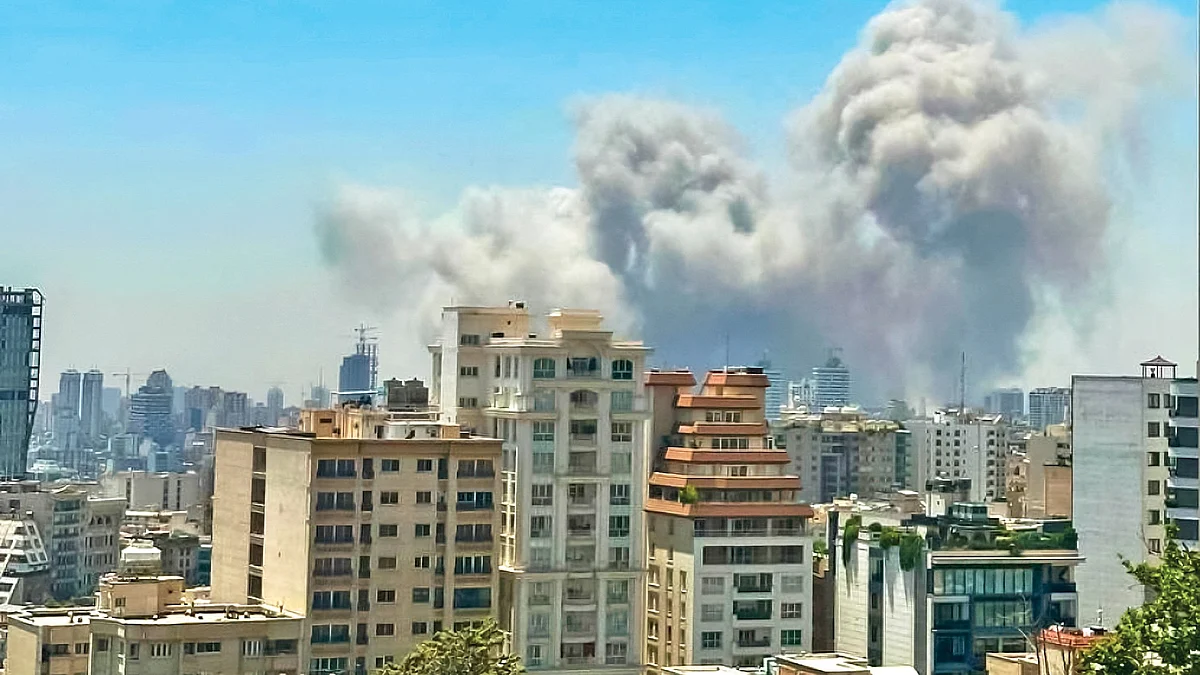


Iran has once again entered a familiar and dangerous moment. Since late December, protests that began over soaring prices, unpaid wages and deepening economic despair have turned into the most widespread and politically explicit uprising the country has seen since 2022.
What started as anger at empty refrigerators and collapsing livelihoods has transformed into open calls for the end of the Islamic Republic itself. Demonstrations have spread far beyond Tehran, cutting across provinces, ethnic lines and social classes, while the Iranian diaspora has poured into the streets of cities from Lyon to Los Angeles. Slogans are no longer cautious or coded — they are direct, angry and revolutionary.
This time, the regime looks weaker than it has in years. Western sanctions have tightened further, oil revenues are constrained, inflation is punishing ordinary households and the currency has lost much of its value. Israeli airstrikes in June 2025, aimed at military and strategic targets, have added to a sense of vulnerability that the leadership has struggled to conceal.
Iran’s regional posture of strength is also under severe strain. Allies and proxies in Syria, Lebanon and Palestine are either severely weakened or fighting for survival, exposing the limits of Tehran’s influence and draining resources at home. For many Iranians, the promise that regional power would translate into dignity and prosperity has long since collapsed.
The regime’s response has followed a grimly predictable script. Internet shutdowns, mass arrests and live ammunition are once again being used to terrorise the streets into silence. Some human rights organisations are estimating that more than 500 protesters have already been killed. State television beams images of hundreds of thousands of regime loyalists chanting rehearsed slogans, while the Supreme Leader dismisses the protesters as foreign agents.
Also Read: Iran gets a breather, but for how long?
Beneath this performance of defiance lies a system under real stress. The security apparatus is overstretched, legitimacy is eroding even among former supporters, and fear no longer works as efficiently as it once did.
There is no doubt that Iranians deserve a system that reflects their will, protects their rights and offers them a future. The theocratic state, built on clerical supremacy and enforced by coercion, has failed on all counts. It has crushed political life, marginalised women and minorities, squandered national wealth and dragged the country into endless confrontation abroad. That millions are now demanding its removal should surprise no one.
What is worrying, however, is the direction in which parts of this anger are being channelled. Alongside chants for freedom and dignity, a new and troubling demand has gained visibility: the return of monarchy. Some protesters and diaspora activists are calling for the restoration of the Pahlavi dynasty and the installation of Reza Pahlavi, the exiled son of the deposed Shah, as Iran’s ruler.
In interviews and public statements, he has not only urged Iranians to intensify protests but has also openly called on the United States, and particularly President Donald Trump, to militarily intervene in Iran to overthrow the current regime.
This should alarm anyone who genuinely cares about Iran’s future. The Islamic Republic may be discredited, but the memory of the Shah’s rule is not the romantic tale that monarchists now sell.
The pre-1979 monarchy was not a golden age of freedom stolen by clerics. It was an authoritarian system sustained by a brutal security apparatus, political repression, torture and the systematic exclusion of popular participation. The 1979 revolution, which ultimately produced the current theocracy, was itself a response to decades of dictatorship, inequality and foreign-backed rule.
Also Read: The dangerous acquiescence of Europe
To present monarchy as a solution today is to forget why Iranians rose up in the first place nearly half-a-century ago. It also ignores the basic fact that legitimacy cannot be inherited in exile. Reza Pahlavi has not lived under the conditions his supporters claim he should now rule. He has not faced sanctions, repression or the daily humiliations imposed by the State. More importantly, he has never been chosen by Iranians through any democratic process. Crowds chanting his name abroad do not amount to a social contract at home.
The call for foreign military intervention is even more dangerous. Iran’s modern history offers a clear lesson on the cost of external interference. From the 1953 CIA-engineered coup that overthrew Mohammad Mossadegh to decades of Cold War manipulation, foreign involvement has repeatedly undermined democratic possibilities and empowered authoritarian forces.
Any foreign-led intervention today would almost certainly produce chaos, civilian suffering and fragmentation, not freedom. It would also hand the regime its most powerful narrative weapon: that the uprising is a foreign conspiracy, thereby justifying even greater repression.
There is also a moral contradiction at the heart of monarchist appeals. To oppose a theocracy that claims divine authority, only to replace it with a hereditary ruler backed by foreign power, is not liberation. It is a substitution of one unaccountable system with another. Iranians are protesting because they want dignity, agency and control over their lives. They are not risking death in the streets to become subjects once again.
It would be unfortunate for this uprising to be hijacked, as the 1979 revolution was, by forces that do not represent its original demands. Then, a broad-based movement against dictatorship was captured by clerical networks that were better organised and ruthless enough to seize the moment. Today, there is a risk that a vacuum of leadership and coordination could allow loud unrepresentative voices to define the future in advance, especially from outside the country.
The real challenge facing Iran’s protesters is not simply to bring down the current regime, but to prevent the emergence of another imposed order. That requires resisting both internal repression and external manipulation. It means insisting that any transition be led by Iranians inside Iran, through inclusive and genuine democratic processes. It means rejecting the false choice between the turban and the crown.
The West, for its part, should tread carefully. Supporting human rights, documenting abuses and providing platforms for Iranian civil society are all legitimate and necessary actions. Engineering a regime change, backing exiled claimants or threatening military action are not. Such moves would weaken the very forces it claims to support and deepen Iran’s long-standing siege mentality.
Iran stands at a crossroads, and history suggests that the road ahead will not be straight or easy. The courage of those protesting should not be underestimated, nor should the regime’s capacity for using brute force to suppress them.
Yet amid the uncertainty, one principle must remain clear: Iranians deserve the right to choose their future freely, without clerical coercion, dynastic nostalgia or foreign bombs. A revolution that replaces one form of domination with another would not be a victory. It would be a second betrayal.
Ashok Swain is a professor of peace and conflict research at Uppsala University, Sweden. More by the author here.
Join our official telegram channel (@nationalherald) and stay updated with the latest headlines