


A re-enactment of Gaza in Lebanon
How is Israel’s inhuman campaign to displace yet another population getting so little international attention, asks Ashok Swain
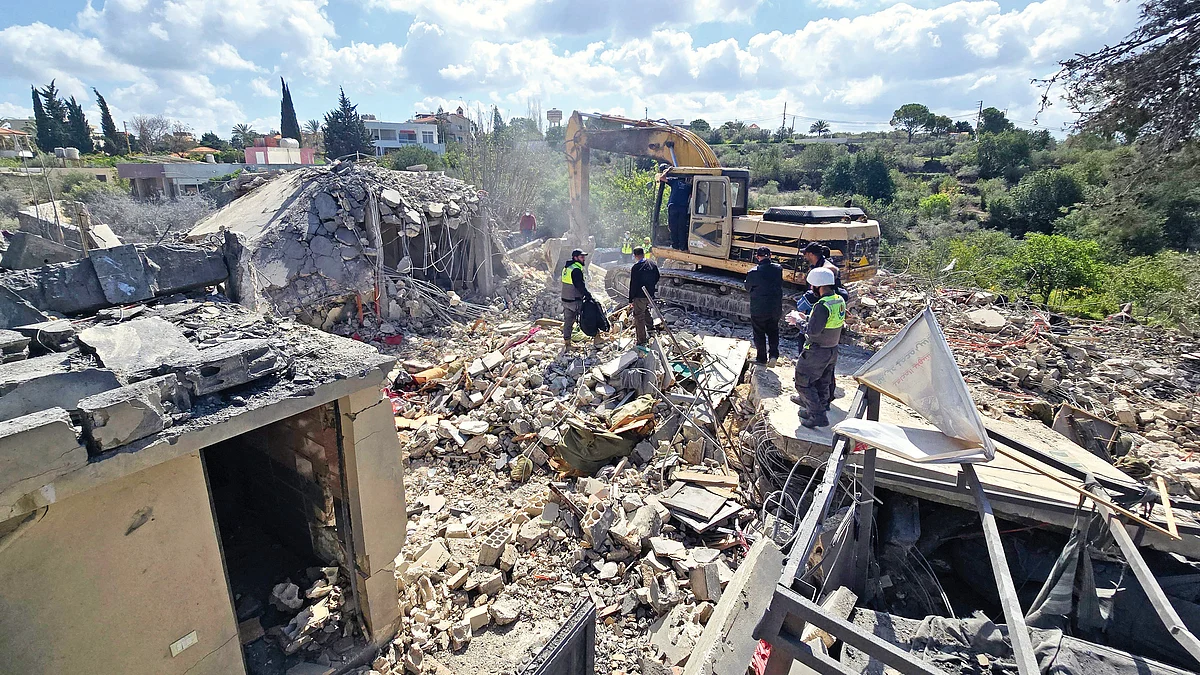


While the fear-fascinated gaze of the world was fixed on Donald Trump’s dangerous brinkmanship with Iran, the simultaneous devastation in Lebanon was receiving too little attention. Israel is threatening to redraw the border with its northern neighbour and has over the past month escalated its military campaign from cross-border strikes earlier to a full-scale war that now includes a ground invasion, the bombardment of civilian areas and an explicit plan to occupy large parts of southern Lebanon.
Since mid-March, Israeli forces have advanced further into Lebanese territory after weeks of air strikes that targeted not just Hezbollah positions but also homes, hospitals, universities, bridges and other infrastructure in densely populated areas.
Entire Muslim-majority towns south of the Litani river are being depopulated. Expanding evacuation orders stretch across large parts of the country, and there is a largescale displacement of the population under ongoing bombardment.
The humanitarian toll is staggering. More than 1.5 million people have been displaced, with hundreds of thousands forced to flee north. Civilian casualties continue to rise, with over 1,500 casualties since early March, including more than 200 women and children, and many medical workers and journalists. Entire families have been buried under the rubble as air strikes flatten homes in southern Lebanon and the suburbs of Beirut.
The pattern of destruction is familiar. Healthcare facilities have been struck, ambulance centres hit and medical personnel killed. Doctors on the ground warn that the targeting of Lebanon’s already fragile health system mirrors what was previously seen in Gaza. Hospitals are shutting down not only because of direct damage but also due to lack of electricity, fuel, medical supplies and staff. A country already crippled by economic collapse is now facing the systematic erosion of its capacity to sustain life.
Israel is making no secret of its intentions, and the objective is no longer confined to weakening or disarming Hezbollah but to establish a buffer zone extending up to the Litani river and to prevent displaced Lebanese civilians from returning to their homes in the south. Entire border villages are slated for destruction as part of this strategy — in effect, another ethnic cleansing project is under way.
For those familiar with the region’s history, the echoes are unmistakable. Israel maintained a security zone in southern Lebanon for nearly two decades, from 1982 to 2000. Predictably, the occupation fuelled resentment, strengthened Hezbollah and entrenched cycles of violence. Israel’s current strategy will repeat this pattern on a larger, even more destructive scale.
What makes the present moment particularly alarming is the normalisation of extreme measures against civilian populations. Air strikes have repeatedly hit residential neighbourhoods, including areas that had previously been considered relatively safe.
Even sites sheltering displaced civilians have not been spared. One widely reported strike targeted a Beirut seafront, where families, fleeing earlier bombardments, had set up tents.
There is also a deliberate pattern in the destruction of infrastructure. Key roads and bridges have been struck, making large areas of southern Lebanon inaccessible. This doesn’t just disrupt Hezbollah’s military logistics, it traps civilians.
The conflict has also spilled into the international sphere in deeply troubling ways. Members of the United Nations Interim Force in Lebanon (UNIFIL), including three Indonesian peacekeepers, have been killed in Israeli shelling. The fact that UN personnel are being killed and wounded in what is supposedly a monitored conflict zone underscores how rapidly norms are eroding. Israeli soldiers have also destroyed UNIFIL surveillance cameras and even detained peacekeepers.
Meanwhile, the regional risks continue to grow. Hezbollah’s involvement is closely tied to Iran, and the war in Lebanon cannot be separated from the confrontation unfolding across West Asia. Missile exchanges, cross-border attacks and retaliatory strikes are creating a volatile environment in which the situation can escalate quickly and unpredictably.
Yet, despite the scale of destruction, the ethnic-cleansing pattern of the Israeli campaign and its rogue government’s undisguised attempt to redraw the border, the international response has been muted.
Some European governments have expressed concern and called for a ceasefire but their half-hearted attempts will not alter the course of events. The war in Lebanon is being overshadowed, treated as a secondary theatre in a larger geopolitical drama, but this silence has consequences.
When largescale ethnic displacement, destruction of civilian infrastructure and brazen territorial occupation does not trigger a forceful response from the international community, it grants impunity to bad actors and encourages worse transgressions. What happened in Gaza is proof. The erosion of international norms, even in the conduct of wars, does not happen dramatically; it happens gradually, through the normalisation of what was once considered unacceptable.
Israel is using brute military force to reshape and usurp the territory of another sovereign country. It is imposing immense costs on Lebanese civilians, who have no control over the dynamics driving the conflict.
For Lebanon, the consequences are existential. The country was already in the grip of one of the worst economic crises in modern history. Its state institutions are weak, public services are collapsing and political divisions run deep. The war is accelerating the disintegration of an already fragile state.
The implications are equally profound for the region. A prolonged Israeli presence in southern Lebanon can only deepen resistance, strengthen militant networks and increase the likelihood of recurring conflict. It will, in a sense, institutionalise instability. If southern Lebanon is indeed being turned into another Gaza, the question is not only what is happening but why it is being allowed to happen, with so little scrutiny or resistance from the international community.
Ashok Swain is a professor of peace and conflict research at Uppsala University, Sweden. More by the author here
Join our official telegram channel (@nationalherald) and stay updated with the latest headlines