


Lebanon hospitals overwhelmed after sudden Israeli strikes kill hundreds
Medical staff in Beirut describe unprecedented chaos as mass casualties strain an already fragile healthcare system
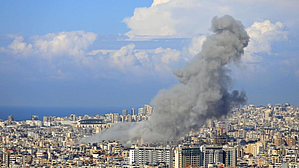


Hospitals across Lebanon have been pushed to the brink following a wave of intense Israeli air strikes that killed more than 300 people and injured over 1,100 in a single day, according to health officials.
In the capital, Beirut, scenes of panic unfolded as civilians rushed to emergency departments, searching desperately for missing relatives. At the American University of Beirut Hospital, doctors were confronted with an overwhelming influx of casualties within minutes, Al Jazeera reported.
“We received around 76 injured people in under an hour. Sadly, six of them died,” said Dr Salah Zeineldine, the hospital’s chief medical officer. He described the facility as becoming the “epicentre” of the crisis as victims poured in following the strikes.
The attacks reportedly hit more than 100 locations across the country within minutes, despite expectations that a ceasefire involving the United States and Iran might ease tensions in the region.
Medical staff said many of the most critically injured were children. Some were as young as a few weeks old, requiring immediate intensive care. Lebanon’s Health Ministry confirmed that at least 110 of those killed were children, women, or elderly people.
Most casualties were caused by collapsing buildings and falling debris, leading to severe head injuries and fractures.
“This is something we’ve never experienced before,” Dr Zeineldine told Al Jazeera. “We’ve dealt with wars and crises, but not at this scale or intensity.”
At other hospitals, including Rafik Hariri University Hospital, medical workers reported scenes of distress as injured parents called out for missing children. People arrived carrying photographs, hoping for news of loved ones.
The scale of the tragedy has already surpassed the death toll of the Beirut port explosion 2020, one of the most devastating events in the city’s recent history.
Dr Antoine Zoghbi, president of the Lebanese Red Cross, described the situation as “a nightmare”, warning that the healthcare system is under severe strain.
“If this continues, we don’t know how long we can cope,” he said. “Will we have the supplies, the equipment, the medicines? It’s uncertain.”
Even before the latest violence, Lebanon’s healthcare sector had been weakened by years of economic crisis. Doctors say shortages of medicines are worsening, with imports severely limited.
Dr Alain Kortbaoui, head of emergency medicine at Geitawi Hospital, warned that hospitals are struggling to maintain basic operations. “We don’t know when we’ll be able to treat patients properly again if supplies run out,” he said.
The World Health Organization has also cautioned that some hospitals could exhaust life-saving trauma kits within days.
Frequent power cuts further complicate the response, forcing hospitals to rely heavily on generators. Rising global oil prices have added to operational costs.
While Israeli authorities said the strikes were aimed at the Iran-backed group Hezbollah, doctors on the ground reported that those injured were overwhelmingly civilians.
“It felt random,” Dr Zeineldine said. “We saw children, women, elderly people — people from every walk of life.”
Although hospitals have not been directly targeted, medical workers admitted growing uncertainty about what may come next.
Despite the devastation, there have been signs of unity. Calls for blood donations by the Lebanese Red Cross were widely shared, prompting many residents and expatriates to come forward.
“Whenever there is a crisis, people stand together,” Dr Zoghbi said.
However, he cautioned that community support alone will not be enough to address the scale of the disaster.
“We are a wounded people,” he said. “The only real solution is to stop the war.”
For many doctors on the front lines, that message has become urgent as they continue to treat patients under mounting pressure and dwindling resources.
Join our official telegram channel (@nationalherald) and stay updated with the latest headlines