


Longest-serving prime minister in a fast-shrinking democratic space
The foundations of democracy, painstakingly laid by our freedom fighters and nurtured by Nehru, are being eroded day by day, writes Ram Puniyani
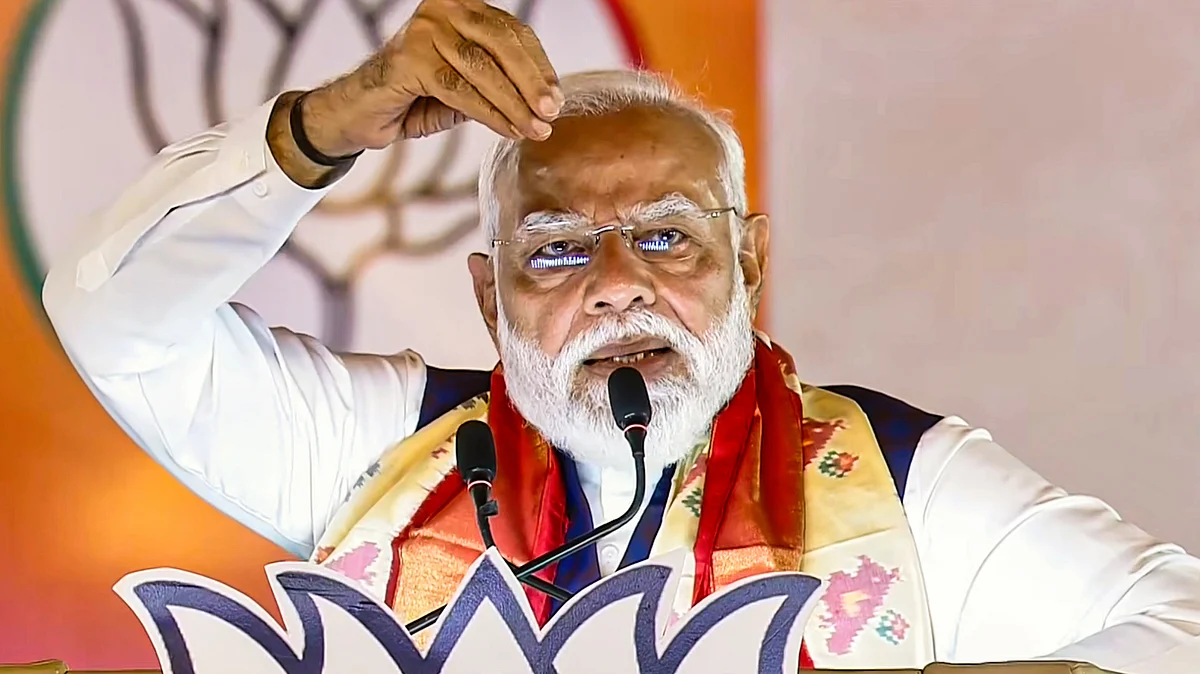


Today, 10 June, Narendra Modi became the prime minister to govern for the longest period in independent India, surpassing the tenure of Jawaharlal Nehru.
A few weeks ago, Modi completed 12 years in office. These twin occasions are being used by the BJP’s propaganda machinery to further elevate his image. Full-page advertisements by chief ministers of BJP-ruled states have appeared in major newspapers, highlighting what they describe as the great achievements of this period.
Claims such as monthly ration support for 81 crore poor people, 4 crore PM Awas houses, 10.5 crore Ujjwala LPG connections and 12 crore toilets are being prominently showcased. Also being highlighted are 32 crore Jan Dhan accounts, Metro networks, skill training programmes for youth, Ayushman Bharat, free treatment for people aged above 70 (up to Rs 5 lakh), defence exports, and welfare measures for farmers and the middle class. The construction of the grand Ram Temple, Kashi Vishwanath Dham, Kedarnath Dham and Mahakal Lok is also being underlined.
Uttarakhand chief minister Pushkar Singh Dhami has gone a step further by advertising the establishment of Sanskrit schools in every district, the setting up of Hindu studies centres in Doon University, the inclusion of the Shrimad Bhagavad Gita in school curricula, and the promotion of tourism linked to Hindu and Sikh places of worship.
In reality, the very foundations of democracy, which were painstakingly laid by our freedom fighters and nurtured by Nehru, are being eroded day by day. India has witnessed a steady decline in global democracy indices, with several international agencies describing the country as an 'electoral autocracy'. Freedom of the press and freedom of religion have seen a parallel decline.
Attention to these concerns was drawn by none other than BJP veteran Lal Krishna Advani, now sidelined within the party, who remarked that an undeclared Emergency existed during the Modi era. Autonomous institutions such as the Enforcement Directorate (ED), Income Tax Department (IT) and Central Bureau of Investigation (CBI) have increasingly submitted to the ruling dispensation. The judiciary too has often appeared inclined towards government decisions. Many within the judiciary seem to have imbibed the values of the Manusmriti rather than the Indian Constitution in their decision-making.
Also Read: The prime minister of records
The peak of this trend was witnessed when a former chief justice of India said he wrote the Babri Masjid verdict after God appeared in his dreams and gave him guidance. In a democracy, the prime minister is supposed to be first among equals within the Cabinet. Here, however, most major decisions emanate directly from the Prime Minister’s Office. Modi himself has elevated his image to a near-divine status by declaring that he is “non-biological”.
While his tenure has not witnessed large-scale communal riots, barring the 2020 Delhi violence, enough steps have been taken to marginalise Muslim and Christian minorities, undermining their right to equal citizenship. Hindutva politics now dominates the public sphere. Instead of large-scale massacres, scattered attacks on religious minorities have become the order of the day.
Many of the government’s major policy decisions, including demonetisation, the GST rollout and the Covid-19 lockdown, imposed immense hardships on ordinary citizens. Demonetisation, which was projected as a cure for terrorism, black money and corruption, severely damaged the small and medium-scale sectors, rendering lakhs of workers unemployed, while 99.3 per cent of the currency returned to the banking system.
The sudden Covid lockdown, announced with very little notice, created enormous difficulties for poor and marginalised sections of society. The image of a schoolgirl carrying her father on a bicycle across nearly a thousand kilometres captured the tragedy of that period. It was also a period in which vaccine manufacturers made substantial profits and a self-styled godman found commercial opportunity by launching medicines that were inaugurated by two Union ministers.
The flawed GST implementation further weakened the informal sector and small enterprises, already struggling in the aftermath of demonetisation. Despite the government's tall claims about welfare schemes, a recent Reuters report on youth-driven political satire groups highlighted growing anger among India’s young population over unemployment and economic insecurity.
The report cited surveys showing widespread anxiety regarding jobs and the future. According to Reuters, unemployment among Indians aged 15–29 stood at around 9.9 per cent, while concerns over inflation and opportunities continue to rise.
As far as healthcare is concerned, despite government claims of improved facilities, poor and middle-class citizens continue to face significant hardships in accessing quality treatment. The situation in education is equally troubling. The National Education Policy seeks not only to expand the role of private players but also communalise education by sowing seeds of hatred against minorities and promoting values rooted in texts such as Manusmriti.
The Uttarakhand example illustrates how education is increasingly being directed towards the goal of a 'Hindu rashtra'. While languages such as Sanskrit are undoubtedly important, the present situation demands employment-oriented and skill-based education. Job creation, agricultural distress, healthcare infrastructure, educational quality and income inequality remain pressing concerns facing Indian society.
Opposition leaders and independent analysts have repeatedly accused the government of favouring large corporate groups while small businesses struggle to survive. The Financial Times recently reported concerns about rising economic stress, inflationary fears and growing public anxiety over economic hardship. Critics argue that despite strong branding around development, the economic burden on middle- and lower-income households has increased substantially.
A Reuters report on youth concerns identified inflation as one of the biggest anxieties among India’s younger generation, and the present economic situation is making matters worse.
This regime has significantly diminished democratic space. Earlier, concerns centred around alleged vote manipulation and suspicions regarding EVMs, with critics claiming that election outcomes increasingly favoured the ruling establishment. With the introduction of the Special Intensive Revision (SIR), there are now allegations that voters perceived to be opposed to BJP ideology are being removed in large numbers.
In West Bengal, 91 lakh names were reportedly removed from electoral rolls, while 27 lakh people were awaiting the outcome of their appeals. The courts, critics argue, responded inadequately by suggesting that affected individuals could vote in the next election.
Meanwhile, Modi’s promises of Rs 15 lakh in every citizen’s bank account, two crore jobs annually and effective control over inflation remain unfulfilled. In contrast, a small segment of the corporate world continues to prosper as resources increasingly concentrate in their hands.
The continued decline of democratic institutions is likely to preserve the economic status quo, while religious minorities risk being pushed further towards second-class citizenship.
Views are personal
Join our official telegram channel (@nationalherald) and stay updated with the latest headlines