


Bhagwat says Hindus must have three children. Where does that leave govt policy?
Contradictory messages from RSS chief and political leadership on family size raises questions about coherence of policies
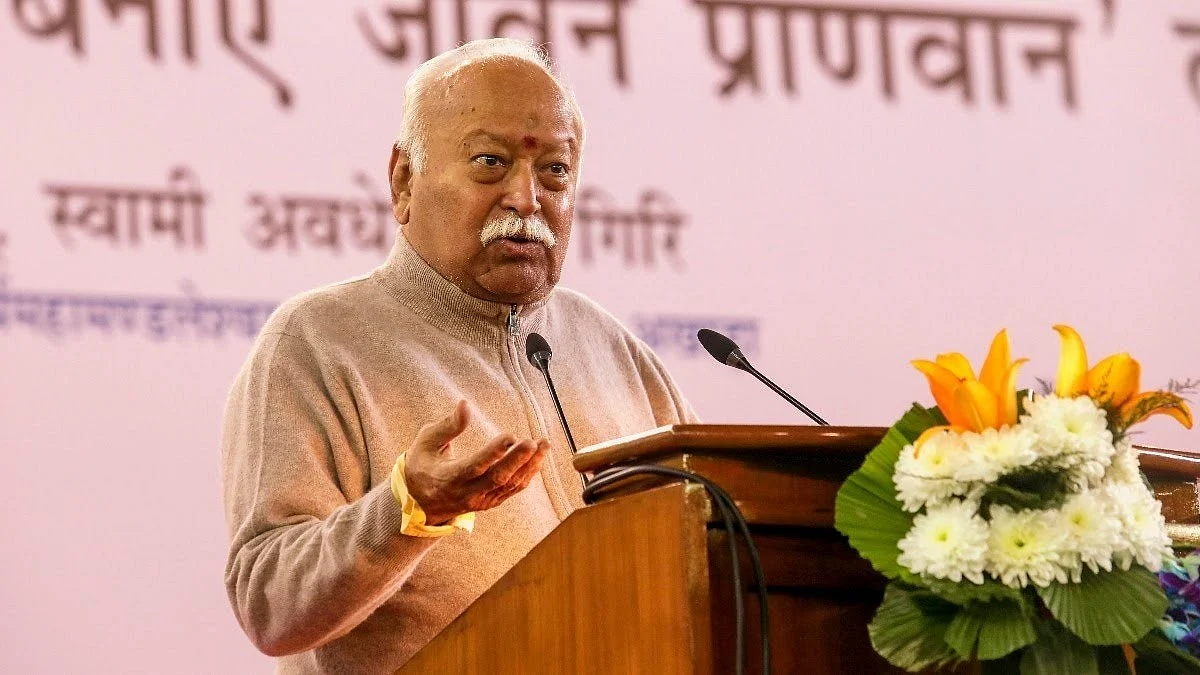


RSS chief Mohan Bhagwat has once again urged Hindu families to have at least three children, citing concerns over the declining Hindu population in India.
Addressing a social-harmony meeting at the Saraswati Shishu Mandir in Lucknow, Bhagwat expressed concern over what he described as a declining Hindu population and said inducement or coercion-based religious conversions should be stopped.
"There is a need to unite and empower Hindus. There is no threat to us but vigilance is necessary," he said.
His latest remarks have once again sparked widespread debate, given that they seem to contradict the existing government regulations that impose restrictions on families with more than two children.
Claiming to cite scientific opinions that societies with an average fertility rate of below three could disappear in the future, Bhagwat said newly-married couples should be made aware of this and added that the purpose of marriage is to carry forward creation, not merely fulfilling one's own desires.
Bhagwat’s 17 February exhortation, a repeat of what he has said in the past, reflects a socio-political narrative prevalent in certain quarters that frames demographic shifts as a challenge to cultural and religious continuity. He highlighted the perceived decline in Hindu population growth and recommended larger families as a strategy to reverse the trend.
The reaction to his remarks came quickly. Social media was flooded with comments ranging from “Sure if you pay the cost of child birth, school, college and etc and also income for each child upbringing!” to “He himself has no children” and “Yet another man telling what should happen to women's body (sic)”.
His views also go against India’s current policy framework, which gives incentives to smaller families and restricts political participation for individuals who exceed the two-children norm.
Several states in India have implemented rules barring individuals with more than two children from contesting local government elections such as panchayats and municipal bodies. The objective is to encourage population control and ensure that elected representatives set an example in family planning.
By disallowing those with larger families from political leadership roles, the government aims to promote sustainable demographic growth.
Maternity benefits and various social welfare schemes offered under government programmes too generally provide incentives for families with up to two children. These benefits include paid maternity leave, child health and nutrition programs, and educational subsidies. Families exceeding the two-children norm often become ineligible for such support, further reinforcing the state’s stance on population control.
The juxtaposition of Bhagwat’s appeal for larger Hindu families with the two-children framework presents a clear contradiction. It raises questions about the coherence of policies governing population management and the messaging from influential social leaders.
Though emerging from the same ‘ideological factory’, Bhagwat’s views echo concerns about religious demographics and cultural preservation, while the government’s actions remain aligned with national population stabilisation goals.
Join our official telegram channel (@nationalherald) and stay updated with the latest headlines